Before September 8, Publish the Tariff-and-Support Ledger
Ottawa is about to collect retaliatory tariffs and promise relief spending. Canadians deserve the product list, cost, exemption and worker-impact receipts first.
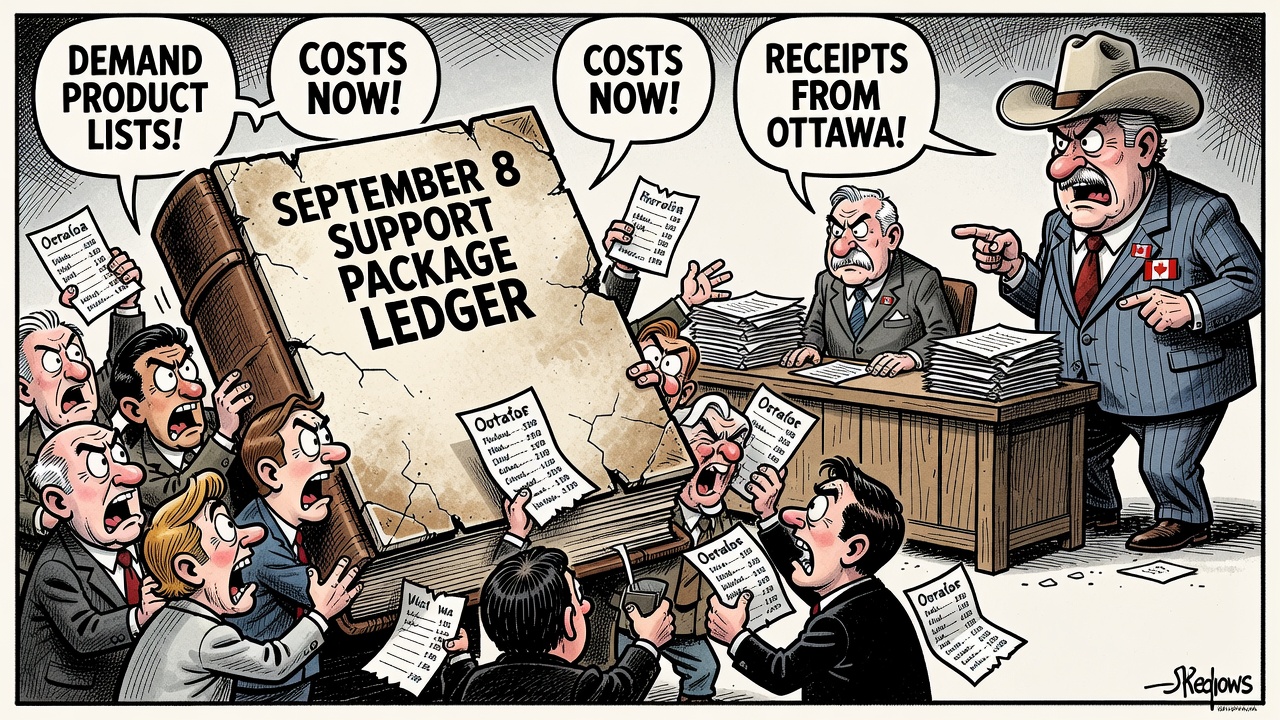
Canada’s trade fight with Washington has moved from negotiating-room drama to a household-cost test. On August 21, Prime Minister Mark Carney said he was suspending Canada-U.S. trade negotiations after what he called unfair last-minute U.S. terms. He said the United States intended to impose a 50% tariff on roughly $28 billion in Canadian goods and that Canada would match the tariffs dollar for dollar.
That is a serious response to a serious escalation. It is also exactly the kind of decision that should come with a public ledger before the bills hit businesses, workers and consumers.
Finance Canada said on August 24 that Canada’s dollar-for-dollar counter-tariffs will take effect September 8. The same release said a major support package will soon be announced to help businesses maintain liquidity, support workers, and strengthen economic resilience and competitiveness. It also said provinces and territories were being asked for input on proposed countermeasures, implicated products and supports.
Those words may sound reassuring. They are not enough. “Soon” is not a budget. “Support” is not an eligibility rule. “Resilience” is not a cheque register. Before September 8, Ottawa should publish the tariff schedule, estimated revenue, expected consumer-price impacts, sector-by-sector exposure, remission criteria, and the legal authority and cost ceiling for every relief program it plans to launch.
Carney’s August 22 remarks named sectors likely to be caught in the countermeasure net, including steel, dairy, appliances, agricultural equipment, pulp and paper, and electronics. Associated Press reporting also described competing accounts of the failed talks: Carney accused Washington of using economic integration as leverage, while U.S. Trade Representative Jamieson Greer argued the United States was responding to Canadian retaliation. Canadians do not need to settle that diplomatic argument to demand receipts from their own government.
The conservative accountability point is simple: retaliation may be justified, but blank-cheque retaliation is not. Tariffs can raise prices on families, disrupt small importers, invite sector lobbying, and create a new round of subsidies that outlast the emergency. If Ottawa picks winners and losers by exemption, remission or relief program, taxpayers should know who applied, who qualified, who was denied, and when the support sunsets.
Carney says Canada will protect workers and businesses. Fine. Publish the plan in numbers: affected firms by region, estimated job exposure, expected federal revenue, administrative costs, fraud controls, clawback rules, and the cabinet signoff trail. If the response is disciplined, the ledger will prove it. If it is improvised, September 8 will expose it.
Canadians can stand up to unfair U.S. tariffs without handing Ottawa a closed file. Trade wars are expensive. Secrecy makes them more expensive.
- Prime Minister of Canada: Statement by Prime Minister Carney on Canada-U.S. trade negotiations
- Prime Minister of Canada: Prime Minister Carney delivers remarks on Canada-U.S. trade negotiations
- Department of Finance Canada: Finance ministers meet on Canada’s response to latest U.S. tariffs
- Associated Press: U.S. and Canada fall deeper into a trade war with new tariffs
This article argues for disclosure of implementation details and support-program receipts; it does not claim that counter-tariffs are unlawful or that any relief recipient has acted improperly.