Before Tariff Aid Flows, Publish the Support Ledger
With 50% U.S. tariffs hitting Canadian firms and Ottawa promising support, taxpayers deserve eligibility, cost, clawback and sunset-date receipts before aid flows.
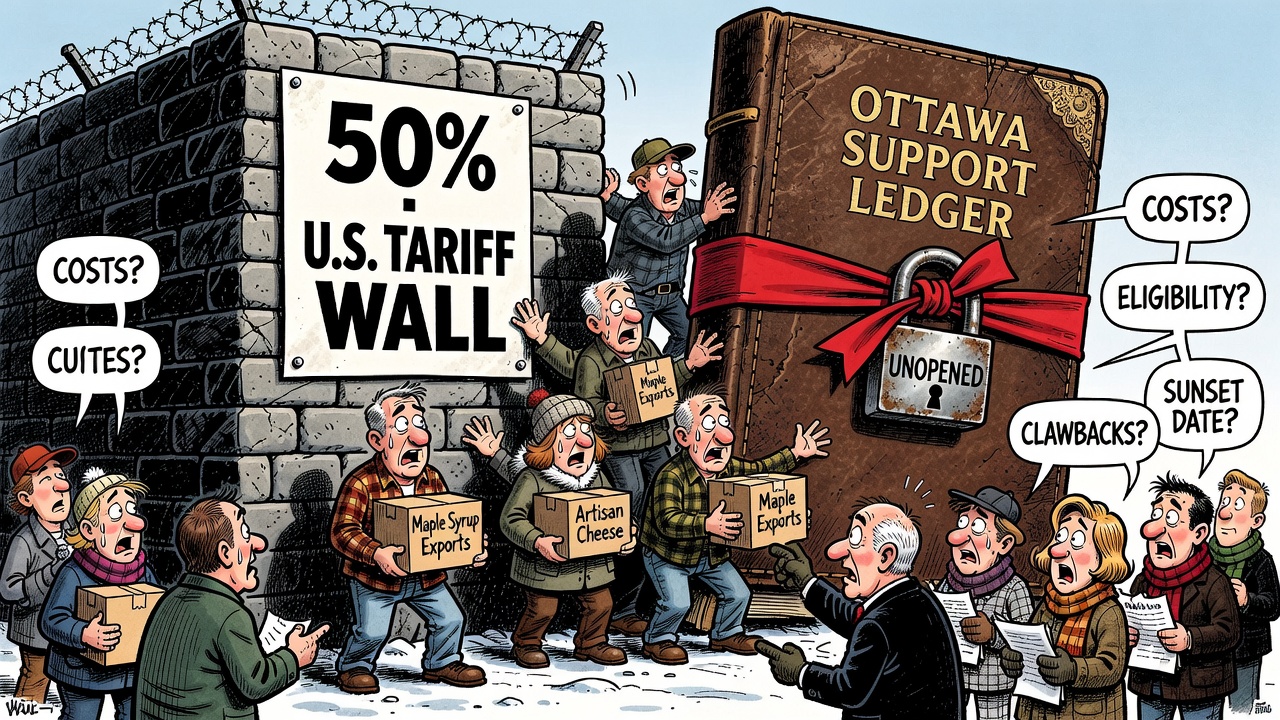
Canadian businesses are now past the podium phase of the Canada-U.S. trade fight. The tariff shock is landing on invoices, orders, margins and payroll decisions. That is exactly when Ottawa’s next instinct becomes dangerous: promise emergency support first, then disclose the details later.
Global News reported Sunday that Canadian companies are bracing for the 50% U.S. tariffs that came into force after negotiations failed. The business reaction is not abstract. Global cited the Canadian Federation of Independent Business saying 40% of small exporters sell products included on the tariff list, and that one-third of those firms expect sales to fall by 50% or more.
No serious conservative should minimize that damage. Tariffs are taxes by another name, and small exporters did not ask to become collateral damage in a continental political fight. But compassion for affected workers and firms is not a blank cheque for another opaque subsidy pipeline.
The Prime Minister’s Office says Ottawa is preparing dollar-for-dollar counter-tariffs for the Tuesday after Labour Day, along with additional measures for affected workers and businesses. That means Canadians are looking at two bills at once: higher costs from retaliation and a support package whose price, rules and safeguards have not yet been published.
That is backwards. Before money flows, the Carney government should publish the support ledger: the total envelope, the expected deficit impact, eligibility criteria, application process, sector-by-sector exposure, riding-by-riding recipient totals, lobbying contacts, repayment rules, clawbacks for abuse, and a firm sunset date. If the aid is temporary, prove it in writing. If it is targeted, show the targeting. If it is meant to save jobs rather than pad balance sheets, tie it to payroll, investment and Canadian production commitments.
Ottawa also needs to separate legitimate relief from political favour-trading. Big firms with government-relations shops should not be able to crowd out smaller exporters that lack lobbyists. Companies that move work out of Canada, use aid for executive bonuses, or fail to document tariff-related losses should not receive open-ended taxpayer protection. Emergency programs require speed, but speed without guardrails is how bad policy becomes permanent spending.
The government can blame Washington for the tariff wall. It cannot blame Washington for refusing to publish its own aid rules. Canadians can support workers and still demand receipts. In fact, that is the only defensible way to support them.
Carney says Canada will defend its economy. Good. Start by defending taxpayers from secrecy. Publish the tariff-support ledger before emergency relief becomes another Liberal slush fund by habit.
- Global News: Canadian companies brace for U.S. tariffs
- Prime Minister of Canada: Readout of First Ministers’ meeting on Canada-U.S. trade
- Prime Minister of Canada: Statement on Canada-U.S. trade negotiations
This article does not defend U.S. tariffs. It argues that any Canadian relief program should be transparent, temporary, targeted and auditable before taxpayer dollars are committed.