Carney’s Gas-Tax Relief Becomes a September Cost Hike
Ottawa called the fuel-tax holiday affordability relief. On September 8, that relief is scheduled to disappear unless the government can show Canadians the cost ledger.
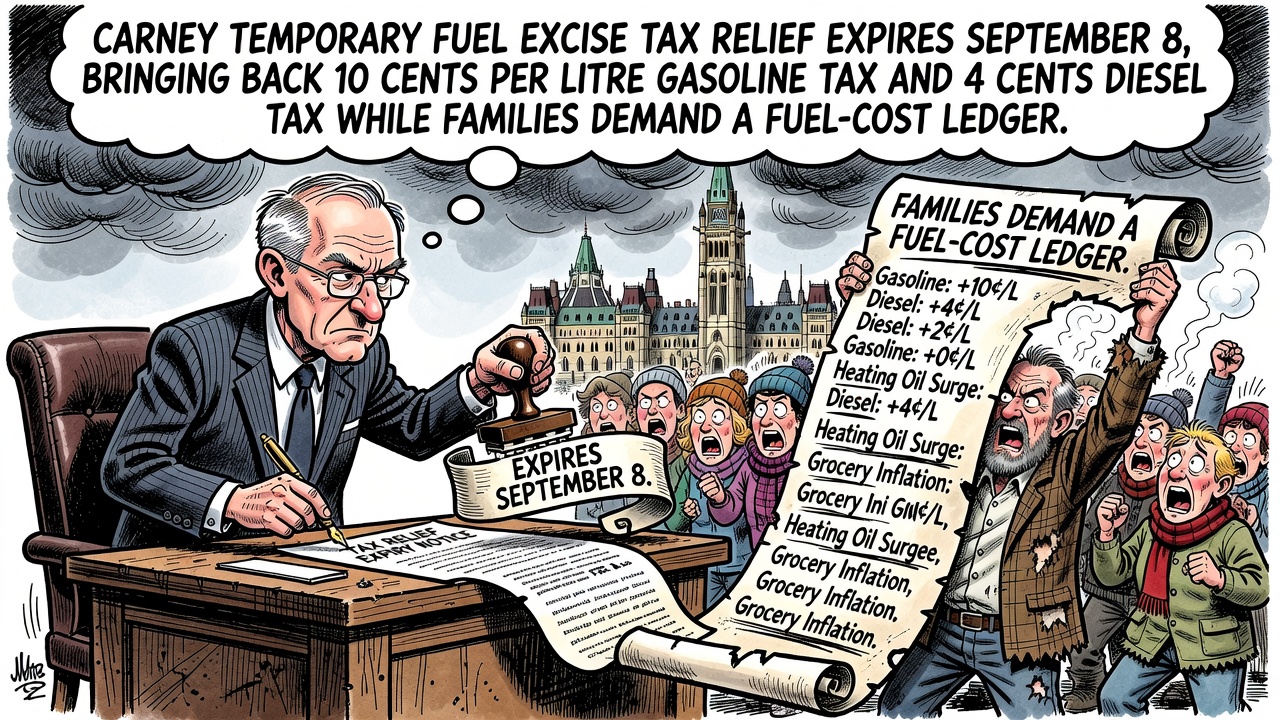
The Carney government’s temporary fuel-tax break has always had an expiry date. Finance Canada says the federal fuel excise tax was reduced to zero cents per litre from April 20 through Labour Day, September 7, 2026. On September 8, it returns to 10 cents per litre on gasoline and unleaded aviation gasoline, and 4 cents per litre on diesel fuel and aviation fuel.
That means a policy sold as cost-of-living relief now becomes a pocketbook test. If suspending the tax was worth more than $2.4 billion in relief, as Finance Canada estimated, then restoring it is not a rounding error for households. It is a deliberate decision to take back relief at the pump while families are still paying elevated grocery, housing, insurance and borrowing costs.
Ottawa’s own June release on Bill C-30 described the suspension as a measure to reduce everyday costs, cutting gasoline costs by 10 cents per litre and diesel by 4 cents. The government cannot have it both ways. If cutting the tax reduced everyday costs in April, bringing it back raises everyday costs in September.
The diesel piece matters because this is not only about commuters filling a minivan. Diesel powers trucks, farm equipment and parts of the supply chain that move food and goods to store shelves. A responsible government should publish its pass-through analysis before the tax returns: expected pump impact by province, trucking-cost exposure, farm-input exposure, grocery-price assumptions and the regional burden on rural Canadians who cannot simply switch to transit.
The Canadian Taxpayers Federation says a Leger poll it commissioned found 63 per cent of Canadians oppose the September fuel-tax increase, with 26 per cent supporting it and 11 per cent unsure. That poll does not settle tax policy by itself. But it does show Ottawa is moving toward a visible affordability hit without a persuasive public case.
Conservative accountability does not require pretending roads, defence and services are free. It requires making government prove the tax is necessary, efficient and honestly explained. If the Carney cabinet wants the revenue back, it should say how much it expects to collect, where every dollar will go, which spending will not be cut instead, and why drivers should pay more before Ottawa has published a serious spending-reduction plan.
The minimum standard is a fuel-cost ledger before September 8: revenue expected by fuel type, household impact by region, supply-chain pass-through estimates, rural and northern exposure, inflation assumptions, and a plain-language explanation of why temporary relief ends while tariff uncertainty and affordability pressure continue.
Carney called it relief when the tax went to zero. If he brings it back, Canadians deserve more than a quiet calendar flip. They deserve the receipt.
- Department of Finance Canada: Temporarily suspending the federal fuel excise tax
- Department of Finance Canada: Legislation passes to implement measures from the Spring Economic Update 2026
- Canadian Taxpayers Federation: Poll: Canadians oppose upcoming gas tax hike
- Rebel News: Canadians say no to gas tax hike as Carney's relief measure set to expire
This article argues for public fiscal and affordability disclosure before a scheduled tax return. Polling figures are attributed to the organization that commissioned and released them.