NATO Vetting Probe Needs a Committee Accountability Clock
A unanimous committee vote is only useful if it produces dates, witnesses and receipts.
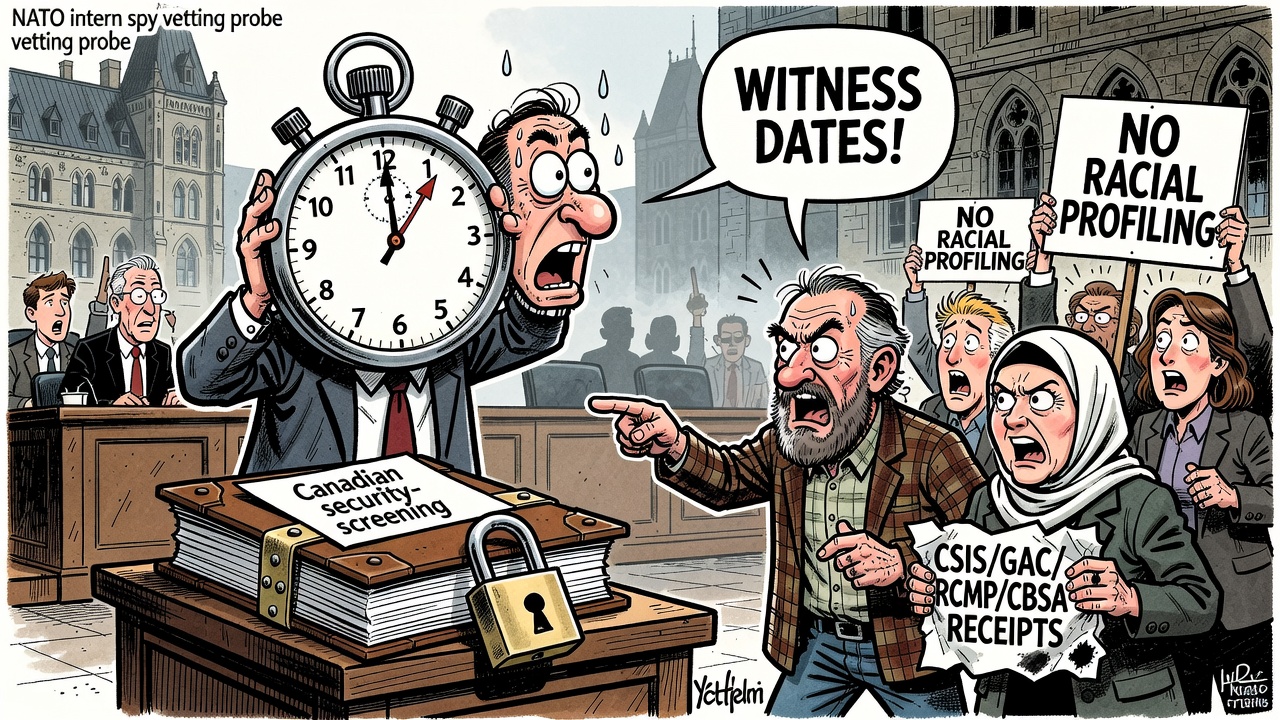
Parliament finally has an accountability clock on the NATO vetting scandal. National Post reports the House of Commons public safety committee voted unanimously Monday to investigate Canada’s security-screening process after Biwei “Claire” Zhang, a Canadian woman, was arrested in Belgium over alleged spying connected to an internship at NATO’s SHAPE headquarters.
That is the right start. It is not the finish. A committee probe can expose a failure, or it can become a holding pen where the government waits out the news cycle. Conservatives should demand the former: a public schedule, a serious witness list, document requests, and a deadline for recommendations before the fall sitting turns this into another “lessons learned” fog machine.
The facts reported so far justify real scrutiny. Belgian authorities announced on July 25 that a “Canadian national of Chinese origin” had been arrested on suspicion of spying for a third country while interning at NATO headquarters. National Post reports Zhang’s NATO internship clearance was approved by the Canadian government after CSIS vetting. It also reports that in 2023 she was found to have committed fraud by submitting two Canada Border Services Agency applications under slightly different names and taking the related job exam twice.
None of that proves guilt in the NATO allegation. Charges and accusations must be handled carefully. Nor should security screening become a lazy excuse for racial or ethnic profiling; the test has to be conduct, risk indicators, access level and verifiable evidence. But if a known application-fraud finding existed before a sensitive NATO posting, Canadians deserve to know how that information was weighed, who saw it, and why the final clearance decision was made.
The committee has reportedly agreed to hold at least three priority meetings, call Public Safety Minister Gary Anandasangaree, and report findings and recommendations to the House. Good. Now put dates beside each promise. Which meetings will hear from Public Safety, CSIS, Global Affairs Canada, the RCMP, CBSA, the Privy Council Office and NATO-program officials? Which records will be requested? Who approved the clearance? What safeguards protected allies after the arrest? What changes, if any, were ordered after July 25?
The government will cite national security. Some redactions will be legitimate. But “national security” cannot mean “no accountability.” Canadians do not need operational secrets; they need a redacted decision trail that explains the clearance standard, the adverse-information review, the escalation process, and the ministerial briefings.
The receipt test is simple: publish the committee calendar, witness list, document categories, redaction rules and reporting deadline. If Ottawa truly wants to get to the bottom of this, it should welcome a clock everyone can see.
This article argues for public oversight of security-screening processes. It does not presume guilt in the Belgian allegation and rejects racial or ethnic profiling as a substitute for evidence-based vetting.