Churchill Falls Victory Lap Needs a Federal-Financing Ledger
Ottawa is calling the Labrador power package historic. Fine. Then publish the federal terms before taxpayers are asked to applaud.
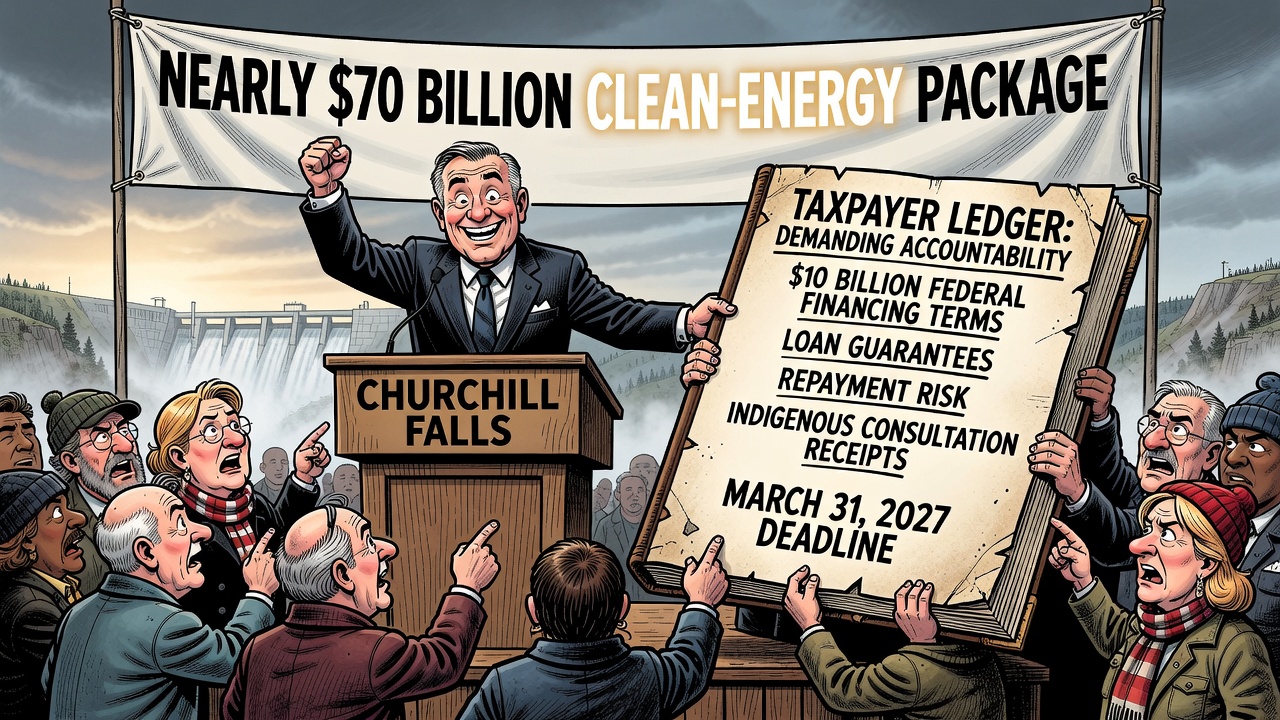
Prime Minister Mark Carney went to St. John’s on Monday with Newfoundland and Labrador Premier Tony Wakeham and Quebec Premier Christine Fréchette to celebrate a new Churchill Falls and Labrador electricity agreement. Ottawa says the package is worth nearly $70 billion and represents the largest clean-energy investment in North American history.
That may be true. It may also be a rare chance for Newfoundland and Labrador to escape a bad old resource bargain, secure better transmission access through Quebec, and build more power for homes, industry and exports. Conservatives should not oppose development because Liberals announced it. If Labrador can produce more reliable energy, more mining opportunity and more regional wealth, that is good news.
But a good project does not excuse a blank public ledger. CBC reports Ottawa will provide $10 billion in federal financing to upgrade and expand Churchill Falls, develop Gull Island hydro, build transmission lines and pursue a 2,000-megawatt Labrador wind project. CBC also reports a federal loan guarantee for Gull Island construction costs, plus smaller federal support for Labrador west transmission study work and Kami iron ore preconstruction and feasibility planning.
Those are not minor footnotes. Federal financing is taxpayer-backed risk. Loan guarantees can become public exposure if costs rise, markets change, approvals stall, or counterparties renegotiate. The new agreement is not fully final either: CBC reports it runs until March 31, 2027 unless definitive agreements are signed earlier or the parties change the date. That makes the receipts more urgent, not less.
Carney’s government wants Canadians to accept a familiar Liberal formula: big podium, giant number, green label, limited public detail. That is not accountability. If this is a nearly $70 billion nation-building investment, then Ottawa should publish the project-by-project federal exposure before the political marketing hardens into accepted fact.
The ledger should include the interest rate, maturity, repayment schedule, seniority and security behind the $10 billion in financing. It should separate Churchill Falls upgrades, Gull Island, transmission, wind and mining-related supports. It should disclose the maximum taxpayer liability under each loan guarantee, the triggers that would make Ottawa pay, and the federal due-diligence assumptions on construction cost, power price, demand, permitting, Indigenous partnership, environmental review and export access.
It should also show who benefits. What are the terms for Innu Nation participation in the wind project? What commitments protect Labrador communities from bearing construction disruption while distant customers receive the power? What happens if Quebec’s election changes the politics before definitive agreements are signed? What is the federal exit plan if the March 31, 2027 deadline slips?
Canadians do not need slogans about history. They need the amortization table, the guarantee cap, the risk register and the consultation record. If the deal is as strong as Ottawa says, the ledger will prove it.
- CBC News: N.L., Quebec announce new Churchill Falls agreement worth billions — with help from Ottawa
- CBC News: Carney says last-minute U.S. tariff negotiations are 'delicate' and 'intense' as deadline looms
This article supports energy development while arguing that federal financing, loan guarantees and unfinished definitive agreements require public disclosure. It does not allege wrongdoing by any government, utility or Indigenous partner.