Before DND Calls Job Cuts Savings, Publish the Cut-the-Cutters Ledger
If Ottawa is adding management capacity to plan defence job reductions, Canadians deserve net-savings and readiness-risk receipts before the cuts are booked as discipline.
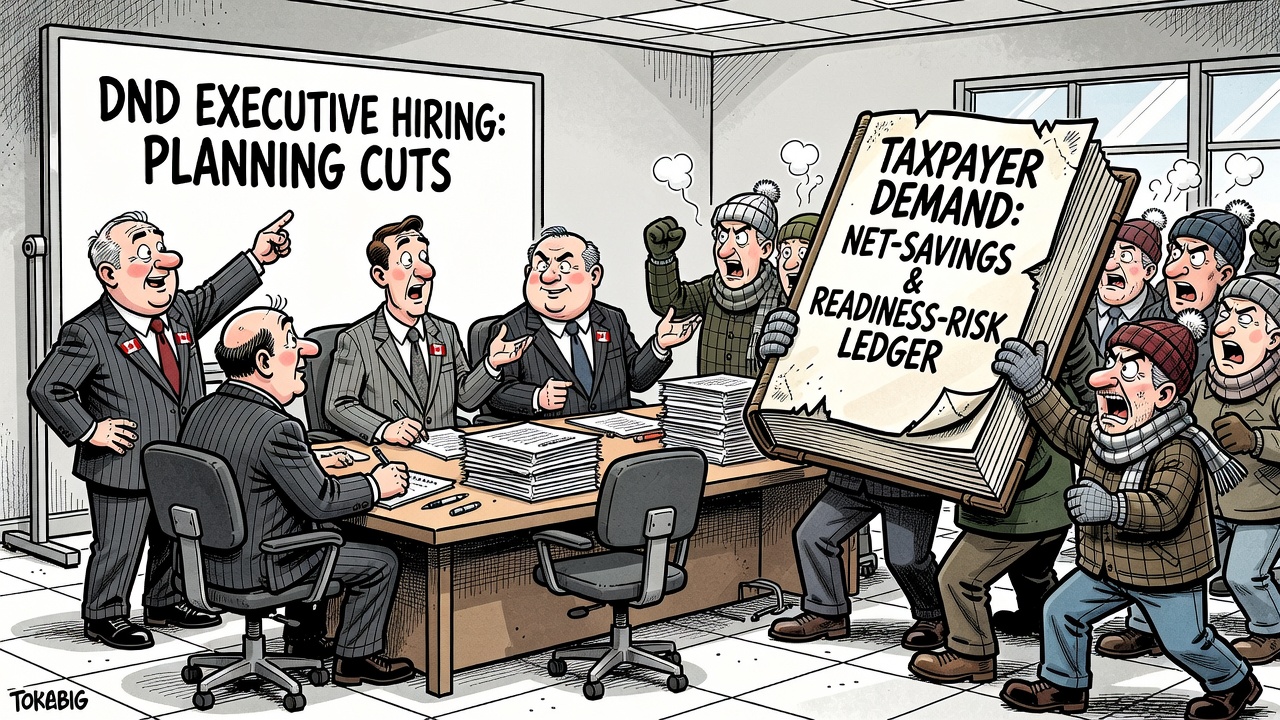
Canadians can understand the case for trimming bureaucracy. What they should not accept is a savings exercise that becomes another management layer with no public accounting. That is the problem raised by Ottawa Citizen/Defence Watch reporting that internal National Defence planning included hiring more executives to help figure out how to cut department jobs.
The issue is not whether every civilian position at the Department of National Defence is untouchable. It is whether Ottawa can prove the cuts save money after the machinery of cutting is paid for. New executives, consultants, severance, internal project teams, reclassification costs and delayed work can turn a headline reduction into a shell game. Before the Carney government books a dollar of savings, it should publish the cut-the-cutters ledger.
That ledger should start with the new management cost: how many executive positions, what classifications, what salary ranges, what bonuses, what office support and what term length. Then it should show the implementation cost: outside advice, legal fees, HR surge capacity, severance, relocation, retraining and software or contracting changes. Only after those numbers are visible should Ottawa claim a net saving.
Defence also has a readiness problem that ordinary departments do not. Canada is promising allies more military seriousness at the same time DND is looking for reductions. The department’s own 2026-27 planning documents describe a massive organization with military, civilian and procurement responsibilities. The Prime Minister’s Office has also promoted Canada’s move to NATO’s two-per-cent benchmark. Those promises make transparency more urgent, not less. A cut that slows procurement, maintenance, recruiting, cyber work, base operations or military family services is not a clean saving; it is a transferred risk.
A conservative accountability approach should be careful here. Civilian staffing can be excessive. DND administration can be slow. Taxpayers are entitled to demand discipline from a department that handles huge budgets and chronic procurement frustration. But discipline means receipts. It does not mean telling Canadians that savings exist while hiding the salary cost of the people hired to design the savings.
Parliament should require a public table with six columns: unit affected, positions eliminated, new management or consulting cost, one-time severance and transition cost, annual net saving, and readiness or service risk. Each line should name the accountable assistant deputy minister and set a date for follow-up reporting. If a cut has no readiness impact, say so and explain why. If it carries risk, tell Canadians what mitigation is funded and who signs off.
DND should not be allowed to bury the numbers in broad transformation language. If Ottawa is hiring cutters to cut jobs, the public deserves to know whether taxpayers are getting leaner government or simply paying a more expensive class of managers to announce fewer front-line and support workers.
The test is simple: no claimed savings without the net-savings ledger, and no defence cuts without the readiness-risk ledger.
- Ottawa Citizen / Defence Watch: DND planned to hire more executives to figure out how to slash department jobs
- Department of National Defence: 2026-27 Departmental Plan
- Prime Minister of Canada: Prime Minister Carney announces Canada has achieved the NATO 2% defence spending target
- Public Service Alliance of Canada: DND jobs cuts source check
This article relies on the morning candidate file and published source links. It argues for public ledgers before savings claims; it does not assert that every proposed DND reduction is improper.