Cabinet’s Late Ethics Filing Needs a Public Delay Ledger
If ethics paperwork is late, Canadians should see the timeline.
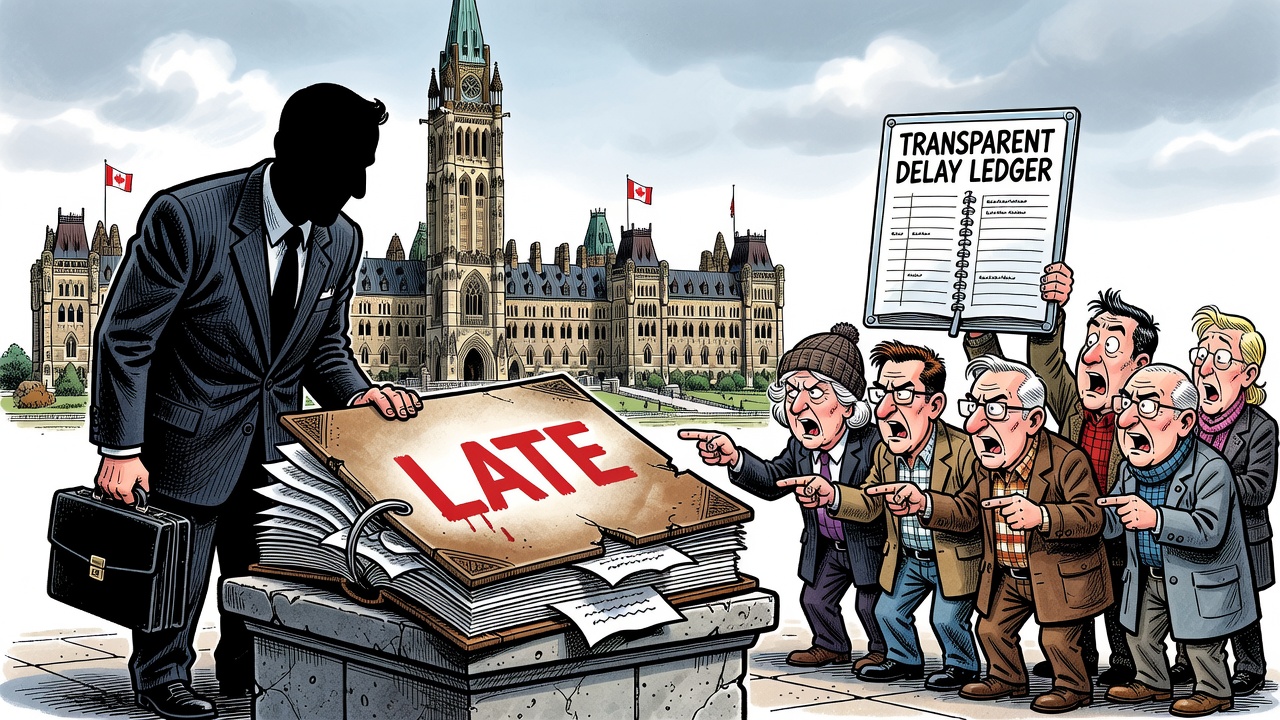
There is a simple rule for cabinet ethics: file on time, disclose what the law requires, and do not make citizens hunt for basic accountability records after reporters start asking questions.
Global News reported on April 22, 2026 that Indigenous Services Minister Mandy Gull-Masty was the only minister in Prime Minister Mark Carney’s cabinet whose conflict-of-interest disclosure was still missing from the public registry seven months after the deadline. The report said the Conflict of Interest Act requires ministers to complete signed statements covering assets, trusts, income streams and related interests no later than 120 days after appointment.
That is not a paperwork technicality. Cabinet ministers spend public money, shape regulations, make appointments and influence files that can affect private interests. The whole point of disclosure is to let Canadians see whether proper screens, recusals or divestment measures are in place before trust has to be demanded on faith.
The Ethics Commissioner’s office told Global that it is “not unusual” for initial compliance under the Act to take longer than 120 days, depending on the complexity of a file and the compliance measures required. It also said the commissioner generally does not issue an administrative monetary penalty for going beyond 120 days as long as the compliance process is progressing.
Fair enough: some files are complicated. But if the public deadline can slide quietly, then the public needs a delay ledger. Not personal financial details beyond what the registry already requires. Not private advice. A basic timeline: date appointed, statutory deadline, date the office received the confidential report, date further information was requested, date the minister responded, date public declarations were posted, and whether any penalty was waived or imposed.
The update matters too. The official registry now shows Gull-Masty disclosure entries dated April 23, 2026. So the defensible issue is not that the filing is still absent; it is that a cabinet disclosure apparently appeared only after a missing-disclosure story, while Canadians still have no easy explanation of why the public record was late.
Global also reported that 36 MPs had needed to submit further documentation, and that after questions were asked, 10 profiles were updated, leaving 26 parliamentarians still missing ethics documentation at that time. That is exactly why this cannot be treated as one minister’s embarrassment. It is a system transparency problem.
Conservatives should press the narrow point: publish a monthly compliance-status table for ministers, parliamentary secretaries and MPs. If a deadline is missed, show the non-confidential reason category and the enforcement decision. Ethics rules work best when they are visible before a scandal, not explained after one.
- Global News: Carney’s cabinet have their conflict of interest forms public, except one — April 22, 2026
- Office of the Conflict of Interest and Ethics Commissioner: Search the Public Registry
- Justice Laws Website: Conflict of Interest Act
This article argues for disclosure timelines and public administrative records. It does not allege a substantive conflict-of-interest breach by Minister Gull-Masty.