The Foreign Influence Registry Is Live. Now Publish the Receipts.
Canada finally has a foreign influence registry. The next test is whether the Carney government turns it into a real public accountability tool or another delayed database.
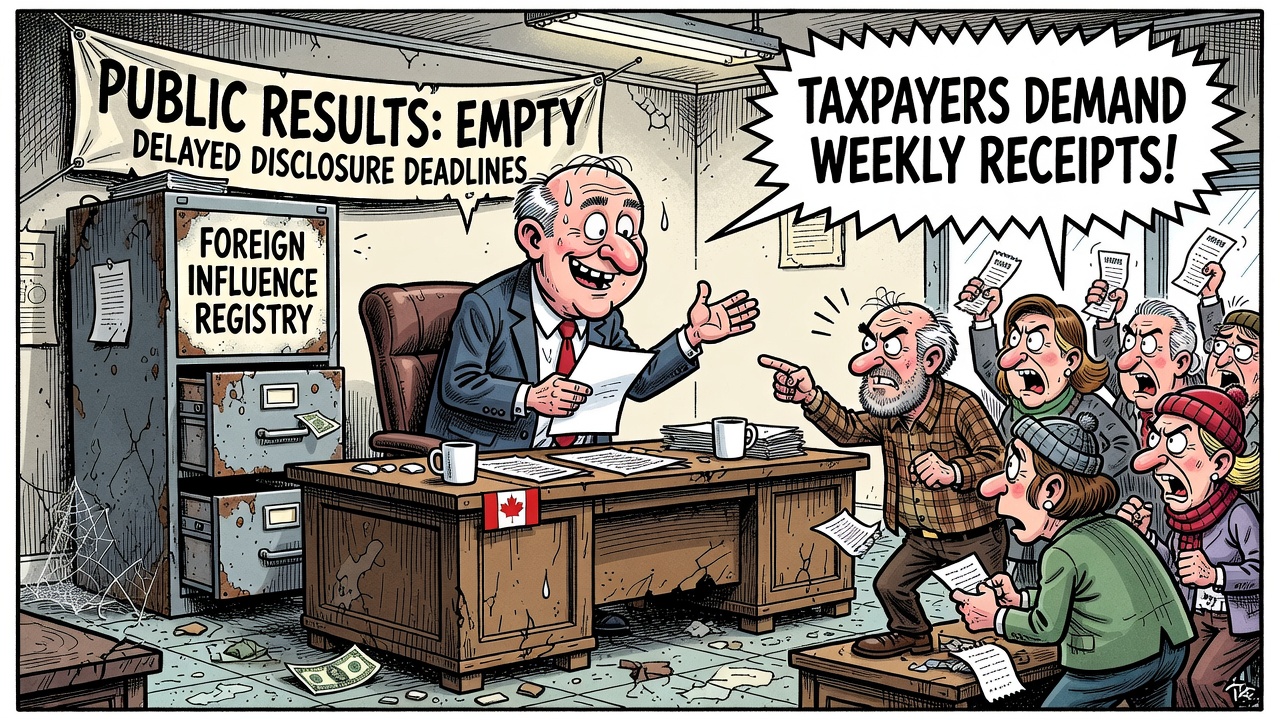
The federal foreign influence registry is finally live. The official registry page says registration started on August 4, 2026, and that information will be published only after it is reviewed and validated. That is a start. It is not yet a receipt.
As of this morning’s candidate check, the public-facing search showed no displayed registrants. The site itself warns that the registry may appear empty until information has been received, reviewed and validated. That may be administratively defensible in week one, but politically it is exactly why Parliament should not treat launch day as victory day. A registry that exists in law but tells Canadians nothing in practice is still a black box.
The timeline matters. The government’s compliance page says people covered by the regime generally must register within 14 days of entering an arrangement with a foreign principal. But arrangements that already existed before August 4 have until October 3, 2026 to register. In other words, the most interesting early material may sit behind a transition window for nearly two months.
Foreign interference has been one of the defining national-security failures of the Liberal decade. Canadians were told, repeatedly, that institutions were alert, processes were serious and the problem was being handled. Then came inquiry testimony, diaspora warnings, party-nomination concerns, CSIS alarm bells and years of pressure before Ottawa produced a working public registry.
Global News reported in June that Canada still did not have an operational registry six months after draft rules were published, while civil-society and diaspora groups continued pressing the Carney government to finish the job. Now that the registry has opened, the question changes: will Ottawa publish meaningful weekly numbers, or will Canadians have to wait until validated names trickle out with no context?
A conservative accountability standard is simple: transparency should not depend on government press releases. The commissioner should publish a weekly dashboard showing the number of registrations submitted, validated, rejected, corrected and under review; the number of compliance inquiries opened; the range of foreign principals by country or category where lawful; average validation time; and any penalties or warning letters issued. Sensitive personal or security details can be protected. Aggregate receipts cannot be.
The penalties on paper are serious, ranging from administrative monetary penalties to potential consequences for false or misleading information. But penalties matter only if the public can see enforcement activity and Parliament can test whether the office has enough staff, legal authority and urgency.
Ottawa should not ask Canadians to celebrate an empty search page. The registry is live. Now publish the receipts — weekly, publicly and before the October 3 transition deadline buries the first real test in bureaucratic fog.
- Foreign Influence Transparency Commissioner: Foreign Influence Transparency Registry — public registry page
- Foreign Influence Transparency Commissioner: Registration and compliance requirements
- Canada Gazette: Foreign Influence Transparency and Accountability Regulations
- Global News: Canada still doesn’t have a foreign influence registry — June 18, 2026
This article relies on official registry pages, published regulations and mainstream reporting. It does not allege unlawful conduct by any registrant or foreign principal; it argues for public aggregate accountability as the new system begins.