Before Five More Senate Seats, Publish the Patronage Firewall
Carney says partisan experience can strengthen the Senate. Canadians are saying something else: prove the process is not becoming a friends-and-insiders pipeline.
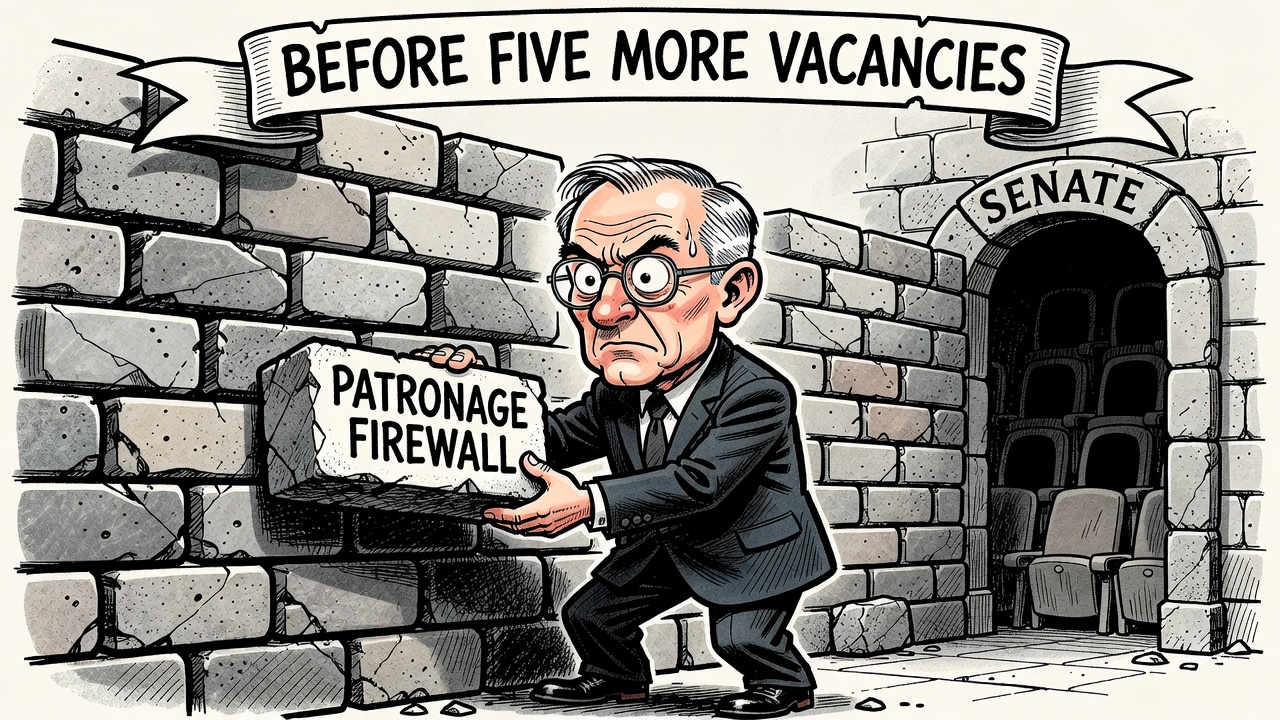
Prime Minister Mark Carney’s July 7 Senate announcement was not just a personnel shuffle. It changed the rules. The Prime Minister’s Office said the government was removing the non-partisanship criterion for Senate appointments, then named four senators: Richard Martel, Rodney Ouellette, Thomas Pitfield and Geeta Tucker.
That deserves scrutiny before the next round, not after it. The same PMO release said five more Senate vacancies were anticipated before the end of 2026 and that a new Independent Advisory Board would be established. But the board’s recommendations remain non-binding, and the ultimate appointment advice still runs through the prime minister.
The political optics are obvious. Canadian Press, published by Global News, reported that Pitfield was Carney’s principal secretary and a longtime Liberal strategist. Martel was a sitting Conservative MP. Carney’s defenders can argue that political and legislative experience is useful in an upper chamber that reviews bills. Fair enough. But experience is not the same as entitlement, and a lifetime appointment should not look like a reward system for insiders, allies, defectors or convenient symbols of bipartisanship.
The public seems to understand that risk. Abacus Data polling published July 27 found 56% of Canadians believe Senate candidates should continue to be selected through the independent advisory board. The largest group, 34%, wanted the advisory-board process while excluding people with strong party ties. Only 8% preferred direct prime-ministerial appointments without an advisory board.
That is the accountability hook. If Carney wants Canadians to accept a looser partisan screen, he should tighten every other screen. Before any of the five anticipated vacancies are filled, Ottawa should publish the advisory board’s mandate, selection criteria, conflict-of-interest process, lobbying and contracting checks, and the disclosure rules for partisan, family, PMO, donor and campaign relationships.
No one is asking for private personnel files to be dumped online. Canadians are asking for enough public information to test whether the process is independent in practice or merely independent in branding. For each appointment, the government should publish a written explanation: why this person, why this province, what expertise, what conflicts were reviewed, what partisan ties exist, and how the advisory board was used.
Conservatives should be consistent here. Patronage is not cleaner because one appointment comes from the other party. It is not cleaner because a government calls it modernization. The Senate already suffers from a democratic deficit; making the appointment pipeline look more political will only deepen public distrust.
Carney has five more chances this year to prove these appointments are about institutional strength rather than insider management. Publish the Senate patronage firewall before the seats are filled. If the firewall is real, the receipts should be easy.
- Prime Minister of Canada: Prime Minister Carney modernises Senate appointment process
- Global News / Canadian Press: Carney puts a key advisor and a Conservative MP in the Senate
- Abacus Data: Carney’s Senate Appointment Changes May Create More Political Risk Than Reward
- Routine Proceedings: The most cynical Senate appointments
This article argues for stronger public process safeguards around Senate appointments. It does not allege unlawful conduct by any named appointee.