Before August 19, Publish Carney’s Tariff-Concession Ledger
If Ottawa is preparing to trade Canadian leverage for tariff relief, Canadians deserve to see what is on the table before the deadline hits.
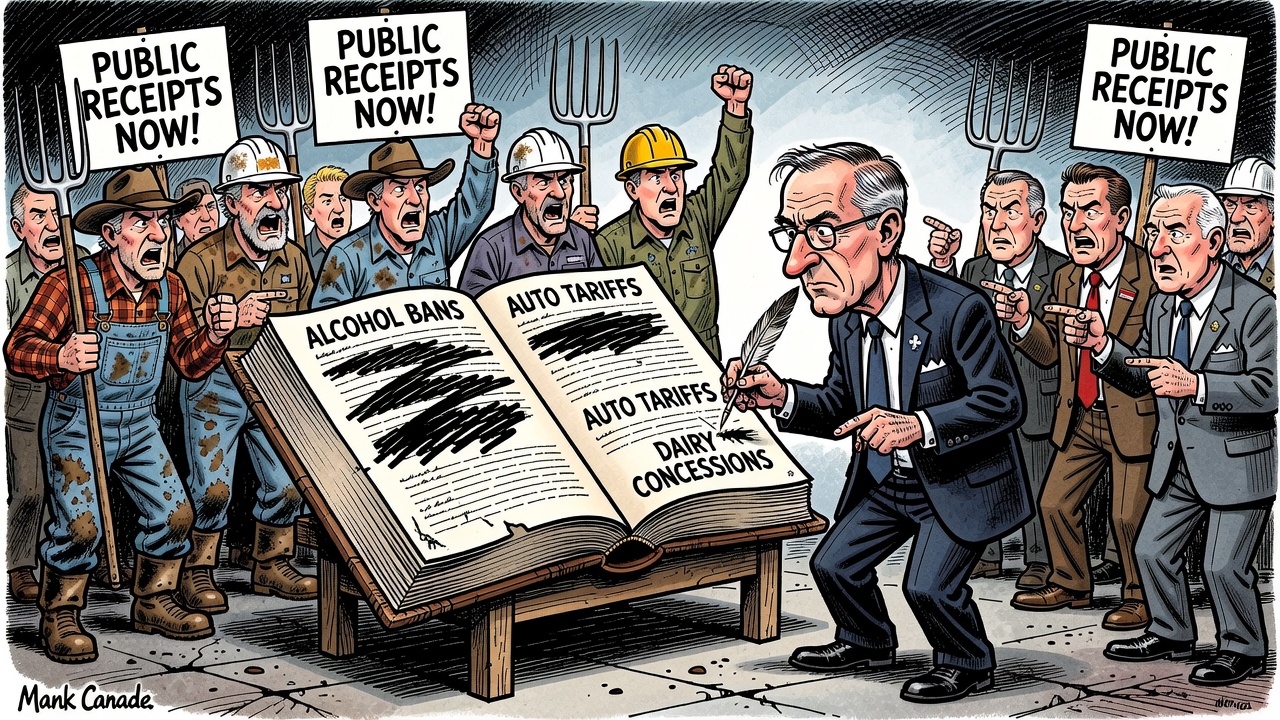
CBC reported on August 7 that the Carney government is prepared to meet some U.S. demands, including ending bans on American alcohol sales, in exchange for tariff relief. CBC attributed the details to industry sources with knowledge of the negotiations and said the possible Canadian moves could also include lifting retaliatory tariffs on U.S. autos and making unspecified changes on dairy.
That is not a small housekeeping update. Alcohol retaliation touches provincial decisions. Auto tariffs touch workers and supply chains. Dairy touches farmers, quota rules and a sector Ottawa has repeatedly promised to defend. If those files are now bargaining chips, the public should not be left piecing together the offer from anonymous-source reporting after the fact.
The pressure is real. Prime Minister Mark Carney said on July 20 that the United States had announced an intention to impose a new 50% tariff on a significant number of Canadian goods, and he said Canada had made “detailed and comprehensive proposals” to resolve the dispute and modernize CUSMA. Global Affairs Canada said Dominic LeBlanc and chief negotiator Janice Charette briefed provincial and territorial trade ministers on August 6 as talks intensified before the August 19 deadline, including efforts to secure relief from existing sectoral tariffs and new Section 338 tariffs.
Here is the accountability problem: Canadians still do not know what those “detailed and comprehensive proposals” contain. CBC reported that LeBlanc’s office would not comment on specifics when asked what Canada is seeking and what is being offered. Confidential negotiating tactics are one thing; a blank cheque on dairy, autos, alcohol and provincial retaliation is another.
A conservative trade policy should start with leverage, parliamentary scrutiny and clear wins for Canadian workers and producers. It should not ask farmers, factory towns and premiers to trust that Ottawa’s private ledger protects them. If a concession is necessary, the government should be able to explain who authorized it, which provinces were consulted, what Canada gets in return, and whether the United States is committing to enforceable relief or only another round of temporary political promises.
Before August 19, Parliament should demand a tariff-concession ledger. It does not need to publish every tactical line of the negotiation. But it should publish the categories of U.S. demands, the Canadian counter-offers, the sectors affected, the provincial consultation record, the expected tariff relief, the enforcement mechanism and the compensation plan for any Canadian industry asked to absorb the cost.
Carney promised competence. Competence is not secrecy with better vocabulary. If Ottawa is bargaining away retaliation measures and sector protections, Canadians deserve receipts before the deal is announced — not excuses after the damage is done.
- CBC News: Canada prepared to halt booze bans, meet other U.S. demands in exchange for tariff relief: sources — August 7, 2026
- Global Affairs Canada: Minister LeBlanc and Canada’s Chief Negotiator update provincial and territorial Trade Ministers — August 6, 2026
- Prime Minister of Canada: Statement by Prime Minister Carney on the United States administration’s intention to impose new tariffs — July 20, 2026
This article relies on published reporting and official statements. It does not claim the reported concessions have been finalized; it argues that any concession categories affecting Canadian sectors should be disclosed in a defensible public accountability ledger.