Bishnoi Gang Leak Means Ottawa Must Publish the Visa and Trucking Ledger
The leak named the network. Ottawa should publish the redacted ledger showing how visas, trucking links and removals are being handled now.
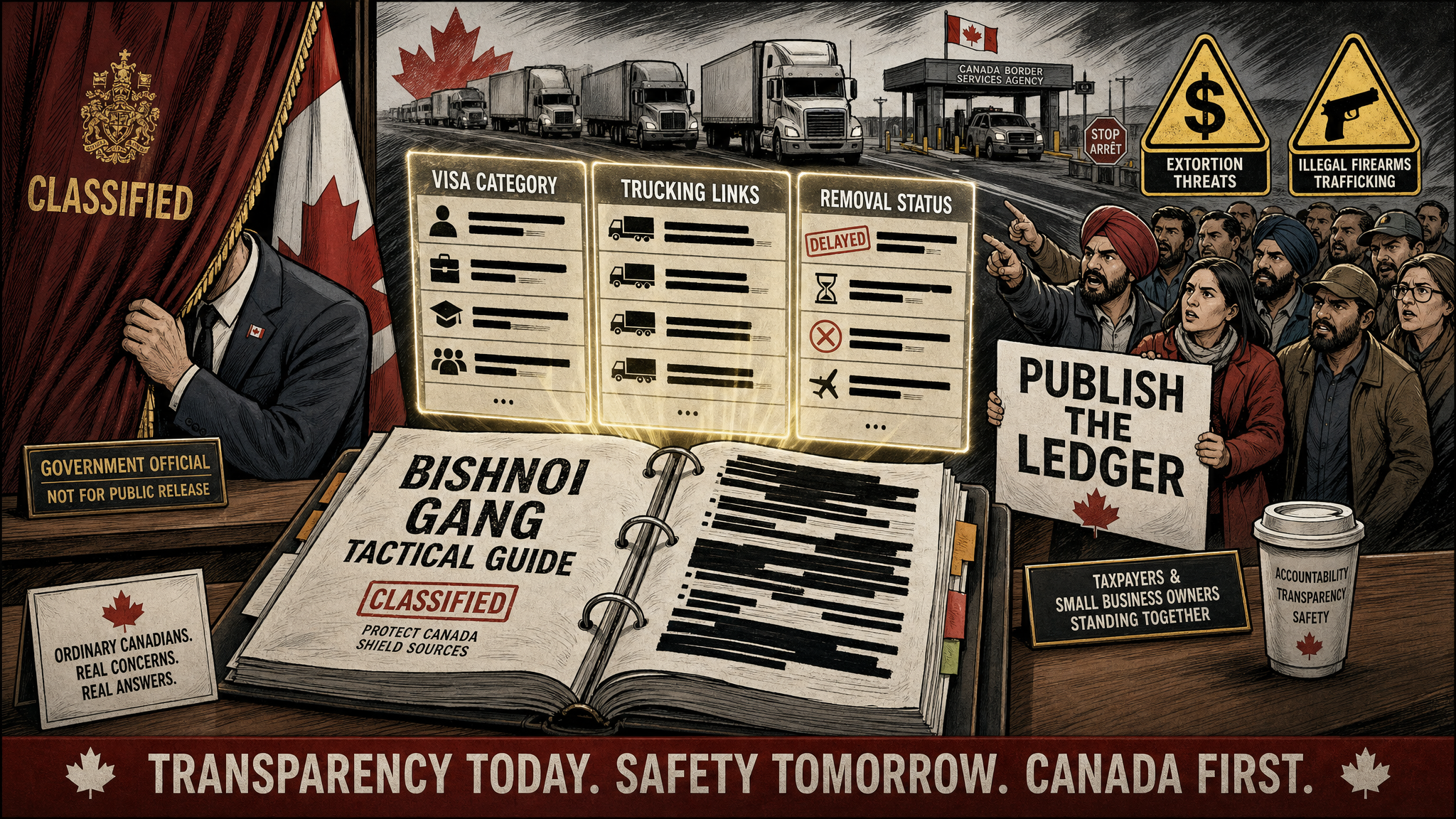
Global News reported on August 6 that a classified December 2025 CBSA Tactical Guide names key members of the Lawrence Bishnoi gang and describes its “growing operational presence in Canada,” access to large funds and a broad recruit network. That is exactly the kind of threat picture Canadians should not have to learn only through leaks and court records.
The details are not minor. Global reported the CBSA guide identifies Goldy Brar as the gang’s top North American lieutenant, Harry Boxer as accused in multiple Canadian extortions, and Goldy Dhillon as an alleged subcontractor. The report says leaders rely on local young males of Indian origin acting as independent contractors, and on alliances with other gangs, to organize attacks and extortions in Canada.
One disclosure should ring alarm bells from Ottawa to every provincial transport ministry: Global says the CBSA guide flagged suspected ties to the commercial motor vehicle sector, including the possible movement of associates and contraband, including firearms, across provinces. If organized crime is exploiting trucking channels, the public deserves a clear account of what enforcement checks changed after the guide was circulated.
A companion Global investigation reported that the CBSA guide described “demonstrated use of Canada’s immigration programs for criminal purposes,” including participants on study and work permits. The same story noted an important limit: those charged were a small share of the overall Indian-student population. That distinction matters. This is not a case against immigrants or students; it is a case against weak screening, poor follow-through and official secrecy when a violent network allegedly exploits legal pathways.
CBSA’s own public numbers show why a ledger is needed. On June 25, the agency said enhanced tracking of extortion-linked immigration-enforcement cases had produced 484 investigations, 139 removal orders and 81 removals as of June 18, across the Pacific, Prairie and Greater Toronto Area regions. Those figures are useful, but they do not reconcile the new intelligence picture with visa categories, screening flags, trucking indicators, detention decisions, hearing timelines, removals, appeals or re-entry controls.
Prime Minister Mark Carney’s government cannot hide behind the word “classified” for everything. Operational details can be protected while aggregate accountability is published. Parliament should demand a redacted Bishnoi ledger: visa category at entry, permit status when identified, police or CBSA referral date, commercial-vehicle links, firearms or contraband indicators, detention and removal status, re-entry controls, and what IRCC and CBSA changed after the December 2025 guide.
Communities facing extortion deserve more than reassurance. Law-abiding newcomers deserve protection from gang recruitment and suspicion by association. Taxpayers deserve proof that Ottawa learned from the file before more permits, trucks and court dockets become after-the-fact evidence of a preventable failure.
- Global News: EXCLUSIVE: Key members of India’s Bishnoi gang named in Canadian intelligence report — August 6, 2026
- Global News: EXCLUSIVE: Classified report reveals how India’s Bishnoi gang uses Canada’s student visa program — August 6, 2026
- Canada Border Services Agency: CBSA provides update on enforcement actions targeting extortion across Canada — June 25, 2026
This article relies on published reporting and official aggregate enforcement figures. It does not allege criminal conduct beyond what cited sources report, and it argues for transparent aggregate reporting while protecting due process, privacy and operational security.