Toronto’s $2.7B Housing Package Needs a Public Ledger
Announcing 5,600 rentals is easy. Publish the 18-project ledger: recipients, loan terms, affordability periods, milestones and audit triggers.
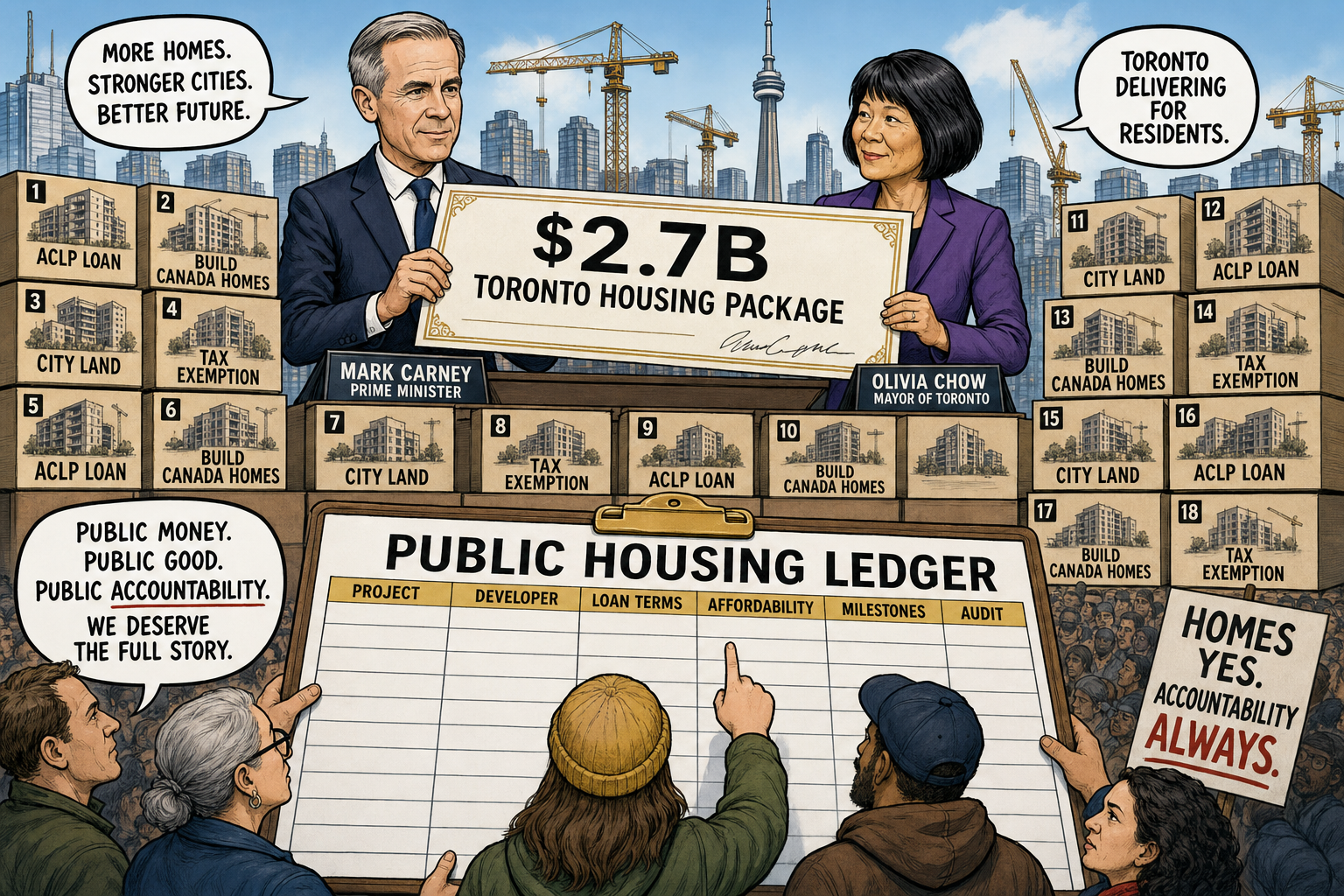
Prime Minister Mark Carney and Toronto Mayor Olivia Chow have announced a major housing package. The federal release says Ottawa and the city will move more than $2.7 billion over three years to unlock 18 Toronto rental projects, delivering more than 5,600 new rental homes, with construction expected to begin on more than 4,500 homes before the end of 2026.
That is the promise. The accountability question is simpler: where is the public ledger?
The backgrounder divides the package into two channels. Build Canada Homes would provide more than $310 million for nine projects on City-owned land, producing 1,885 rental homes, including 739 affordable or supportive units. CMHC’s Apartment Construction Loan Program would provide more than $1.8 billion in low-cost financing for nine purpose-built rental projects, producing 3,720 rental homes, including 1,079 affordable units. Ottawa also says up to $600 million in additional ACLP financing could be available for future Toronto projects that meet program requirements.
Those details are useful, but not enough. The public has project names and unit counts. It still needs the money trail: final recipients, developers, loan amounts, interest terms, repayment schedules, land valuations, city incentives, property-tax exemptions, affordability definitions, affordability periods, replacement-unit protections, conflict screens and due-diligence status.
That matters because this is not one simple grant. It mixes federal funding, federal financing, city-owned land, city capital dollars and financial incentives. The Prime Minister’s release says Toronto will contribute public land at nominal value and more than $530 million in capital funding and incentives, including up to 99-year exemptions from municipal and school property taxes for the Build Canada Homes stream. If that is good public policy, the paper trail should prove it.
Conservatives should not sneer at rental construction. Toronto needs homes. Supportive housing, Indigenous-led housing, rent-geared-to-income units and purpose-built rentals can be legitimate public priorities. But urgency is not a substitute for controls, and housing need is not a blank cheque.
The federal backgrounder itself says Build Canada Homes investments remain subject to satisfactory due diligence, program requirements and final agreements. It also says ACLP financing remains subject to underwriting, credit approval, program requirements and loan agreements. Good. Then publish a status column for every project, updated monthly, showing which tests have been passed, which conditions remain open and when taxpayers can expect construction, occupancy and affordability audits.
The receipt test is not complicated. For all 18 projects, Ottawa and Toronto should post one table showing the project, site, owner, developer or operator, total units, affordable units, federal contribution, loan terms, city contribution, land value, tax exemption value, affordability length, construction milestone, completion target and audit trigger.
Carney and Chow have made a big announcement. Now they owe Canadians the ledger that proves whether this is disciplined housing delivery or another podium-first spending package.
- Prime Minister of Canada: Government of Canada and City of Toronto to build thousands of new rental homes
- Housing, Infrastructure and Communities Canada: Backgrounder: Canada and Toronto announce new partnership to build thousands of new homes
This article argues for proactive disclosure, value-for-money controls and project-level auditability. It does not allege illegal conduct; the concern is whether taxpayers can verify the terms, milestones and affordability results.