Carney’s Equalization Freeze Needs a 2029 Reform Ledger
If Ottawa plans to keep the equalization formula untouched until the next renewal, Canadians deserve the assumptions, options and province-by-province receipts now.
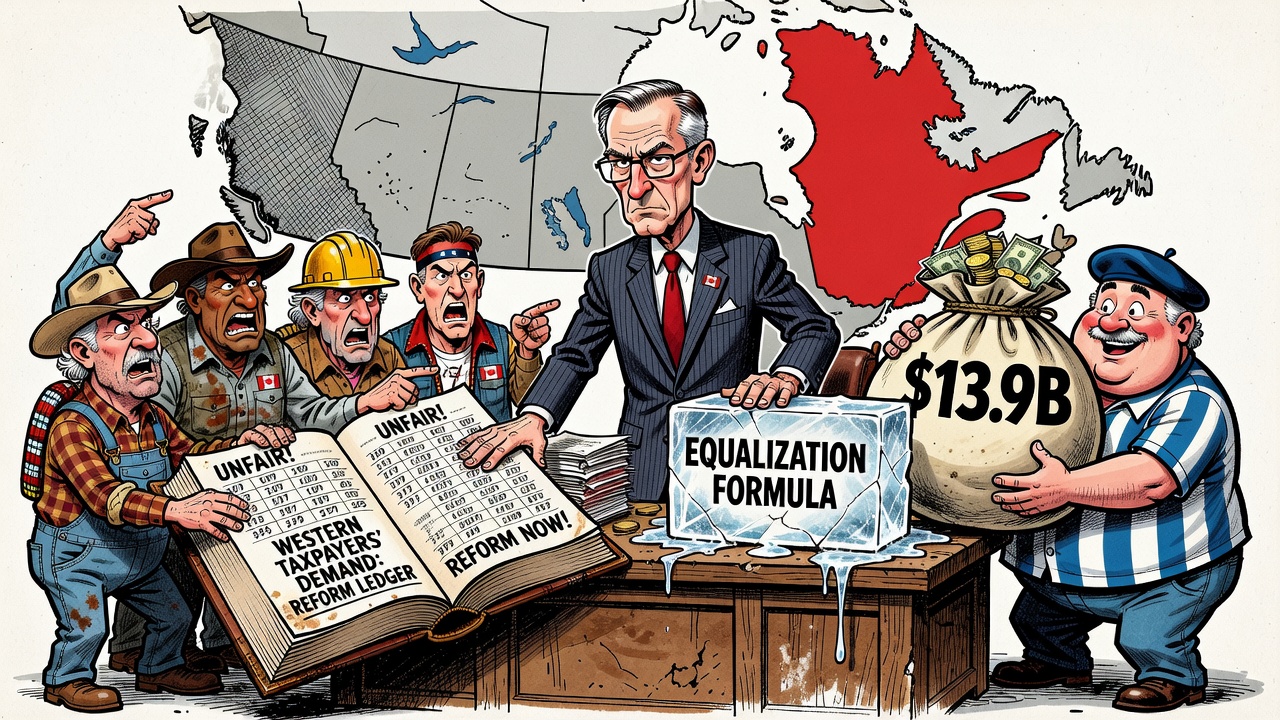
Prime Minister Mark Carney’s latest equalization answer should be treated as a receipt test, not a regional shouting match. Juno News reported Thursday that Carney was asked whether he supported changes proposed by Alberta Premier Danielle Smith, including removing the formula’s automatic GDP escalator. His answer was that Ottawa has an agreement in place, governments rely on the formulas, and the federal government is “going to keep it in place.” He added that the next review is in 2029.
That matters because Finance Canada’s own tables show the scale. In 2026-27, the total Equalization envelope is listed at $27.160 billion. Quebec is listed for $13.907 billion. Alberta, Saskatchewan and British Columbia are listed at zero. Ontario receives $406 million, Manitoba $5.044 billion, New Brunswick $3.360 billion, Nova Scotia $3.538 billion, P.E.I. $723 million and Newfoundland and Labrador $182 million.
None of that means equalization is unconstitutional or that poorer provinces should be abandoned. The Constitution commits Parliament and Ottawa to ensuring provincial governments can provide reasonably comparable public services at reasonably comparable taxation levels. The program is funded from federal general revenues, payments are unconditional, and Finance Canada says the formula is based on fiscal capacity rather than each province’s spending choices.
But fiscal federalism is not supposed to be a black box. Finance Canada also says the overall Equalization envelope grows in line with the economy, using a three-year moving average of national nominal GDP growth. That is precisely why the GDP escalator is a legitimate public-policy question. If the envelope grows automatically while some provinces receive nothing and others receive billions, taxpayers deserve to see the assumptions before being told to wait three more years.
The conservative accountability position should be simple: do not reduce this to anti-Quebec politics, and do not let Ottawa hide behind process. Publish the ledger. Canadians should see the province-by-province calculations, the GDP-escalator effect, the impact of natural-resource treatment, and the reform options submitted by premiers or federal officials. They should see which ministers were briefed, what fiscal risks were flagged, and why the government believes no change is needed before the renewal due before March 31, 2029.
Carney’s government likes the language of stability and predictability. Fine. Stability for provincial budgets should be matched by transparency for federal taxpayers. If Ottawa is confident the formula is fair, it should be able to defend the receipts in public. If it cannot, then keeping the formula frozen until 2029 is not responsible federalism. It is avoidance dressed up as certainty.
- Juno News: Carney again dodges equalization reform as Quebec prepares to collect $13.9B
- Juno News/X clip: Carney equalization question and response clip
- Finance Canada: Major federal transfers, including 2026-27 Equalization tables
- Finance Canada: Equalization Program overview and formula notes
This article argues for transparency and reform disclosure around equalization. It does not argue against the constitutional principle of comparable provincial public services.