Carney’s Fundraiser-to-Housing Firewall Needs Receipts
If no one bought influence, publishing the access ledger should be easy.
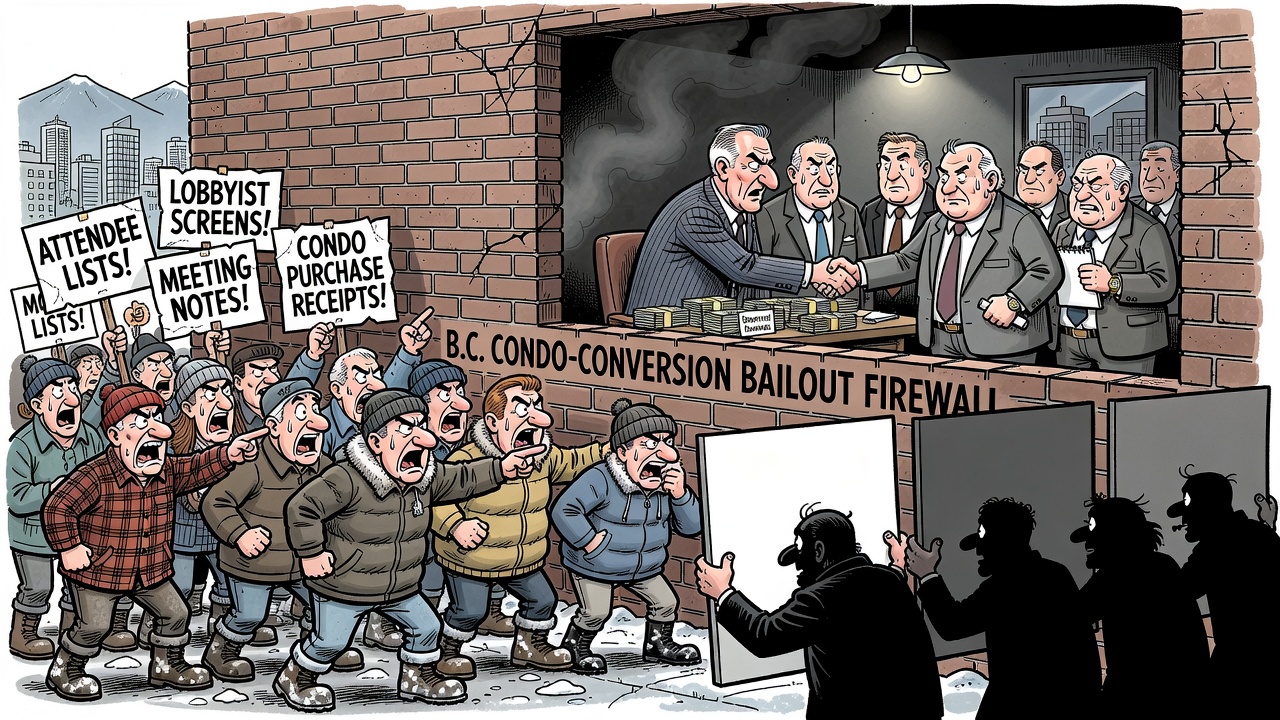
Closed-door political fundraising is not automatically corruption. But when a prime minister raises money in private, developers attend, and the same housing market later becomes the target of a taxpayer-backed condo-conversion plan, Canadians do not need slogans. They need a firewall they can inspect.
Canadian Press reported that Mark Carney attended a private-residence Liberal fundraiser in Vancouver on February 18, with tickets priced at $1,775 and media excluded. The report noted that shutting media out of Carney fundraisers was a shift from Justin Trudeau’s later practice of allowing reporters to observe opening remarks and see participants. Democracy Watch’s Duff Conacher warned that, without reporters in the room, there is “no way to double-check” claims about lobbyist exclusion.
That concern only grows when housing policy is in the background. The Bureau later reported on B.C. Housing records referring to a March “Rennie Meeting” briefing after Bob Rennie had hosted “An Evening with Mark Carney” in February. The Bureau also reported that Elections Canada filings listed 146 attendees paying up to $1,775, including at least 17 developers or condo marketers.
None of that proves a policy was bought. That is exactly why the paper trail matters. The public should not have to guess whether politically connected housing insiders received indirect access, whether lobbyist checks were meaningful, or whether officials screened conflicts before Ottawa and Victoria moved toward buying or financing unsold condo inventory.
The June federal announcement made the stakes concrete. Ottawa and British Columbia said Build Canada Homes and BC Housing would work on a condo-conversion partnership to convert more than 2,200 vacant units in priority growth areas into affordable homes. If taxpayers are stepping into a distressed condo market, every qualifying seller, project, appraisal, discount, financing term and conflict screen should be posted before public money moves.
The conservative accountability test is simple: publish one ledger that connects the fundraising firewall to the housing file. It should list the fundraiser date, ticket price, attendee names as required by law, registered-lobbyist screening, ministerial and staff meetings, travel-cost allocation, briefing notes, developer contacts, eligible condo inventory, purchase or financing criteria, recusals and final decision-makers.
Carney’s Liberals can say no developer asked for anything improper. Fine. Then prove the system was built to catch indirect access too. In a housing crisis, taxpayers should not be forced to trust a closed room, a donor list released after the fact and a condo plan whose unit-level terms remain hidden.
If the government wants credit for affordability, it can start with transparency. Publish the firewall ledger.
- CityNews / The Canadian Press: Carney returning to B.C.; closed fundraiser details and ethics criticism
- The Bureau: B.C. Housing records, Rennie meeting and fundraiser-attendee reporting
- Prime Minister of Canada: Canada-B.C. partnership on homebuilding and condo conversion
This article argues for disclosure and conflict-screening. It does not allege illegal conduct by any named official, donor, developer, broker or agency.