Emergency-Centre Cuts Need the Staffing Receipts
The wildfire-season staffing dispute is exactly why emergency readiness needs public receipts.
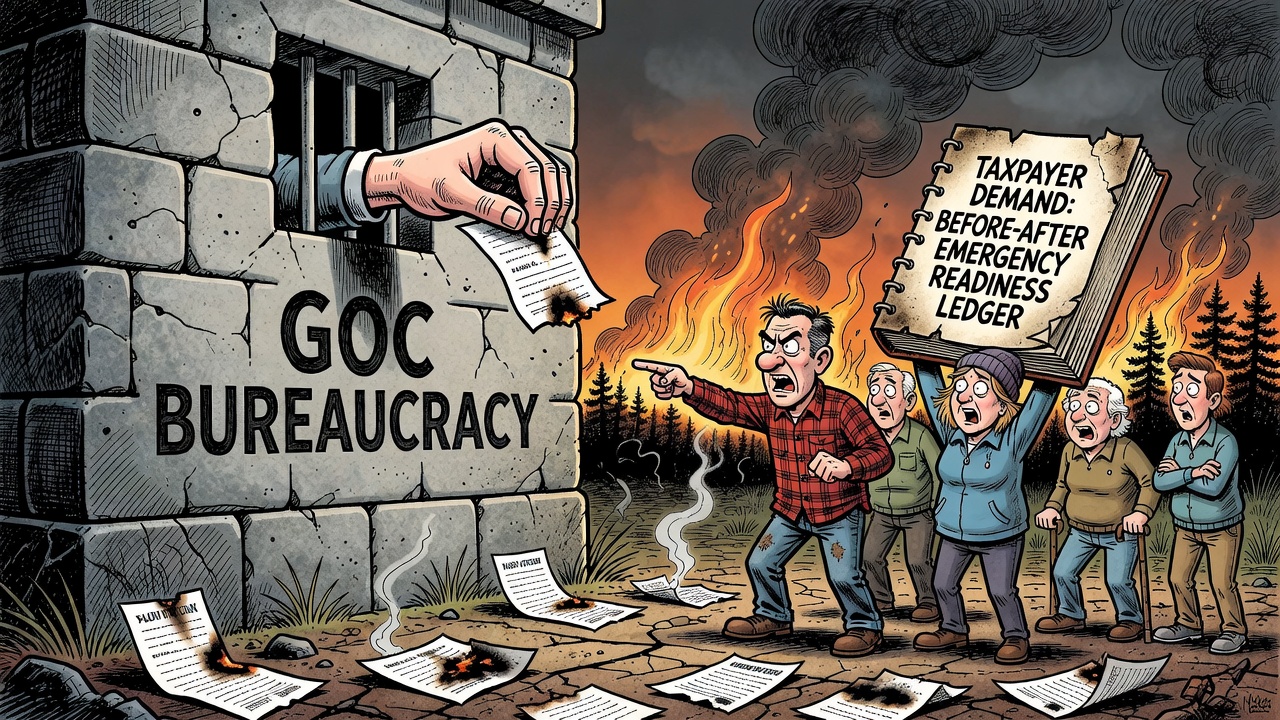
Canada is in another serious wildfire season, and the federal nerve centre for emergency coordination is now itself an accountability story. Public Safety Canada’s own Government Operations Centre page says the GOC supports preparedness and leads coordination of the integrated federal response to all-hazard events of national interest. It also says that, as of July 17, 2026, the GOC is activated at Level 3 for wildfire season.
That is why the staffing dispute reported by Global News should not be waved away as an inside-Ottawa labour fight. PSAC says about 60 GOC employees received workforce-adjustment letters in January, representing roughly half the workforce. The minister’s office says that is inaccurate and that the core workforce was reduced by only 10 employees, to 100, largely through back-office consolidation.
Both claims cannot be the full public picture. Canadians do not need duelling press lines. They need the before-and-after staffing table: total employees, core operational roles, watch officers, analysts, vacancies, surge staff, contractors, regional liaison capacity, bilingual coverage, overtime, training status and 24-hour shift coverage.
The government’s own departmental plan makes the tension obvious. Public Safety Canada lists emergency management as a core responsibility with planned spending of about $1.18 billion and 310 planned human resources. The same plan also says departmental reductions are expected to involve approximately 377 fewer full-time equivalents by 2028-29, and it warns that spending restraint sits beside pressure to respond to new threats, retain talent and protect service delivery.
There is nothing inherently wrong with finding efficiencies. Taxpayers should expect Ottawa to cut duplication, bloated administration and low-impact work. But emergency readiness is not a slogan category. If back-office consolidation genuinely left front-line coordination stronger, the government should prove it. If operational capacity was reduced during a wildfire season, Canadians deserve to know that before the next evacuation, flood, earthquake or cross-border smoke crisis.
The standard should be simple: no anonymous assurance should substitute for operational metrics. A government that can announce a modernized facility can also publish whether shifts are fully staffed, whether surge rosters are current, how many exercises were completed, and what risk rating officials assigned after the January letters went out.
Mark Carney’s Liberals keep promising disciplined government. Fine. Discipline means measuring the risk before cutting the staff, publishing the surge plan before disaster hits, and showing whether the centre responsible for national emergency coordination can actually sustain the workload it is assigned.
The question is not whether every job in Ottawa is permanent. The question is whether the people coordinating national emergencies have enough trained hands on deck. Publish the GOC staffing receipts.
- Global News: Ottawa halved federal emergency centre staff before wildfire season: union
- Public Safety Canada: Government Operations Centre response status
- Public Safety Canada: 2026 to 2027 Departmental Plan
This article treats the union and government staffing accounts as disputed claims and argues for a public readiness ledger before Canadians are asked to trust emergency-management cuts.