The WE Charity File Is Not Closed
The Supreme Court just cracked open the ethics-review firewall. Canadians should welcome the receipt test.
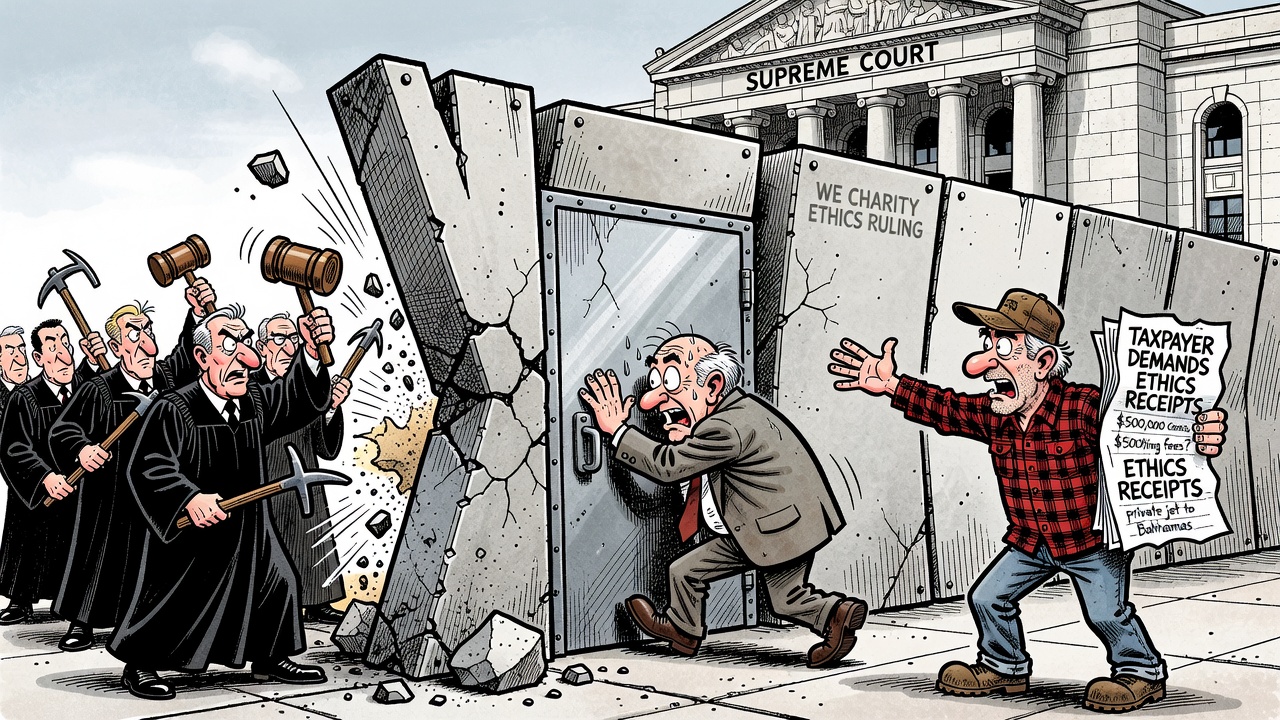
The WE Charity scandal was supposed to be safely filed away: one ethics commissioner report, one political explanation, and then a long Liberal effort to move on. The Supreme Court of Canada has now said something much more important than another round of partisan talking points: Parliament cannot simply wall off legality review when an ethics ruling may contain errors of fact or law.
On July 30, 2026, the Court allowed Democracy Watch’s appeal, set aside the Federal Court of Appeal order that had dismissed the judicial-review application, and sent the matter back to that court. It also declared section 66 of the Conflict of Interest Act of no force or effect to the extent it blocks judicial review on questions of fact and law.
That matters because Democracy Watch is challenging the 2021 ethics report that found Justin Trudeau did not contravene the Conflict of Interest Act when he participated in two decisions involving WE Charity. The Supreme Court did not rule that Trudeau broke the Act. Conservatives should be precise about that. The ruling is about whether the watchdog’s legal and factual conclusions can be tested in court.
The government’s position had been that section 66 sharply limited court review of the commissioner’s decisions. The SCC docket says the Attorney General argued Democracy Watch’s application was barred because the Act prevented review on questions of law and fact, leaving only narrow grounds such as jurisdiction, procedural fairness, fraud or perjured evidence. In practical terms, that would have made the commissioner’s conclusions extremely hard to challenge even where the issue was whether the law was applied correctly.
That is exactly the kind of firewall citizens should distrust. Ethics law is not supposed to become a trust-me exercise for insiders. When the file involves a former prime minister, a federal program, a charity with personal Trudeau-family connections, and a commissioner’s decision that cannot otherwise be changed, judicial review is not a technicality. It is the minimum safeguard against political self-sealing.
There is also a lesson for the current Liberal government. If Mark Carney’s Ottawa wants Canadians to believe its ethics screens, conflict rules and watchdog processes are serious, it should stop treating independent review as a threat. Publish the timelines. Publish the recusals. Publish the legal reasoning. And when courts say the public is entitled to legality review, do not spin that as nuisance litigation.
The WE Charity file is not closed. It is back where accountability belongs: in a forum where public power has to show its receipts.
- Supreme Court of Canada: Case information — Democracy Watch v. Attorney General of Canada, file 41576
- Supreme Court of Canada: Judgment — Democracy Watch v. Canada (Attorney General)
- Canadian Lawyer: Landmark SCC ruling says Parliament can’t use privative clauses to prevent judicial review
- CityNews / The Canadian Press: Background on the WE Charity ethics-ruling challenge
This article distinguishes the Supreme Court’s reviewability ruling from the still-unresolved merits of Democracy Watch’s challenge to the 2021 ethics finding.