Ottawa’s Crime Bills Need a Public Results Ledger
Crime severity fell in 2025. That does not let Ottawa declare victory, and it does not let Liberals pass sweeping criminal-law reforms without proving results.
Statistics Canada’s latest police-reported crime release should make every political slogan more careful. The national Crime Severity Index fell 5% in 2025, the second straight annual decrease after an upward trend that began in 2015. The conventional crime rate also declined 2%, while violent severity fell 4% and non-violent severity fell 5%.
That is good news. Conservatives should be honest enough to say so. But good news in a national index is not the same thing as proof that Ottawa’s justice agenda is working. It is also not a reason to ignore repeat offenders, extortion, car theft, retail violence, court delay, victims, or communities where the trend looks different.
The timing matters. Justice Canada says three major Criminal Code bills were passed in June 2026, including bail and sentencing reforms, victim-protection changes, and hate-crime measures. The department’s own release says most bail and sentencing reforms came into force on July 15, 2026. In other words, the 2025 crime decline happened before the central new bail-and-sentencing test began.
This is where Liberal communications become dangerous. If crime numbers fall, Ottawa will be tempted to take credit. If a terrible case happens, Ottawa will be tempted to demand more powers. Neither instinct is accountability. The only defensible standard is measurement: what changed, where, for whom, at what cost, and with what unintended consequences?
CityNews, carrying The Canadian Press, reported that the falling numbers raised questions about whether the tough-on-crime package had the evidentiary base its supporters claimed. Critics argued the laws were being sold through fear and police-podium politics. The government responded that the reforms strengthen the Criminal Code, support front lines, invest in prevention, and that the work is not done.
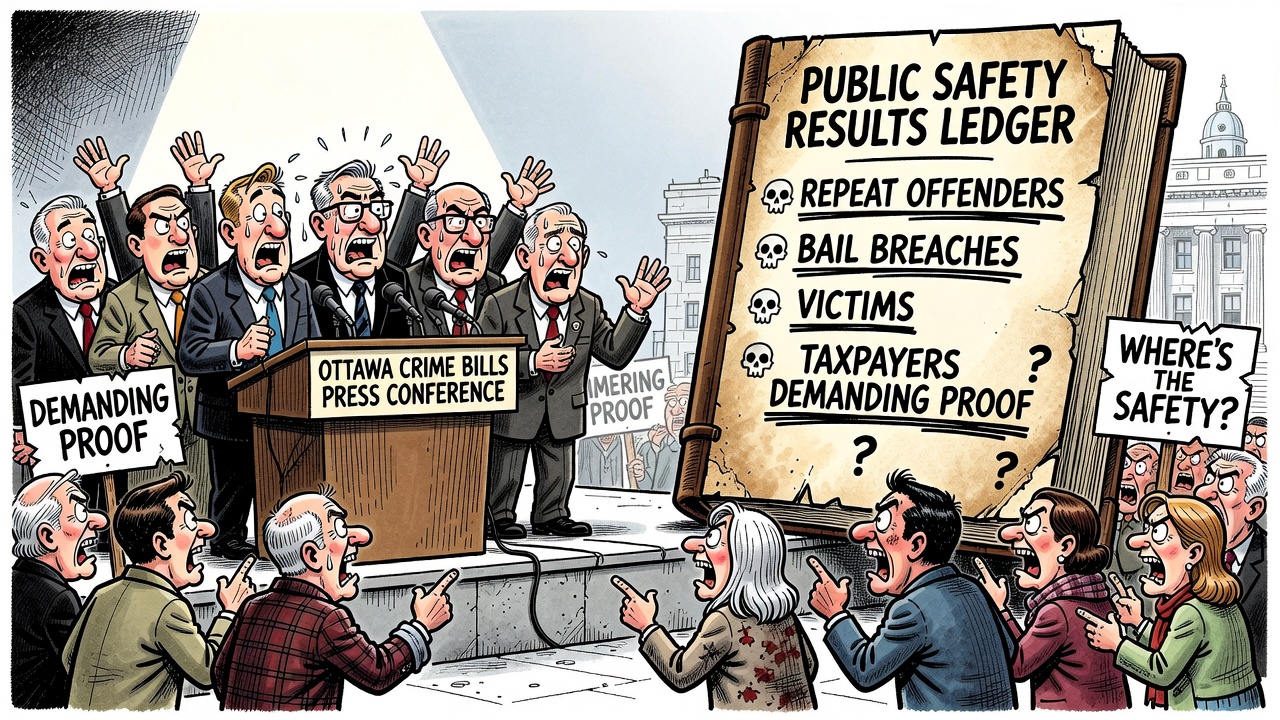
Fine. Then prove it. A serious government would welcome the ledger. If reverse-onus bail provisions reduce repeat violent offending without clogging courts or sweeping in low-risk accused people, publish the evidence. If tougher sentencing for extortion, arson, organized retail theft, vehicle theft, or attacks on transit workers changes offender behaviour, publish the evidence. If it does not, stop confusing press conferences with public safety.
Conservatives can be tough on crime without being lazy about data. Liberals can claim compassion without hiding the victim results. Canadians deserve both safety and proof. Ottawa passed the laws. Now it owns the scoreboard.
- Statistics Canada: Police-reported crime statistics in Canada, 2025 — July 22, 2026
- Statistics Canada: Police-reported crime in Canada, 2025 infographic
- CityNews / The Canadian Press: Falling crime numbers raise questions about Ottawa’s tough-on-crime bills — July 23, 2026
- Department of Justice Canada: Major Criminal Code reforms to protect Canadians are now law — July 7, 2026
This article relies on police-reported statistics and does not claim that national trends capture every local community, victim experience, unreported offence, or court outcome.