Carney’s Immigration “Control” Claim Needs the Exit-Tracking Ledger
If Ottawa now admits immigration levels were far too high, Canadians deserve the expired-permit, exit-tracking, asylum, removal and housing-capacity receipts.
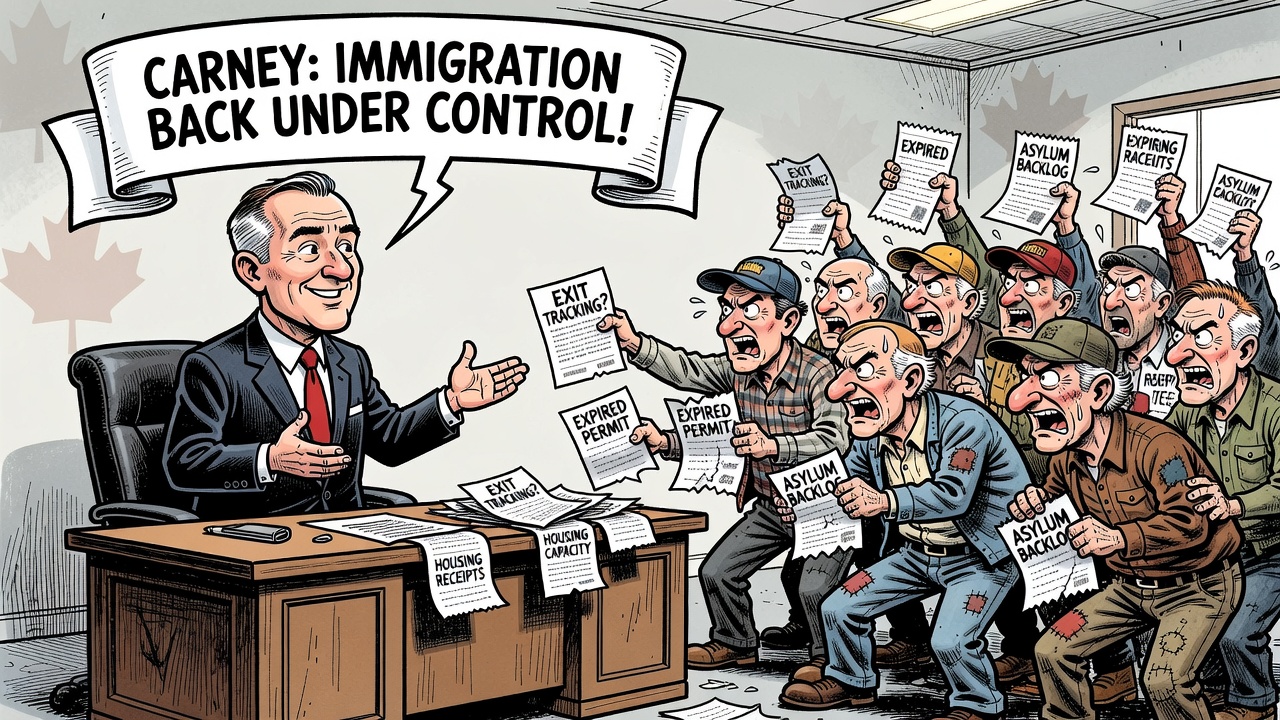
Prime Minister Mark Carney’s new immigration line is meant to sound reassuring: the government has “taken back control.” The accountability question is more uncomfortable: taken back from whom?
According to CTV News, Carney told reporters on July 29 that immigration was “far too high” when his government took over and that Canada had “lost control” of foreign-student and temporary-worker levels. He also claimed the flow of asylum seekers is down by one-third, temporary foreign workers by half, and foreign students by two-thirds, while acknowledging that immigration pressure on housing may require “a few more years of restraint.”
That is not a small admission. For years, Liberals dismissed capacity concerns as mean-spirited or unserious. Now the Liberal Prime Minister is effectively admitting the system overshot what housing, services and enforcement could absorb. Conservatives should be precise here: immigration can strengthen Canada when it is lawful, measured and matched to capacity. But a government that loses control of intake, status tracking and enforcement has failed newcomers and citizens at the same time.
The official numbers show why a victory lap is premature. IRCC says Canada is trying to reduce the temporary population to less than five percent of the total population by the end of 2027, partly to ease pressure on housing, infrastructure and services. Its May 31, 2026 snapshot reports 19,425 new student arrivals and 77,915 new worker arrivals from January through May 2026, down sharply from the same period in 2024. Those reductions matter, but they count new arrivals. They do not, by themselves, prove that expired permits are being resolved, departures are being tracked, removals are happening, or housing capacity has caught up.
Hansard shows the same gap. On May 5, Pierre Poilievre pressed Carney over whether the government could confirm that temporary students left after permits expired. Carney answered with reduction claims, CBSA inadmissibility reviews, visa cancellations tied to the Iranian regime, and last year’s removals. Those may be relevant enforcement data points, but they do not answer the core management question: who is still here after authorization expired, and what happened to each file?
Statistics Canada’s March population estimate adds another caution. Canada’s population fell by an estimated 103,504 people in the fourth quarter of 2025, driven largely by fewer non-permanent residents. But StatCan explicitly warned the estimate is preliminary and could be updated as fuller administrative data, including permit extensions, become available.
That is the problem with governing by headline. “Taken back control” is a slogan. Control is a ledger. It means the government can reconcile approvals, arrivals, extensions, exits, asylum claims, removals, backlogs, school seats, rental supply, doctors and local infrastructure before ministers announce another target.
Carney deserves credit if the inflow numbers are falling. But the same Liberals now promising discipline are responsible for the years they say were out of control. Canadians do not need another press-conference reassurance. They need the receipts that show the system is lawful, sustainable and honestly measured.
- CTV News: PM Carney says government has “taken back control” of immigration — July 29, 2026
- House of Commons Debates: Hansard No. 117 — May 5, 2026
- Immigration, Refugees and Citizenship Canada: Understanding student and temporary worker numbers in Canada — data as of May 31, 2026
- Immigration, Refugees and Citizenship Canada: Supplementary Information for the 2026-2028 Immigration Levels Plan
- Statistics Canada: Canada’s population estimates, fourth quarter 2025 — March 18, 2026
This article criticizes federal immigration management, capacity planning and transparency. It does not blame immigrants, students, workers or asylum claimants for government policy failures.