IRCC’s PR Waitlist Swap Needs a Service-Standard Receipt
IRCC is now separating active permanent-residence files from waitlisted ones. Good. But dropping overall service-standard visibility is not transparency.
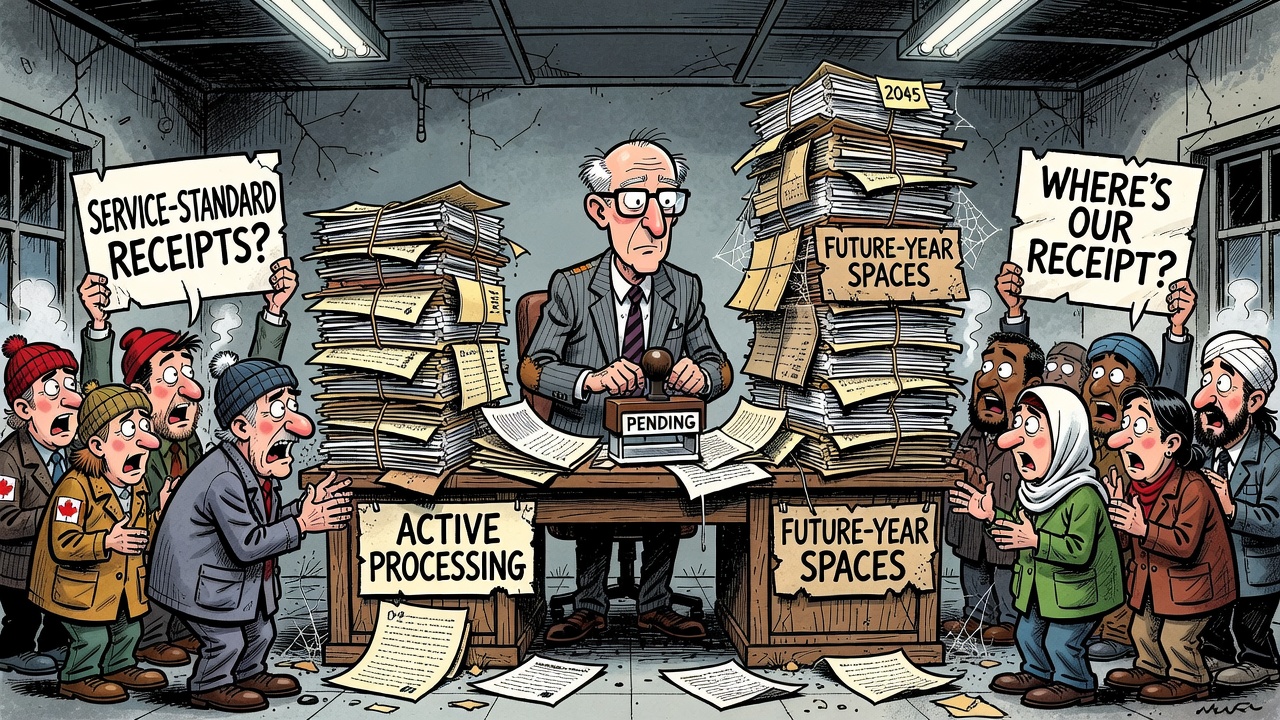
Ottawa has finally admitted something every frustrated applicant already knew: not every permanent-residence file in the inventory is really moving. Some files are being processed now. Others are effectively parked for future spaces in the immigration levels plan.
That new honesty matters. CIC News reported that, as of July 21, Immigration, Refugees and Citizenship Canada began publishing monthly updates that split permanent-residence applications into two categories: active processing and waitlisted for future processing. The same report says this is the first time the federal government has released details on the share of PR applications being set aside for later.
But transparency cannot be a shell game. The trade-off, according to the same report, is that IRCC will no longer release the overall proportion of its inventory being processed within service standards across immigration categories. That is not an upgrade. That is one useful light turned on while another is switched off.
The numbers are too large for vague management language. CIC News reported that, as of May 31, 2026, IRCC had 705,315 permanent-residence applications awaiting finalization. The economic stream had 238,335 applications, with 25 percent waitlisted. The family stream had 159,765 applications, with 40 percent waitlisted. The protected-person and refugee stream had 307,215 applications, with 46 percent waitlisted.
IRCC’s explanation is straightforward: applications may be waitlisted when there are more applications for a program than spaces available under the 2026–2028 Immigration Levels Plan, and that can increase processing times. Fine. Then say the quiet part publicly every month: how many applicants are in a real processing queue, how many are waiting for a future-year admission slot, and how long each category is expected to wait.
A conservative accountability standard does not require Ottawa to promise instant approvals. Canada has a right to set admission levels, protect program integrity, screen applicants properly, and match immigration targets to housing, health care, schools, jobs and infrastructure. But competent government does not hide capacity constraints inside a black-box backlog and then congratulate itself for “processing” files.
The waitlist split should be the beginning of a fuller ledger, not a replacement for service-standard reporting. Applicants deserve to know whether they are waiting because their file needs work, because security or eligibility checks are incomplete, or because the government accepted more demand than the levels plan can absorb. Taxpayers deserve to know whether Ottawa’s intake settings match real national capacity.
IRCC should publish a monthly permanent-residence table by program: active files, waitlisted files, percentage inside service standards, median and longest wait, expected admission year, withdrawals, refusals, approvals, and the levels-plan space available. It should also attach the housing and public-service assumptions cabinet used when setting the targets.
Calling a parked file “waitlisted” is more honest than pretending the whole inventory is equally alive. But if service-standard visibility disappears at the same time, Canadians are not getting transparency. They are getting a backlog rebrand.
- CIC News: Canada opens book on number of waitlisted permanent residence applications
- Immigration, Refugees and Citizenship Canada: 2026–2028 Immigration Levels Plan
- Immigration, Refugees and Citizenship Canada: Understanding IRCC’s application inventories
- Immigration, Refugees and Citizenship Canada: Inside IRCC’s application processing system
This article criticizes federal queue management and public reporting. It does not blame immigrants, refugees, family sponsors, applicants or frontline officers for delays created by policy and capacity choices.