Senate Fundraising Rules Need a Public Firewall
Senate ethics guidance changed just as Ottawa revived partisan Senate appointments. Canadians deserve the fundraising, gift, travel and lobbyist-access receipts.
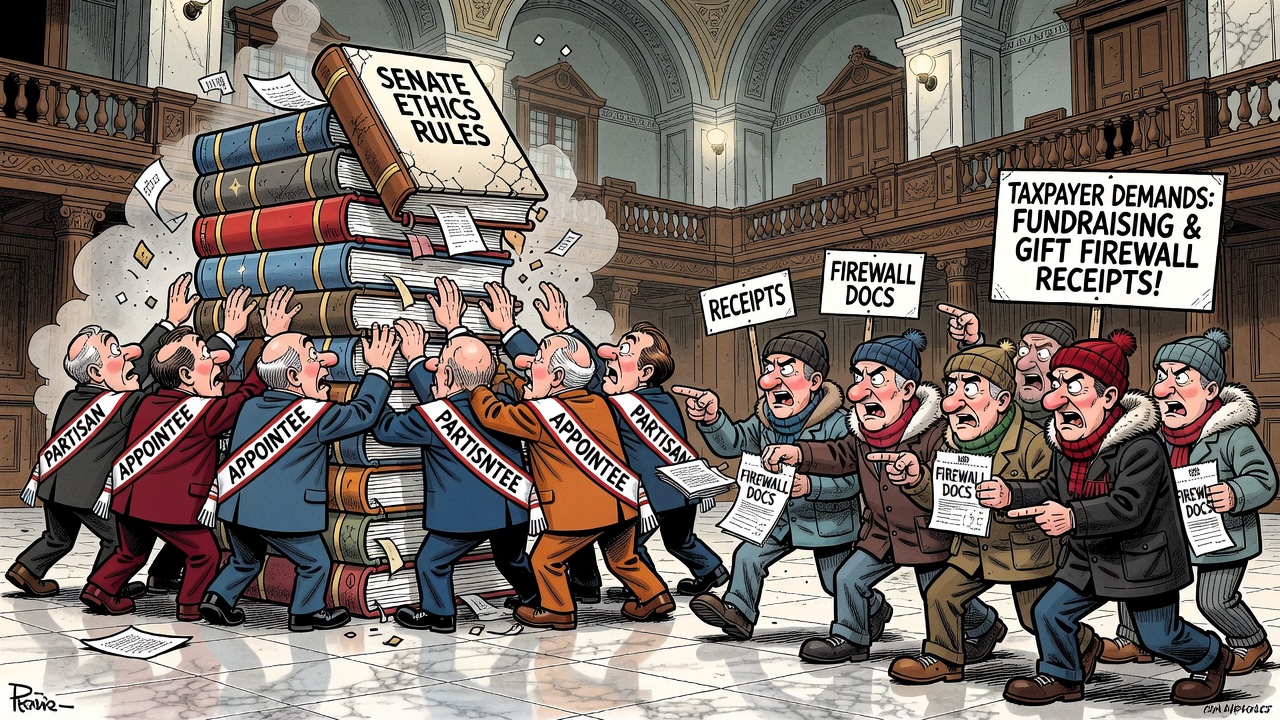
The Senate’s ethics rulebook is moving at the same moment the Prime Minister has reopened the door to partisan Senate appointments. That combination is not automatically corrupt. It is, however, exactly the moment when Canadians should demand a bright, public firewall.
On June 9, 2026, the Senate Ethics Officer announced revised guidelines on outside activities and sponsored travel. The office said the outside-activities update revisited advice on fundraising and clarified that, subject to caveats, senators may participate in political fundraising and fundraising for non-profit organizations. The same guidance still warns senators not to further private interests, misuse Senate resources or lobby governments for funds, assistance or contracts on behalf of outside organizations.
Then, on July 8, the Senate Ethics Officer announced that the Senate had approved two amendments to the Ethics and Conflict of Interest Code for Senators on June 11. One amendment changed the gifts rule from a prohibition on gifts that could reasonably be considered to relate to a senator’s position to a prohibition on gifts that could reasonably be seen as given to influence the senator in an official duty or function. The office said the change aligns the Senate code with the House of Commons code.
Reasonable people can debate whether those revisions clarify existing practice or loosen the guardrails. A HeadTopics mirror of a Hill Times report said the committee and the Red Chamber approved changes allowing senators to participate directly in political fundraising, and quoted discussion about the timing before Prime Minister Mark Carney’s appointments. The official documents make at least this much undeniable: the rules and guidance changed in June, and the public deserves the before-and-after text in plain language.
On July 7, Carney’s office announced that the government was removing the non-partisanship criterion from the Senate appointment process. The same release named Richard Martel, Thomas Pitfield, Rodney Ouellette and Geeta Tucker as incoming senators, and said five more Senate vacancies were anticipated before the end of 2026. Global News and CityNews/Canadian Press reported that Pitfield had been Carney’s principal secretary and a longtime Liberal strategist, while Martel was a Conservative MP.
That is the accountability problem. A more openly partisan Senate, with clearer permission for political fundraising and a narrower gifts test, needs stricter disclosure than a press release. Senators should publish fundraising attendance logs, host names, ticket prices, donor categories, lobbyist presence, travel sponsors, gift declarations and any communications with ministers, PMO staff or government House leadership about legislation. The ethics committee should publish its witness list, vote record and rationale.
Conservative accountability is not complicated: if senators are going to help political machines while revising government bills, Canadians need to know who gets access, who pays, who benefits and who is kept out of the room.
- Senate Ethics Officer: Revised outside-activities and sponsored-travel guidelines
- Senate Ethics Officer: Guideline on Outside Activities 2026
- Senate Ethics Officer: Revised ethics code and gifts guideline notice
- Prime Minister of Canada: Senate appointment process changes and July 7 appointments
- Global News: Carney puts a key advisor and a Conservative MP in the Senate
- CityNews / Canadian Press: Carney defends appointment of his principal secretary to Senate
- HeadTopics mirror of The Hill Times: Senate approves changes to ethics code and guidelines
This article argues for disclosure and stronger conflict safeguards. It does not allege criminal wrongdoing by any senator, appointee, committee member, minister, official, donor or outside organization.