Build Canada Homes Needs a Cost Ledger Before It Picks a High-Rent HQ
An affordability agency reportedly chose Toronto for its head office despite internal warnings about high rents and office delays. Publish the cost ledger.
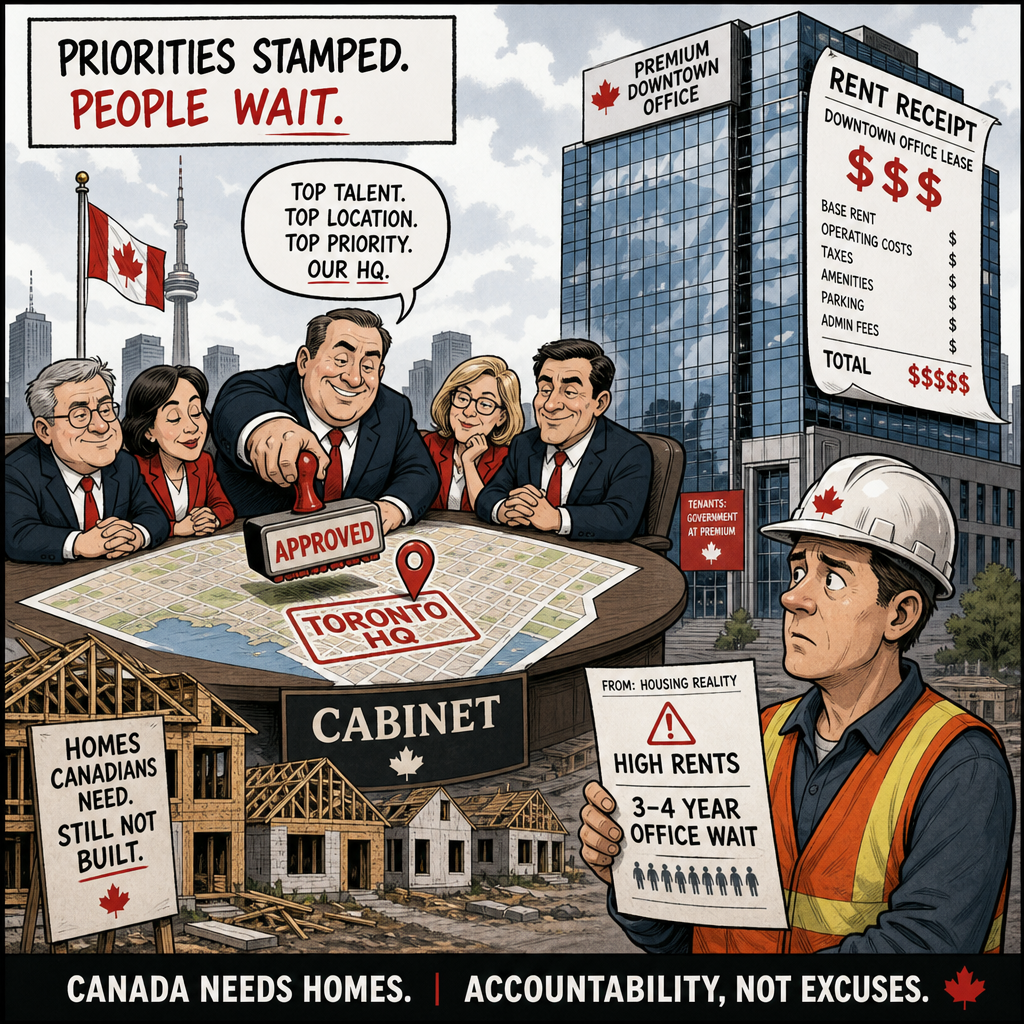
The federal agency created to lower housing costs now has a basic housekeeping problem: its own cost discipline. Blacklock’s Reporter reported Thursday that Cabinet overruled the housing department and chose Toronto as the head office for Build Canada Homes, despite an internal memo warning that Toronto rents were too high and that office space came with a three-to-four-year wait. That is exactly the kind of decision that should trigger a public ledger before the first lease is signed.
This is not an argument that Toronto cannot host federal work. It is an argument that an affordability agency should not get to make expensive administrative choices in the dark. Build Canada Homes was launched September 14, 2025 as a new federal housing entity meant to build affordable housing at scale. Ottawa said it would use public lands, flexible financing, private capital, large portfolio projects and modern construction methods to help double the pace of housing construction over the next decade. Those are big promises. They require boring, ruthless cost control.
The numbers already demand humility. The Parliamentary Budget Officer estimated that Build Canada Homes would create about 26,000 units over five years, a 2.1 percent increase in housing completions relative to its baseline projection. The PBO also said the agency could fund about 13,000 new units for low-income households. That may help some families, but it is not a blank cheque for headquarters symbolism, and it is not proof that Ottawa has solved delivery.
The government’s own framework agreement says Build Canada Homes was designed as a lean, mission-driven organization drawing on Housing, Infrastructure and Communities Canada, other departments and Crown corporations through secondments and interchange. That description makes the Toronto decision even more important. If the model is supposed to be lean, Canadians deserve to know why Cabinet selected a high-rent market after officials reportedly warned about cost and space constraints.
Conservatives should press for the full decision note: every location option considered, the rent and fit-up estimates, the office-space timeline, the staffing plan, the expected number of employees on site, the telework assumptions, and the written reason Cabinet rejected departmental advice. The public should also see whether the Toronto headquarters changes the agency’s first-year operating budget, delays hiring, or diverts money from program delivery, project due diligence, land assembly or partnerships with non-profit builders.
The accountability standard is simple. A housing agency should be judged by homes started, homes completed, affordability levels, occupancy dates and cost per unit. Its administration should be judged by the same discipline: cost, timeline, alternatives and measurable value. If Toronto is truly the best headquarters choice, release the analysis and defend it. If the decision was political convenience dressed up as delivery, Canadians should know that before the agency asks for more patience, more authority or more money.
Build Canada Homes was sold as machinery for results. The first test is whether the machinery can control itself. Publish the headquarters receipt.
- Blacklock’s Reporter: Cabinet Picks Toronto For HQ
- Government of Canada: Launch of Build Canada Homes
- Housing, Infrastructure and Communities Canada: Build Canada Homes framework agreement
- Government of Canada: Introduction of the Build Canada Homes Act
- Parliamentary Budget Officer: Build Canada Homes forecast to build 26,000 units
This article treats Blacklock’s as the source for the reported internal-memo and Cabinet-location details, and uses primary federal and PBO sources for Build Canada Homes’ mandate, structure and housing-output context.