Visa Overstay Incentives Need a Status-and-Benefit Ledger
The issue is not compassion versus enforcement. It is whether Ottawa can account for who is here, under what status, at what cost, and with what result.
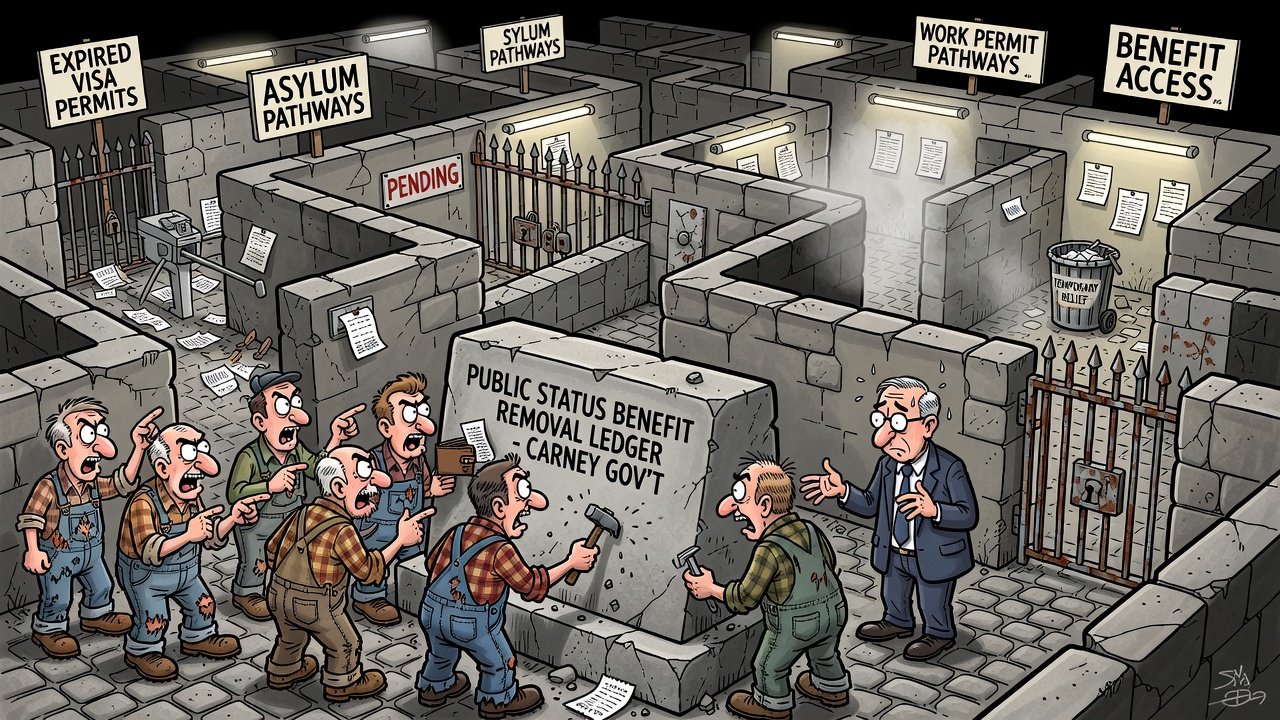
Canada can welcome immigrants and still insist that a visa means what it says. That basic bargain breaks down when temporary status expires, later applications shift people into new queues, public benefits vary by category, and taxpayers are asked to trust that Ottawa is tracking the difference.
The Carney government says Bill C-12 has tightened parts of the system. IRCC’s own backgrounder says the law added new asylum eligibility rules, a modernized asylum process, domestic information-sharing authorities, and new immigration document and application powers. It says asylum claims made more than one year after a person’s first entry into Canada after June 24, 2020, will not be referred to the Immigration and Refugee Board if made on or after June 3, 2025. It also says IRCC can share identity, status and document information with domestic government partners under written agreements.
Good. Now publish the receipts.
There is a practical reason this matters. IRCC tells visitors who want to stay longer that they need to apply for a visitor record. ESDC says rural employers in participating provinces and territories can use temporary foreign worker measures from April 1, 2026, to March 31, 2027, including a 15 percent cap instead of the usual 10 percent cap for low-wage positions in some places. IRCC also says the Interim Federal Health Program provides limited, temporary health coverage until eligible people can access provincial or territorial insurance, with coverage depending on eligibility group.
None of those facts is scandalous by itself. Refugees need emergency care. Farmers and rural employers may face real labour shortages. Visitors may have legitimate reasons to extend a stay. But policy becomes indefensible when Ottawa cannot show where legal temporary status ends, where restoration begins, where asylum or humanitarian pathways begin, which public services attach to each category, and how many final removal orders are actually completed.
Conservatives should be clear: this is not an argument for punishing people who followed the rules, nor for denying due process to genuine refugees. It is an argument for protecting the integrity of every lawful pathway by refusing to blur all pathways together. A system that cannot distinguish a lawful student, a compliant worker, a late restoration applicant, an asylum claimant, and a person with an enforceable removal order is not compassionate. It is careless.
The minimum ledger is simple: expired visitor, work and study permits by month; restoration applications; asylum claims filed after temporary status expired; humanitarian and compassionate applications after expiry; work permits issued to claimants; IFHP and provincial handoff totals by status; removals ordered, stayed and completed; average time from expiry to enforcement outcome; and the written information-sharing agreements enabled by Bill C-12.
Ottawa asked Parliament for new tools. Canadians should now demand proof that those tools are producing lawful, measurable results. Publish the visa-overstay incentive ledger.
- Immigration, Refugees and Citizenship Canada: Bill C-12 immigration and asylum measures backgrounder
- Employment and Social Development Canada: Temporary measures under the Temporary Foreign Worker Program
- Immigration, Refugees and Citizenship Canada: Interim Federal Health Program coverage summary
- Immigration, Refugees and Citizenship Canada: Extend your stay in Canada: visitor record
This article argues for transparent status, benefit and enforcement reporting so immigration pathways remain lawful, measurable and fair to Canadians and newcomers who follow the rules.