If Digital ID Is Voluntary, Publish the Pilot Receipts
A voluntary credential can become mandatory in practice if paper, phone and in-person service quietly get worse.
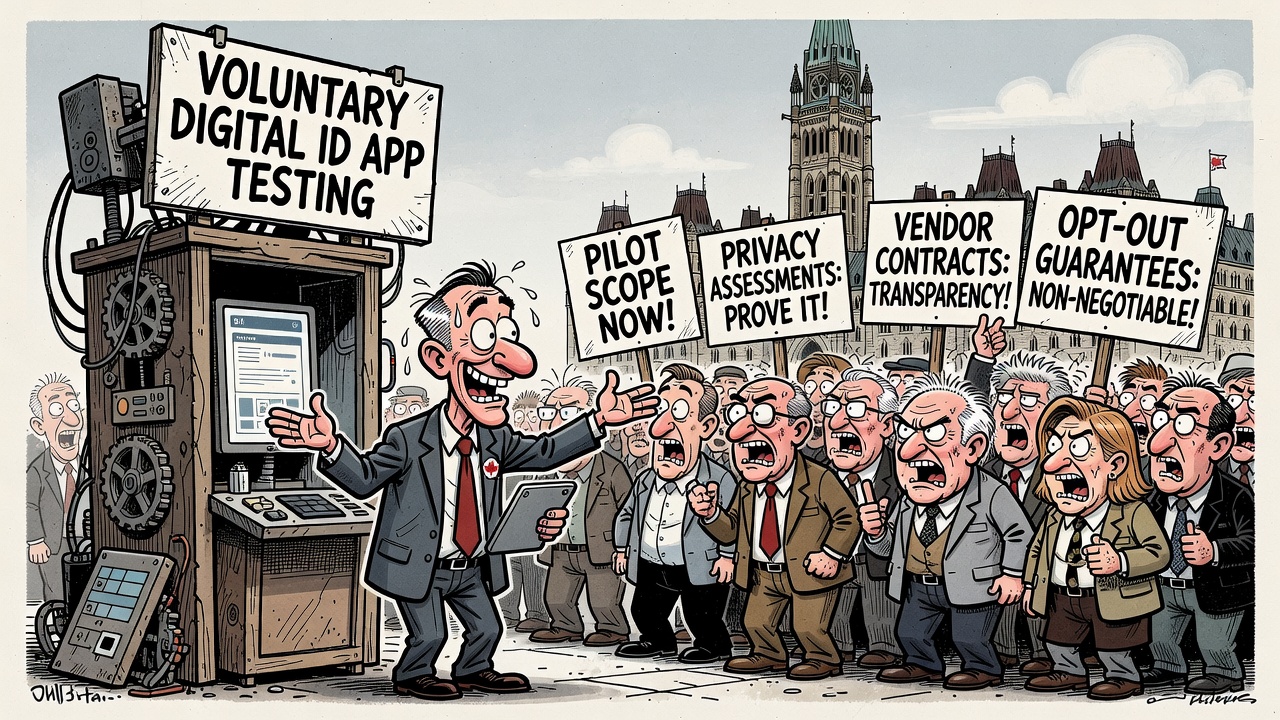
Ottawa keeps telling Canadians not to worry about digital ID. Then publish the receipts.
Blacklock’s Reporter reported July 17 that cabinet has begun testing digital ID apps on an experimental basis, citing an Employment Department briefing note. The same report says the note repeated the familiar assurance that no mandatory national ID system is planned, while acknowledging public distrust of institutions. That is exactly why the government should not ask Canadians to accept a trust-me rollout.
The official paperwork already points to a larger federal direction. Employment and Social Development Canada’s 2026-27 departmental plan says the department will examine authentication, secure data exchange and digital credentials to reduce duplication and simplify access, while maintaining privacy, security and accessibility. The federal digital-credentials page describes a GC Issue and Verify platform that could let departments issue digital versions of physical credentials, such as work permits or boating licences, stored on mobile devices and shared online or in person.
Conservatives should not dismiss every digital tool. A secure credential can reduce paperwork, fraud and delay. But after ArriveCAN, Phoenix and years of federal IT overpromising, Canadians have earned the right to demand guardrails before the next app becomes a gatekeeper. “Optional” means little if a citizen without a smartphone waits longer, gets fewer services, loses access to a benefit, or must surrender more personal data to complete the same transaction.
Parliament is already asking the right questions. A House of Commons written question on federal digital identity asks which departments have approval, what measures ensure credentials remain voluntary in practice, whether non-users could face reduced service quality, what oversight prevents repurposing personal information, and which departments are testing biometric identity systems. Those questions should not disappear into bureaucratic fog.
The Auditor General has also pushed Ottawa toward a national approach for digitally validating identity. That may solve real service-delivery problems. It also concentrates risk. Once identity, benefits, enforcement and compliance systems can talk to each other, safeguards must be designed before deployment, not promised after a scandal.
So here is the minimum public ledger: the briefing note; the pilot departments; user counts; app architecture; procurement and vendor contracts; privacy impact assessments; cybersecurity testing; data-retention rules; consent and selective-disclosure controls; biometric exclusions; complaint process; independent audit plan; service standards for people who opt out; and a sunset clause for every experiment.
If the Carney government wants trust, it should stop treating trust as a communications product. Publish the pilot receipts. Prove that digital ID will help Canadians access government, not help government quietly ration access to Canadians.
- Blacklock’s Reporter: Gov’t Quietly Tests Digital ID
- Employment and Social Development Canada: 2026-27 Departmental Plan
- Government of Canada: Trusted access to digital services
- House of Commons: Written questions on digital identity
- Auditor General of Canada: Report on benefits delivery modernization and digital identity validation
This article argues for transparency, opt-out protections and independent oversight before federal digital credential pilots become embedded in access to public services.