The Vaccine-Injury Support Reset Needs a Public Ledger
Do not relitigate every pandemic argument. Publish the injury-support receipts.
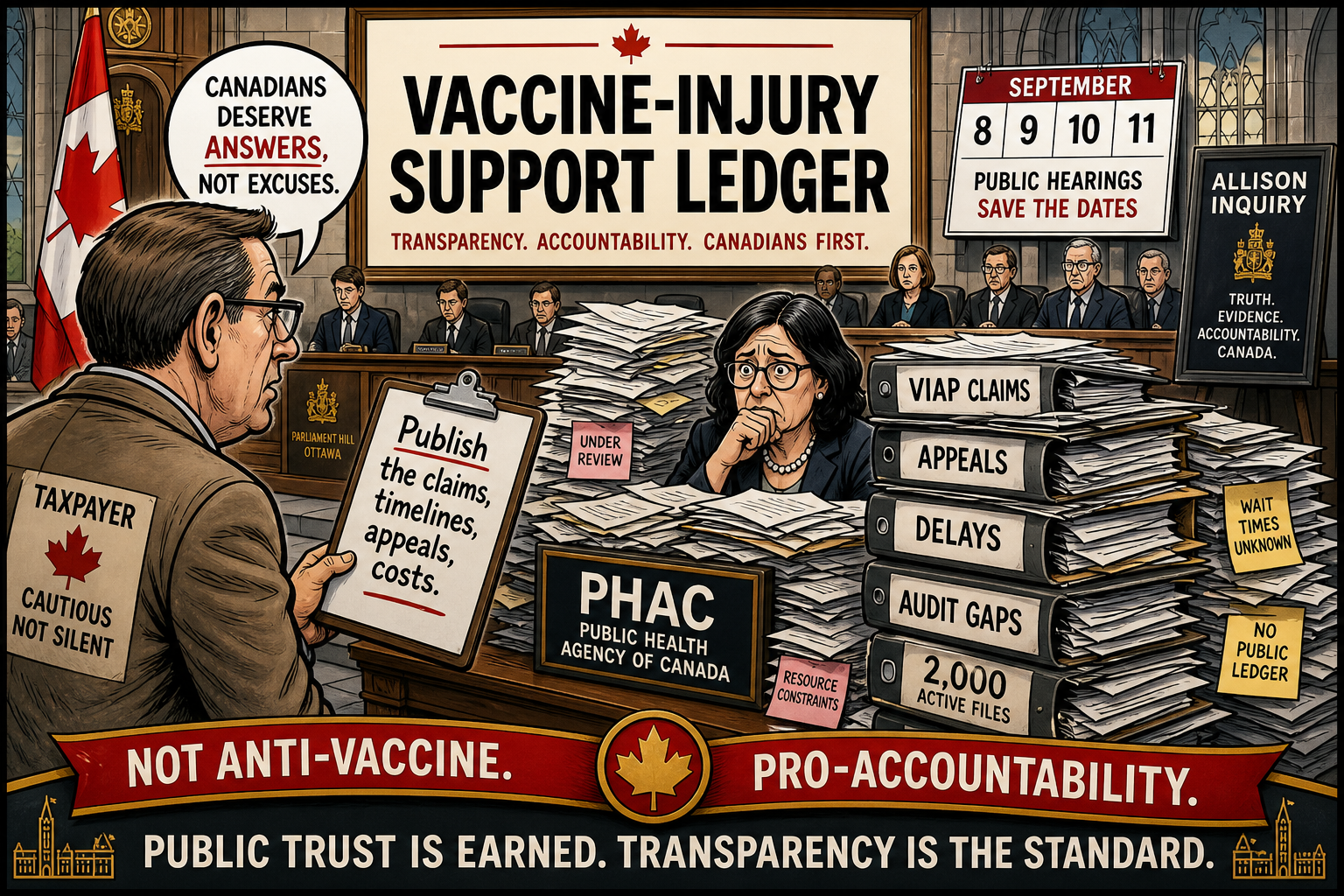
The Public Health Agency of Canada has quietly admitted the old vaccine-injury support system was not good enough. In a July 2 statement, PHAC said it has strengthened the Vaccine Impact Assistance Program, including a new secure portal, clearer rules, claimant information sessions, better contact-centre training and the transfer of more than 2,000 active claims and appeals from the former administrator.
That is not a conspiracy theory. That is the government’s own reset. PHAC says the program transition from OXARO Inc. to PHAC began April 1, 2026, and that the program supports people vaccinated in Canada, except Quebec, who suffered a serious and permanent injury from a Health Canada-authorized vaccine administered on or after December 8, 2020.
The numbers deserve daylight. PHAC’s statistics page says the former program received 3,557 claims from June 1, 2021 to November 30, 2025. It lists 252 claims approved by the Medical Review Board, 551 appeals received, 11 appeals approved, and $21.47 million in financial support paid to claimants. PHAC also says about 2,000 existing applications will be reviewed and processed under the new program, and that updated statistics will be published in coming months.
Canadians should not have to wait for “coming months” to learn whether Ottawa is fixing the problem or simply rebadging it. Serious vaccine side effects are rare, and Canada’s vaccine-safety system should say that plainly. But rarity is not invisibility. If the state told Canadians a medical product was part of a national public-health response, then the state owes the small number of injured Canadians a process that is fast, fair, transparent and auditable.
That is why the Allison Inquiry matters as an accountability signal, even if testimony is not the same thing as medical causation. Global News posted July 9 coverage of Conservative MP Dean Allison calling for public participation in an inquiry into Canadians who may have been injured by COVID-19 vaccines. The Allison Inquiry media page says hearings are scheduled for September 8 to 11, 2026, at Parliament Hill, chaired by Allison, and describes the purpose as listening to affected Canadians.
The Carney government should not hide behind the oldest Ottawa trick: dismiss the witnesses as political, then bury the administrative ledger as technical. The responsible path is narrower and more honest. Do not prejudge every individual claim. Do not turn anecdotes into national medical findings. Publish the program data that lets Canadians judge whether the compensation system is working.
That means monthly claims received, eligibility-screen times, medical-review timelines, approval and denial rates, reasons for refusal, appeal outcomes, average and median payments, administrative costs, audit findings, Quebec comparators, portal performance, outstanding files, and service standards. It also means explaining exactly what changed when PHAC took the program in-house.
If Ottawa wants public trust after the pandemic, it can start with the people it already acknowledges may need support. Publish the ledger.
- Public Health Agency of Canada: Update on the Vaccine Impact Assistance Program
- Public Health Agency of Canada: Vaccine Impact Assistance Program
- Public Health Agency of Canada: Statistics and data: Vaccine Injury Support Program
- Global News: Conservative MP calls for public participation in COVID-19 vaccine injury inquiry
- Allison Inquiry: Media Centre
This article argues for transparency in claims administration. It does not adjudicate individual medical causation claims and does not advise anyone to accept or refuse vaccination.