The Pathways MOU Needs a Subsidy-and-Emissions Ledger
If Ottawa is tying carbon-capture support to pipeline growth, taxpayers deserve the full cost, the company obligations and the emissions math.
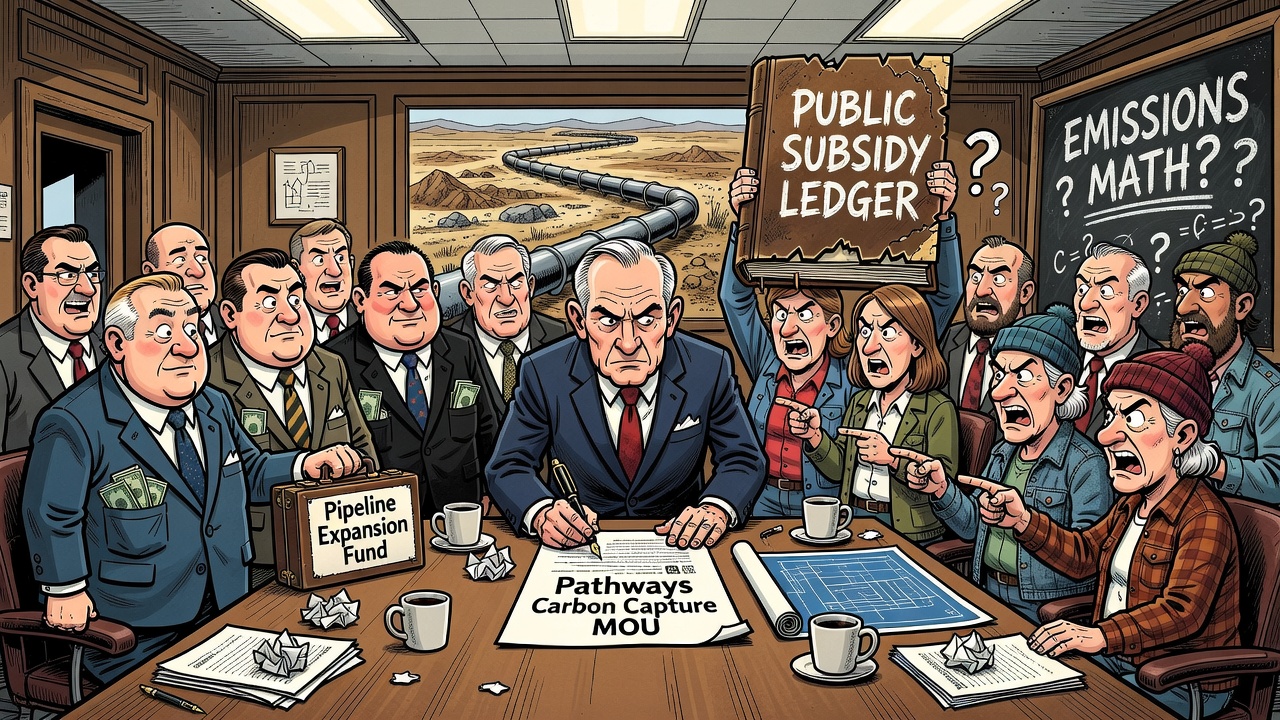
The Pathways carbon-capture memorandum is exactly the kind of deal that needs sunlight before it becomes another open-ended federal invoice.
On July 14, reporting said Ottawa, Alberta and five major oilsands producers had signed a memorandum of understanding to advance the multibillion-dollar Pathways carbon capture and storage project. Alberta’s release says the agreement supports production growth, the proposed West Coast oil pipeline and Pathways, with the Oil Sands Alliance made up of Canadian Natural, Cenovus, ConocoPhillips Canada, Imperial and Suncor.
That does not make the deal automatically wrong. Canada needs energy infrastructure, export capacity and serious private investment. Conservatives should not pretend that every pipeline is a scandal. The accountability problem is different: the Carney government appears to be wrapping a pipeline-growth agenda, carbon-capture subsidies and future emissions promises into one package while taxpayers are left guessing at the bill.
The public facts already raise hard questions. EnergyNow reported that Pathways is a condition for a new West Coast oilsands pipeline moving ahead, and that Ottawa has committed to extending investment tax credits for carbon-capture equipment to 2035. Alberta says the Pathways project would proceed in stages toward a January 1, 2035 completion date. The Oil Sands Alliance says the MOU contemplates regulatory reforms and fiscal measures to accelerate oilsands production growth and reach new markets.
Then comes the emissions math. Canadian Press reporting quoted Canadian Climate Institute economist Dave Sawyer saying new planned pipeline capacity could add an average 20 megatonnes a year in oilsands emissions. The same report said Pathways would store about six megatonnes a year underground starting in 2035, with a goal of an additional 10-megatonne reduction by 2045.
That gap is the receipt test. If new production grows faster than verified captured tonnes, Canadians deserve to know before ministers call the package climate progress. If federal tax credits run through 2035, Canadians deserve the annual cost estimate, the take-up assumptions, the company-by-company exposure and the conditions for clawbacks if promised reductions do not arrive.
Publish the MOU in plain language. Publish the fiscal schedule. Publish the federal and provincial liabilities. Publish the regulatory changes being promised. Publish the pipeline conditionality. Publish annual emissions tables comparing new production emissions with verified captured and stored tonnes, not aspirational targets.
Carney can argue this is nation-building. Fine. Nation-building still needs books. A conservative accountability standard is simple: build what Canada needs, but do not hide the subsidy ledger, privatize the upside and socialize the risk.
- Government of Alberta: Memorandum of Understanding between Canada, Alberta and Oil Sands Alliance parties
- EnergyNow: Alberta, Ottawa and oilsands companies reach Pathways agreement
- EnergyNow / Canadian Press: Oilsands emissions on track to outpace reductions from Pathways project
- Oil Sands Alliance / Global Renewable News: MOU agreement a step forward to support growth and advance Pathways CCS
This article argues for public fiscal, regulatory and emissions records before federal support for pipeline-linked carbon-capture commitments expands.