Define the Speech Line Before Ottawa Regulates Platforms
If Ottawa wants new platform rules in the name of fighting “antifeminist ideologies,” it must first tell Canadians exactly where lawful opinion ends and illegal conduct begins.
The House of Commons Standing Committee on the Status of Women has put a serious problem beside a dangerous policy shortcut. Its June 2026 report, Confronting Antifeminist Ideologies in Canada, studies the manosphere, young Canadians’ development and mental health, extremist movements, gender-based violence and online content. Violence, harassment, child exploitation and non-consensual sexual images are real harms. They should be enforced against directly and transparently.
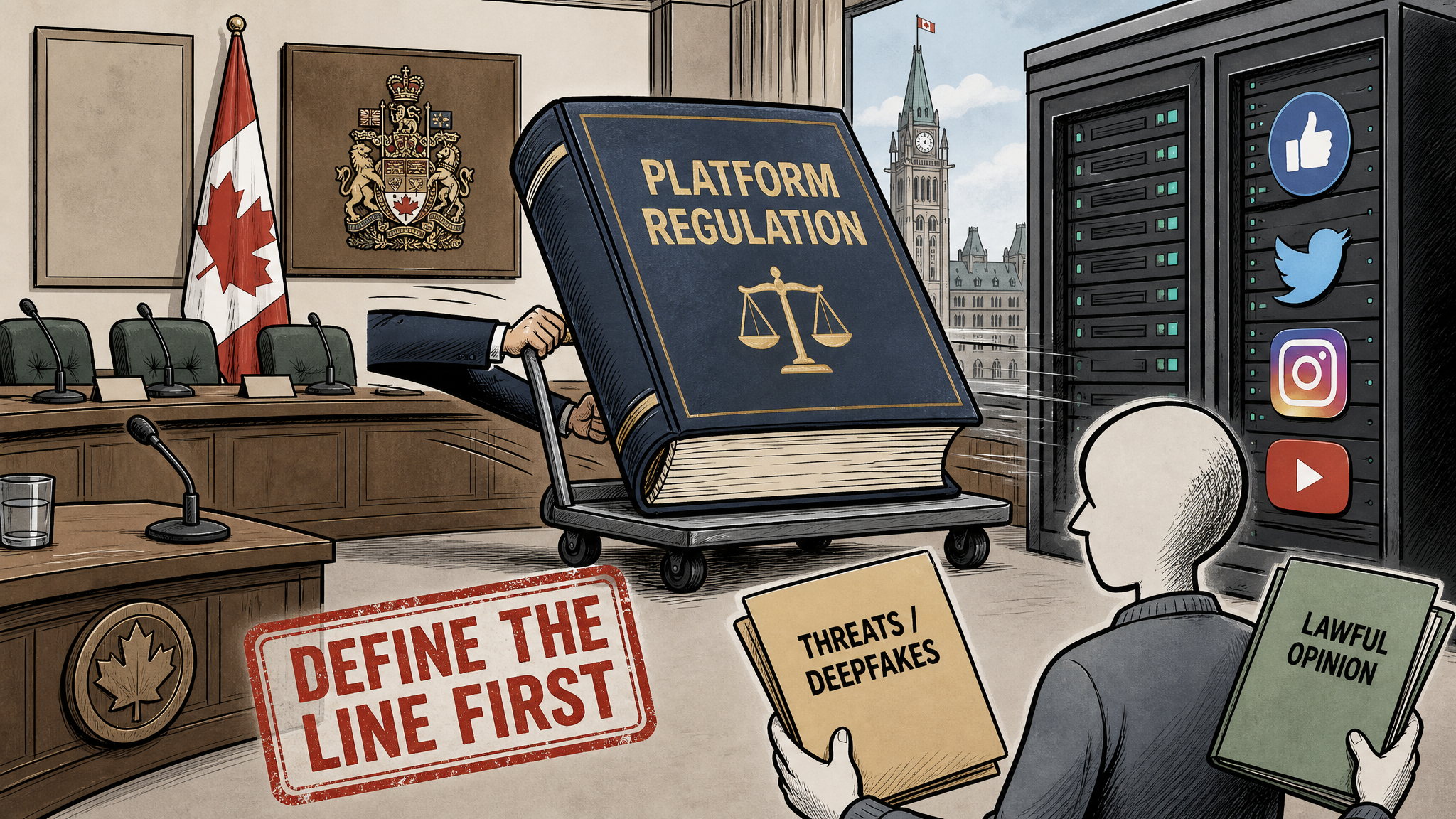
But Recommendation 3 goes further than enforcing existing criminal lines. It says the Government of Canada should table legislation to regulate online platforms, including stronger moderation of harmful content, child-protection measures, transparency mechanisms, and monitoring and reporting requirements. That is not a minor administrative suggestion. It is Parliament asking Ottawa to build a platform-control system around a politically loaded category: “antifeminist ideologies.”
Canadian Press reported that MPs want legislation to make platforms safer for children and to criminalize nonconsensual AI-generated images. Those are concrete targets. The same report also recommends public campaigns, more research, funding for healthy masculinities and men’s mental health, anti-radicalization efforts, and programs combating antifeminism. The accountability problem is that a clear enforcement target can become a broad moderation mandate when government does not define its terms.
Conservatives should not wave away the harms the committee studied. Women and girls deserve protection from violence, coercion, threats and image-based abuse. Boys and young men also deserve mental-health supports that do not treat them as suspects for holding unfashionable views. A serious government can do both: prosecute conduct and protect open debate.
That distinction matters because “harmful content” is an elastic phrase. In one minister’s hands it may mean incitement, threats or abuse. In another’s, it may mean dissent from an ideological program. Canadians have already seen online-safety debates blur child protection, hate, privacy, platform duties and political controversy into one omnibus promise. The committee report is another reason to demand precision before power.
The government should publish the boundary line now. If the goal is to stop non-consensual AI images, write that law narrowly. If the goal is child safety, define age-assurance, privacy and due-process rules. If the goal is violence prevention, show the evidence chain and enforcement plan. But if Ottawa wants platforms to monitor ideology, Canadians should say no until Parliament puts every definition, safeguard, appeal right and reporting demand on the table.
- Government of Canada Publications: Confronting Antifeminist Ideologies in Canada — publication record
- House of Commons Standing Committee on the Status of Women: Report PDF, including Recommendation 3
- Vernon Matters / Canadian Press: MPs urge action to undercut “manosphere” by tackling anti-women ideology
This article argues for precise legal definitions, due process and transparency before any platform-regulation bill is advanced.