Publish the Parks Canada “Colonial Injustice” Report
If a federal agency produced a report saying the creation of national parks was culturally “harmful” and a “colonial injustice,” Canadians deserve the full document, not a two-year blackout.
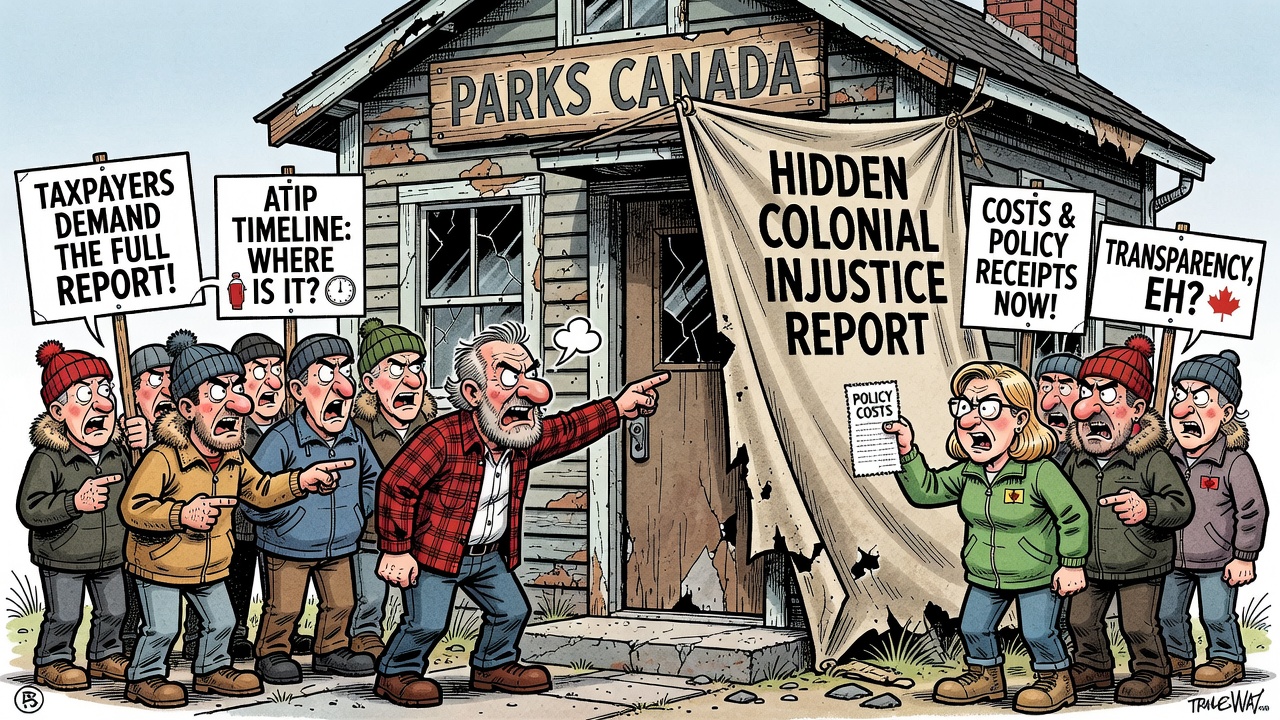
Blacklock’s Reporter says Parks Canada had an internal report that described the creation of national parks as culturally “harmful” and a “colonial injustice.” The outlet further reports that Parks Canada management said it “now acknowledges this harmful historical legacy,” and that the report was newly disclosed after being withheld from the public for two years.
That is not a small communications problem. Parks Canada is a federal agency funded by taxpayers and responsible for places Canadians visit, maintain, protect and pass on to their children. If officials are revising the moral, historical or policy frame for national parks, the public has a right to see the evidence, the recommendations and the implementation plan.
Conservatives should be careful here. The point is not to deny history or dismiss Indigenous perspectives. Parks Canada’s own public material says Indigenous Peoples are partners in conserving natural and cultural heritage and sharing the stories of protected places. The Truth and Reconciliation Commission’s final report also put reconciliation in the context of history, relationships and institutional change.
But reconciliation cannot become a blank cheque for hidden bureaucratic doctrine. If the report is serious, publish it. If it recommends signage changes, programming changes, staff training, land-use negotiations, co-management agreements, grants, contracts or visitor-message rewrites, publish those too. If it contains contested claims, Canadians should be able to evaluate them. If it was withheld for two years, Canadians should know who made that decision and why.
The Liberal pattern is familiar: announce values in public, bury the operational receipts in process, then accuse critics of bad faith when they ask what taxpayers are funding. That is backwards. A democratic government earns trust by showing its work, especially when it is using charged words like “colonial injustice” to describe institutions Canadians have long understood as shared public assets.
National parks can recognize painful history, respect Indigenous rights and still remain open, affordable, transparent public institutions. The way to do that is not secrecy. It is disclosure. Show the report. Show the consultations. Show the costs. Show whether the language is about historical interpretation, legal obligations, land claims, park operations or political branding.
Canadians do not need another hidden memo that surfaces only after years of access fights. They need a public ledger. Parks Canada should publish the report and every receipt attached to it, so taxpayers can judge the facts for themselves.
- Blacklock’s Reporter: Parks “Harmful” Says Agency
- Blacklock’s Reporter: All Issues index
- Parks Canada: Indigenous connections
- Truth and Reconciliation Commission web archive: Honouring the Truth, Reconciling for the Future
This article relies on Blacklock’s reported description of the internal Parks Canada report and public Parks Canada/TRC context. It argues for publication of the full document, timeline and implementation receipts.