Canada’s Largest Procurement Needs a Public Ledger Before Carney Locks the Contract
The question is not whether Canada needs submarines. The question is whether taxpayers get the price, schedule and jobs receipts before the final contract is signed.
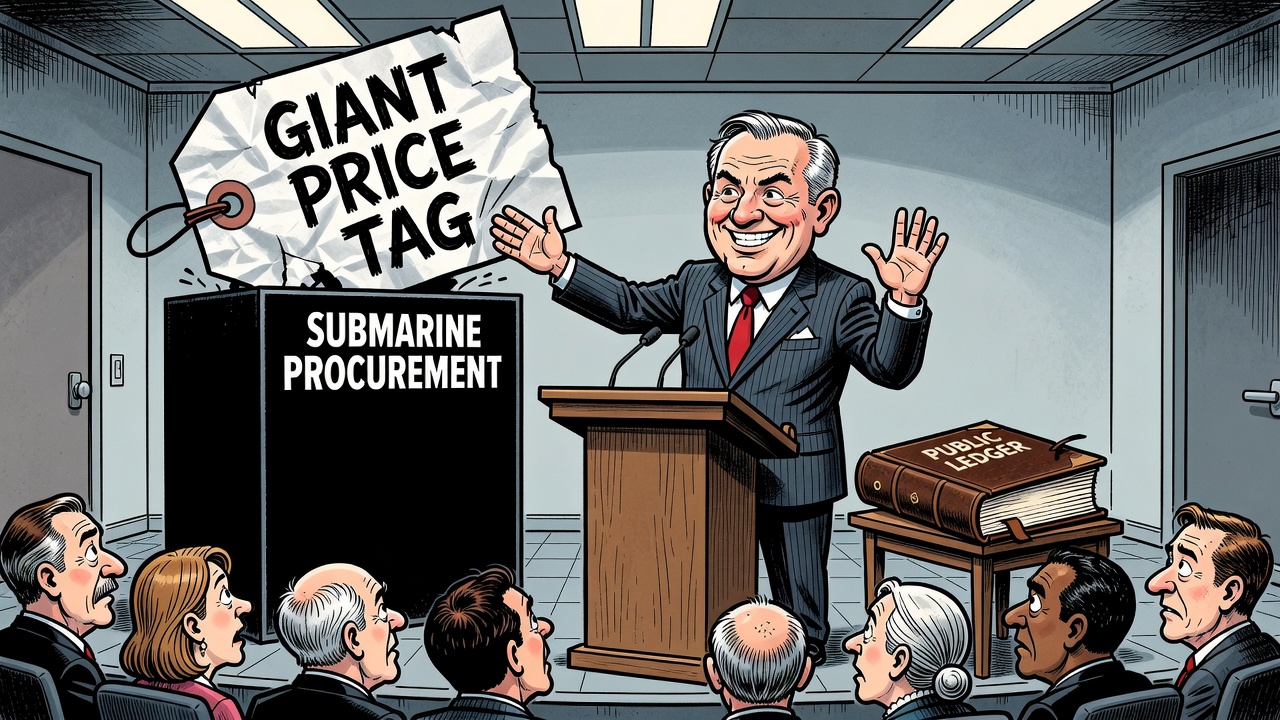
Canada does need a serious submarine plan. A country with the world’s longest coastline, Arctic approaches and aging Victoria-class boats cannot pretend undersea surveillance is optional. But national security is not a blank cheque, and “trust us” is not a procurement policy.
Prime Minister Mark Carney has named Germany’s ThyssenKrupp Marine Systems as the preferred supplier for up to 12 submarines. AP reported Carney called it Canada’s largest-ever military procurement, praised the TKMS platform for Arctic and NATO use, and declined to disclose the price beyond saying it would involve “tens of billions of dollars.” That is exactly when Parliament should demand daylight.
The Canadian Press follow-up made clear that the real work begins now. Final cost, delivery schedules and industrial benefits still have to be negotiated, potentially over six to 18 months, through Canada’s new Defence Investment Agency. In other words, Ottawa has announced the winner before Canadians can see the scoring table, the affordability range or the tradeoffs.
Carney is also wrapping the submarine choice inside a broader diplomatic package. A July 7 statement from Canada, Germany and Norway says Canada’s move to join the Type 212CD submarine cooperation creates a long-term security partnership that extends into investment, energy, artificial intelligence, space and critical minerals. A separate Canada-Germany statement says the two governments want a strategic partnership agreement before the end of the year.
That wider strategic relationship may be defensible. It may even be wise. But it also raises the stakes for transparency because a defence procurement can become a gateway for unrelated industrial promises and political bargaining. Canadians should know what was judged on submarine capability, what was judged on alliance politics, and what was judged on future investment hopes.
The losing Hanwha Ocean bid underscores the point. Hanwha and Ontario Shipyards publicly promoted agreements on shipbuilding capability, training and workforce development in Ontario, including work with Mohawk College. Ontario Shipyards had also advertised cooperation after visiting Hanwha’s Geoje shipyard. If Ottawa chose TKMS anyway, the public deserves a plain comparison: delivery dates, Canadian workshare, risk, maintenance, technology transfer and lifetime costs.
None of this argues against submarines. It argues against locking in the largest procurement in Canadian history behind closed doors while taxpayers are handed only a patriotic press line and a giant undisclosed bill. Conservatives should support rebuilding the Canadian Armed Forces. They should also insist that every dollar promised in the name of NATO comes with a ledger Canadians can audit.
Carney wants to sell competence. Competence shows its math.
- Associated Press: Canada selects Germany’s ThyssenKrupp to build 12 submarines
- Canadian Press via rdnewsNOW: Real work “begins now” after TKMS named preferred bidder
- Prime Minister of Canada: Canada-Germany-Norway Type 212CD statement
- Prime Minister of Canada: Canada-Germany strategic partnership statement
- Hanwha: Hanwha-Ontario Shipyards-Mohawk College agreements
- GlobeNewswire / Ontario Shipyards: Ontario Shipyards-Hanwha cooperation release
This article argues for procurement transparency. It does not allege that TKMS, Hanwha, Ontario Shipyards or government officials acted unlawfully.