Ottawa’s Removal Numbers Need a Public Immigration Enforcement Ledger
Removal numbers are up. Now publish the backlog, warrant and cost receipts.
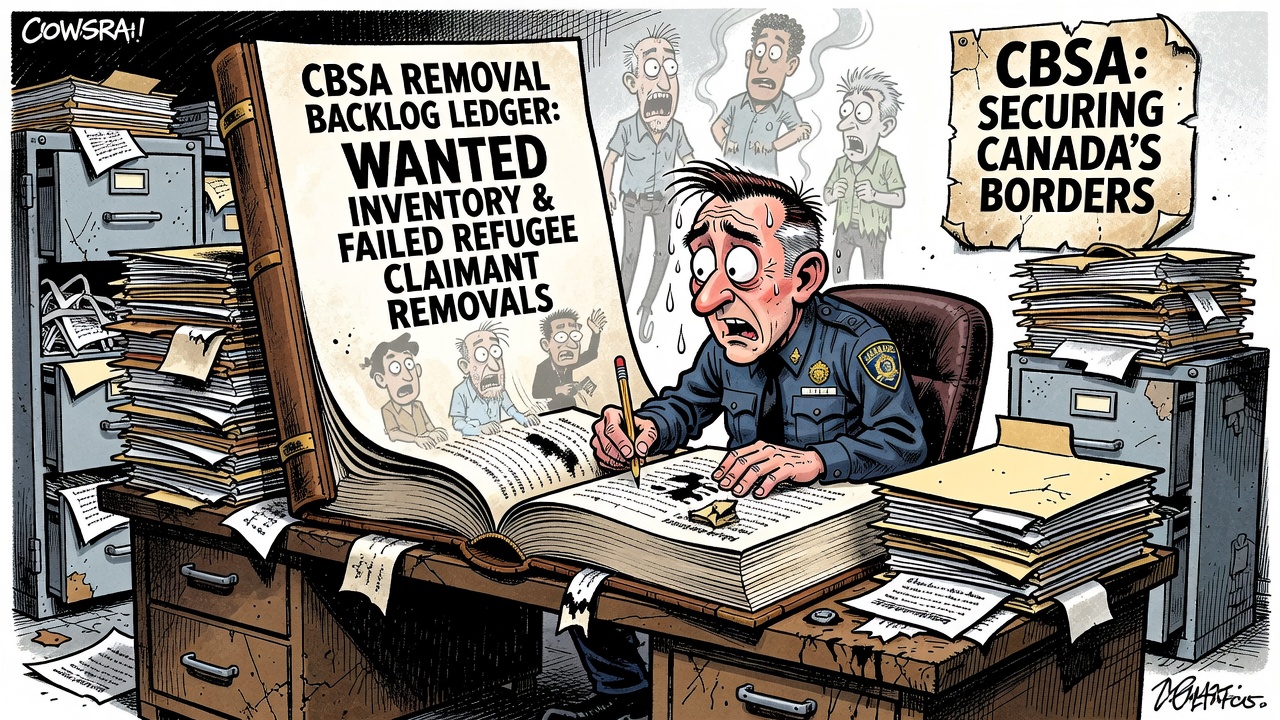
The Canada Border Services Agency now reports 23,160 enforced removals in calendar year 2025 and another 5,260 in the first quarter of 2026. That is the headline Ottawa will prefer: enforcement is moving. But a serious government should not ask Canadians to stop at the headline when the same tables show the system is carrying a much larger inventory problem.
CBSA’s own statistics say non-compliance by refugee claimants accounted for 19,225 removals in 2025 and 4,352 in Q1 2026. In other words, the dominant enforcement stream is not an abstract “border” issue. It is the downstream consequence of asylum, appeal, compliance and departure systems that must either work on time or accumulate into a public-administration backlog.
The inventory numbers are the real accountability test. CBSA lists 31,482 people in “removals in progress,” 33,332 in the wanted inventory, 29,060 where removal is not currently possible, and 483,865 not yet actionable. The wanted category is especially serious: these are people CBSA says failed to appear for removal proceedings and whom the agency is working to locate. Canadians do not need rhetoric. They need a monthly ledger showing whether Ottawa is clearing that queue or simply managing its growth.
Public Safety briefing material says removals are prioritized for cases involving security, organized crime, crimes against humanity, criminality and failed irregular-arrival refugee claimants. It also ties border and immigration enforcement to a $1.3 billion Border Plan and the Strong Borders Act agenda. If taxpayers are funding stronger enforcement, the government should disclose the measurable result: how many priority cases were removed, how many remain, how long they have been pending, and what legal or operational barrier is stopping action.
This is not an argument for sloppy removals or ignoring due process. A conservative accountability standard respects lawful refugee protection, court orders, Pre-Removal Risk Assessments and Charter limits. It also rejects the Liberal habit of treating process as a substitute for performance. Once a person has exhausted lawful avenues and has no right to remain, enforcement should be timely, documented and auditable.
Ottawa’s problem is credibility. Ministers announce border bills, funding envelopes and tougher tools, then ask the public to trust that the machine is working. Trust is not a reporting system. Publish the immigration enforcement ledger every month, with plain-language definitions and regional tables. Canadians can support fair immigration and still demand that final decisions mean something.
- Canada Border Services Agency: Immigration removal statistics
- Public Safety Canada: Question Period Book — Minister of Public Safety, June 2025
- Immigration2Canada: CBSA Removal Statistics 2026
This article argues for transparent enforcement reporting. It does not allege wrongdoing by any individual subject to immigration proceedings, CBSA officer, minister or public official.