B.C. LNG Fast-Track Needs a Public Financing Ledger
Support LNG if it earns its keep. Do not hide the taxpayer-risk ledger.
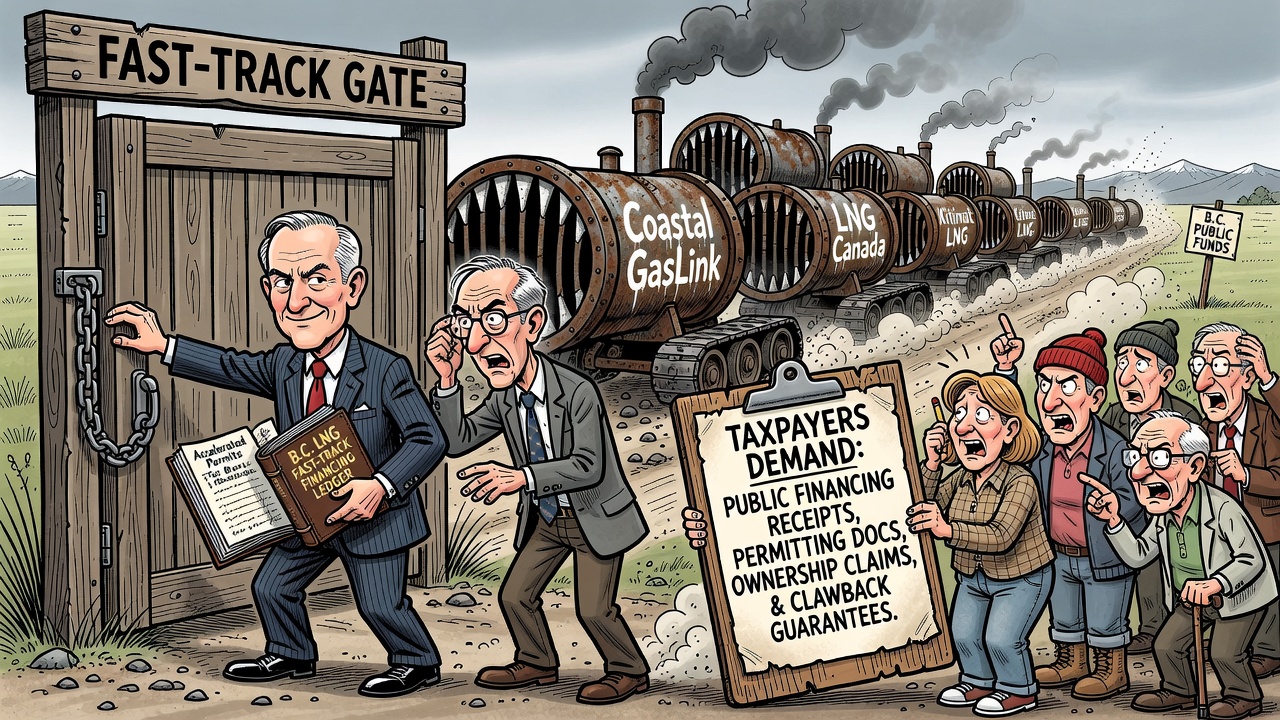
Prime Minister Mark Carney and British Columbia Premier David Eby have put four LNG projects on the fast-track list. The Canada-B.C. Cooperative Prosperity Agreement names LNG Canada Phase 2, Ksi Lisims LNG and the Prince Rupert Gas Transmission project, Cedar LNG, and Woodfibre LNG as priority projects for support on permitting, financing and construction.
There is a serious pro-growth case for LNG. Canada should sell more of what it can produce responsibly, especially to allies looking for stable energy supply. But that is exactly why the accountability standard has to be higher, not lower. When governments begin coordinating approvals and “potential financing tools” for named private-sector projects, taxpayers deserve to see the ledger before risk is shifted from boardrooms to the public balance sheet.
The official agreement says an Implementation Committee will identify and develop supports to move projects toward final investment decision and construction. It also says Canada will provide regulatory coordination, potential financing tools, trade advocacy, aligned permitting timelines and federal financial mechanisms to support First Nations equity participation. Those words may describe useful public policy. They may also describe loan guarantees, credit facilities, subsidies, tax advantages, Crown-corporation exposure or ratepayer-backed infrastructure. Canadians should not have to guess which one.
The missing detail is not a small footnote. BOE Report noted that the agreement did not provide approval or construction timelines and did not announce new financial commitments specific to the four LNG projects. iPolitics also flagged the uncertainty around how a new committee advances LNG projects toward final investment decisions after governments had already promised streamlining and competitive fiscal policies.
That uncertainty matters because the wider B.C. package is already measured in billions. In the same announcement, Ottawa promoted major commitments for Roberts Bank, the North Coast Transmission Line, the Red Chris mine expansion and the Massey Tunnel replacement. A government that can put dollar figures beside ports, transmission and tunnels can also publish a plain-language public-risk table for LNG.
Carney’s Liberals should not treat “economic security” as a magic phrase that ends scrutiny. If a project is commercially strong, say what support it needs and why. If First Nations equity support is central, disclose the mechanism and repayment terms while respecting confidential community negotiations. If permitting is being accelerated, publish the statutory steps, environmental conditions and who is accountable if deadlines are missed.
The conservative test is simple: build what is in the national interest, but do not socialize private risk in the dark. Before the Implementation Committee starts moving money or guarantees, publish the LNG Fast-Track Ledger. Canadians can handle development. What they should not have to accept is development by blank cheque.
- Prime Minister of Canada: Canada-British Columbia Cooperative Prosperity Agreement
- Prime Minister of Canada: Prime Minister Carney announces new Canada-B.C. agreement
- BOE Report: Canada, British Columbia pledge to accelerate four LNG export projects
- iPolitics: B.C. secures billions in federal funding, pledges “good faith” on Alberta pipeline
This article argues for transparent public-risk disclosure. It does not allege wrongdoing by any project proponent, First Nation, minister or public official.