Foreign-Agent Registry Should Publish the Money
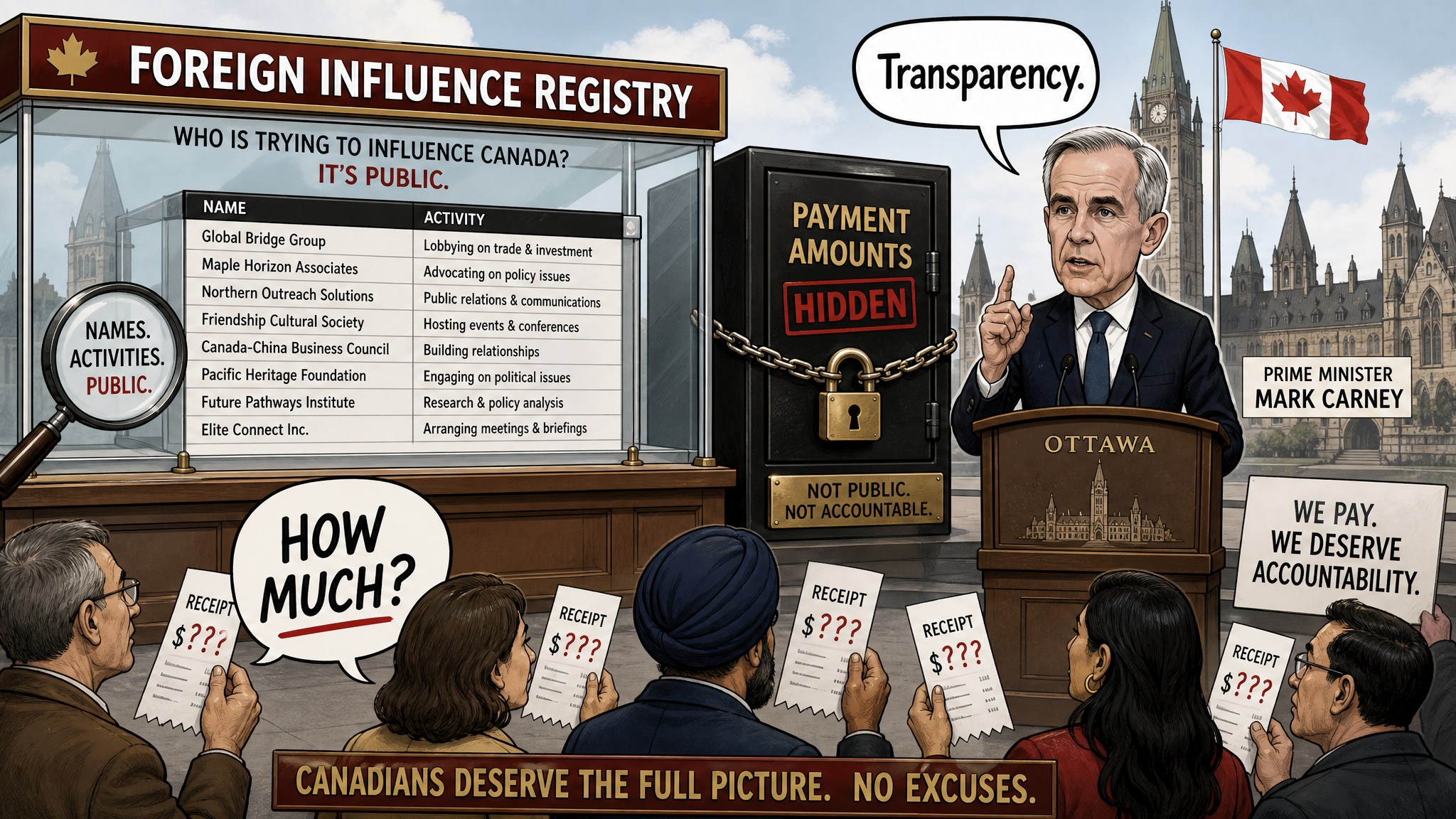
A foreign-influence registry that shows Canadians the arrangement but hides the dollar figure is only partial sunlight.
Canada finally has a date for its foreign-influence transparency regime. The Canada Gazette published an order fixing August 4, 2026, as the day key provisions of the Countering Foreign Interference Act and the Foreign Influence Transparency and Accountability Act come into force. That is progress after a long delay. It is not enough.
Global News reported on June 18 that six months after Ottawa released draft rules, Canada still did not have an operational public database of agents acting on behalf of foreign states. Civil society and diaspora groups were pressing the government to finish the job so Canadians could see who is lobbying or influencing political and governmental processes for foreign principals.
Now the registry is moving toward launch, and the finalized regulations reveal the next accountability fight: the public will see whether compensation or another benefit exists, but not the amount of the compensation. The regulations require a registrant to provide the commissioner with a description of an arrangement, including any compensation or benefit provided by the foreign principal. But the public registry section expressly excludes “the amount of any compensation” from what must be published.
That gap matters because money is not a side detail. In influence work, money can show scale, urgency and seriousness. A $2,000 honorarium, a $75,000 consulting contract and a seven-figure campaign of advertising or outreach are not the same thing. Canadians should not have to guess whether a foreign-principal arrangement is symbolic, modest, or a major paid operation.
Public Safety Canada announced Anton Boegman as the proposed Foreign Influence Transparency Commissioner on March 13, saying the role includes administering and enforcing FITAA and managing the public registry. That office will need credibility from day one. Credibility will not be helped if the public sees a polished registry that withholds the very receipt most citizens would ask for first: how much money changed hands?
The national-security context is not theoretical. Global reported that China and India have been consistently flagged by Canada’s national-security community as among the most active foreign-interference actors targeting the country, even as the Carney government has sought warmer relations with both. Diplomacy may be necessary. Blind trust is not.
Conservatives should support a foreign-influence registry because sovereignty requires transparency. Liberals should support it if they mean what they say about defending democratic institutions. But a registry with hidden payment amounts risks becoming another Ottawa compromise: enough disclosure to claim reform, not enough disclosure for citizens to follow the money.
The fix is straightforward. If privacy or safety requires limited redactions in rare cases, write that rule narrowly. Otherwise, publish the money. Canadians deserve a registry that does not just name foreign influence. It should price it.
- Canada Gazette: Order fixing August 4, 2026 for FITAA-related provisions
- Canada Gazette: Foreign Influence Transparency and Accountability Regulations
- Public Safety Canada: Anton Boegman proposed as commissioner
- Global News: Canada still doesn’t have a foreign influence registry
- Justice Laws: Foreign Influence Transparency and Accountability Act
This article argues for stronger public disclosure. It does not allege that any named individual or entity has violated FITAA or acted as an unregistered foreign agent.