Carney’s West Coast Pipeline Needs a Taxpayer-Risk Ledger
If this is an investment, not spending, Ottawa should be able to show the math.
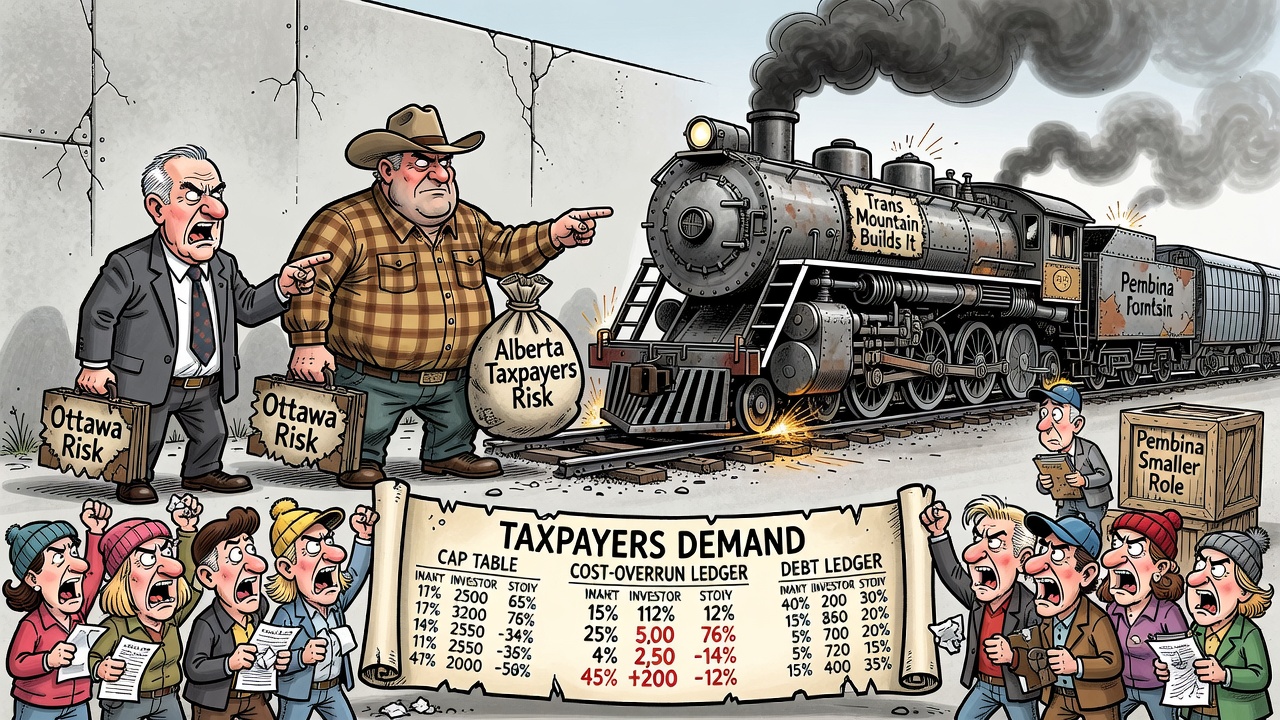
Prime Minister Mark Carney’s new west coast pipeline announcement is being sold as nation-building. It may become that. But the structure Ottawa described on July 2 also creates an immediate taxpayer-risk question: who carries the losses if the cost overruns, shipping contracts, carbon-capture conditions or eventual sale price do not match the podium promises?
The Prime Minister’s release says Ottawa will refer Alberta’s one-million-barrel-per-day west coast pipeline proposal to the Major Projects Office, with a route largely following the existing Trans Mountain corridor and respecting the Oil Tanker Moratorium Act. It also says Canada and Alberta will be equal partners, Indigenous equity will be reserved, Pembina will be a private-sector investor, and Trans Mountain will lead development.
That is not a normal private-sector pipeline proponent. Trans Mountain’s own statement says, subject to final agreements, the federal government through Trans Mountain and Alberta through the Alberta Petroleum Marketing Commission would hold the majority interest, while Pembina participates as a strategic investor. Trans Mountain would be responsible for development, construction and operations.
So the honest label is not simply “public-private partnership.” It is a government-majority project with some private participation. That may be defensible if the business case is strong and the public upside is real. But conservatives should not grade a Liberal megaproject on slogans. They should grade it on risk allocation.
iPolitics reported that Pembina’s equity stake was unclear and that Premier Danielle Smith could not say how much taxpayer money would go into the project. It also reported that Trans Mountain, already financed with roughly $34 billion in public funds for its purchase and expansion, would build the new line on Ottawa’s behalf. Dow Jones coverage, carried by MarketScreener, reported Pembina would hold a 10 per cent interest, while Canada and Alberta would hold equal partnerships and Indigenous equity would be reserved. Those details should not live as scattered media fragments. They should be in a public term sheet.
The Pembina Institute, an environmental advocacy group, argues taxpayers would shoulder about 90 per cent of the project. That is an advocacy interpretation, not a government number. But Ottawa can end the argument easily: publish the ownership percentages, development-capital commitments, loan guarantees, backstop agreements and conditions under which taxpayers are first-loss or last-loss capital.
This is not an argument against getting Canadian energy to tidewater. A serious country needs export options and cannot leave Alberta trapped in one-buyer dependency forever. But a serious country also remembers Trans Mountain’s lesson: when political risk pushes private capital away, governments can end up owning the bill long after the press conference is over.
Carney says this is an investment for Canadians. Fine. Investments have prospectuses, risk factors and exit plans. Publish them before asking taxpayers to cheer another blank cheque.
- Prime Minister of Canada: Canada and Alberta advance west coast pipeline project proposal
- Trans Mountain: Statement regarding the proposed West Coast Oil Pipeline Project
- iPolitics: Canada, Alberta and Pembina emerge as proponents of new bitumen pipeline
- MarketScreener / Dow Jones: Canada, Alberta agree to back new crude pipeline to Pacific Coast
- Pembina Institute: Taxpayer-ownership critique of pipeline structure
This article supports disclosure and risk discipline. It does not claim the project has final approval, final financing, a completed route, or a final investment decision.