Gazan Student Visa Delays Need an IRCC Timeline Ledger
Accepted students should not disappear into an opaque federal queue. If IRCC has a defensible process, it can publish the receipts.
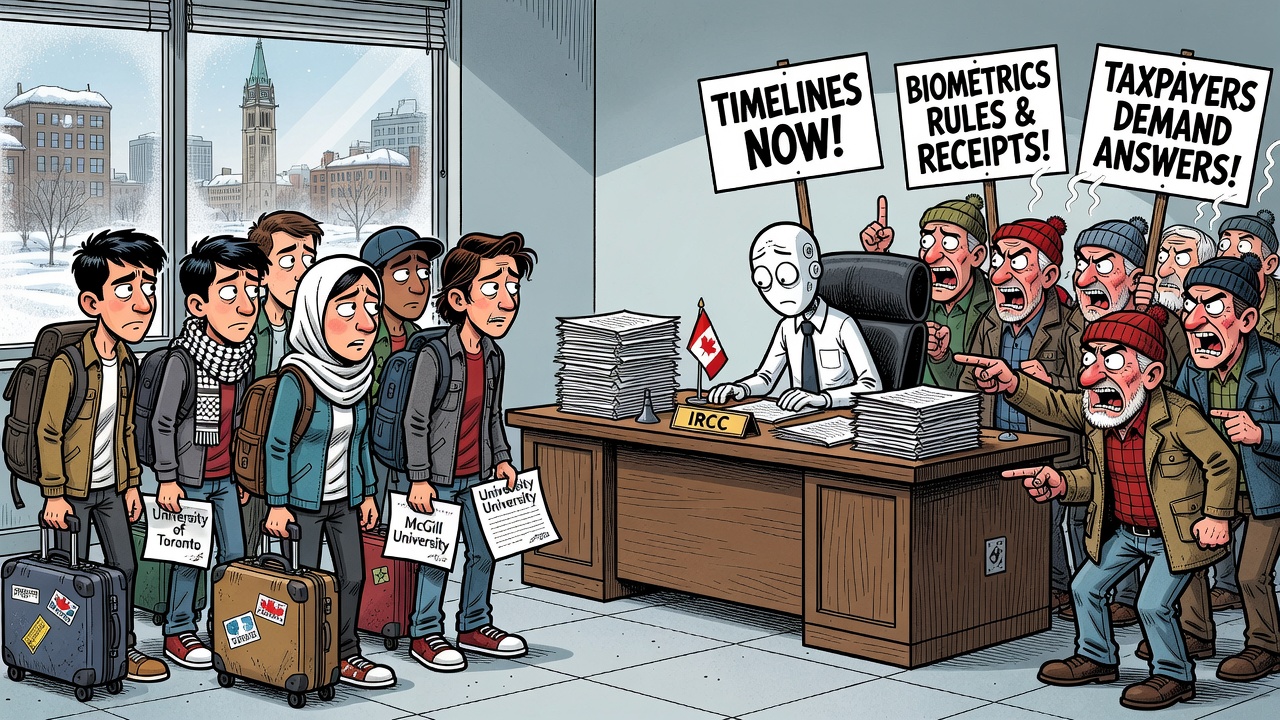
The Gazan student-permit file is exactly the kind of immigration story Ottawa prefers to bury in process language. The Canadian Press reported that Immigration Minister Lena Diab’s office said expedited processing was underway for 37 Gazan students and family members stranded in third countries. Advocates, meanwhile, said roughly 130 Palestinian students accepted by Canadian universities were still stuck abroad, most of them in Gaza, after waits that in some cases reached two years.
Security screening is not optional. Biometrics, identity checks, admissibility rules and program requirements exist for a reason, especially in a war zone where documents, travel routes and third-country status can be complicated. Conservatives should not pretend those safeguards are meaningless. But a safeguard is not an excuse for a black box. A competent department can protect Canada’s security and still tell applicants, universities and taxpayers what standard is being applied.
The problem is not simply that every file has not been approved. The problem is that nobody outside the department can see the ledger. Universities made admissions decisions. Faculty groups and advocates organized public pressure. Families made plans under impossible conditions. Then the federal government answered with scattered assurances instead of a transparent file-count, average wait time and decision timeline.
The Varsity reported that 15 faculty associations signed letters to Prime Minister Mark Carney and ministers responsible for immigration, public safety and foreign affairs, urging “immediate accountability and resolve.” It also reported concerns about biometrics barriers, extra scrutiny and the absence of a confirmed timeline. Those are not partisan slogans. They are basic public-administration questions: what does IRCC need, who must provide it, by when, and what happens if the requirement cannot be met because the applicant is trapped in Gaza?
Ottawa should publish an IRCC timeline ledger for this cohort: the number of Gazan students accepted by Canadian institutions; how many are in Gaza, third countries or already in Canada; how many applications are approved, refused, withdrawn or pending; the average and longest wait time; the biometrics-waiver criteria; the security-screen steps; and the minister’s written explanation for any mismatch between public statements and departmental action.
This does not require lowering Canada’s standards. It requires naming them. If an application is refused, say so with reasons. If a file is waiting on biometrics, explain the workaround. If a security check cannot be completed, identify the legal barrier without exposing operational secrets. What Ottawa should not do is let accepted students, universities and Canadians stare at a status page that cannot answer the simplest question: when will the government decide?
IRCC already has a credibility problem on backlogs, automation, lost files and shifting rules. The Gazan student file is a narrow test of whether the Carney government can run a humane but secure immigration process in public view. Publish the ledger, protect the safeguards and stop hiding failure behind the word “processing.”
- The Canadian Press via 980 CJME: Palestinian students stranded in third country seeing visas processed after long wait
- The Varsity: UTFA, PSSAR, LCPAL urge Ottawa to act on Gazan student permits
- CPAC: Academics urge action on study permit delays for Gazans
- Canadian Parliamentary Press Gallery: Media advisory: Palestinian students and academics press conference
This article supports immigration security screening while arguing that long-running study-permit files require clear public counts, standards and timelines.