Federal Court’s Immigration Backlog Is the Receipt Ottawa Can’t Ignore
The Federal Court says immigration proceedings may exceed 30,000 files in 2026. Ottawa owes Canadians a public ledger showing how policy, processing and automation pressures pushed the burden into court.
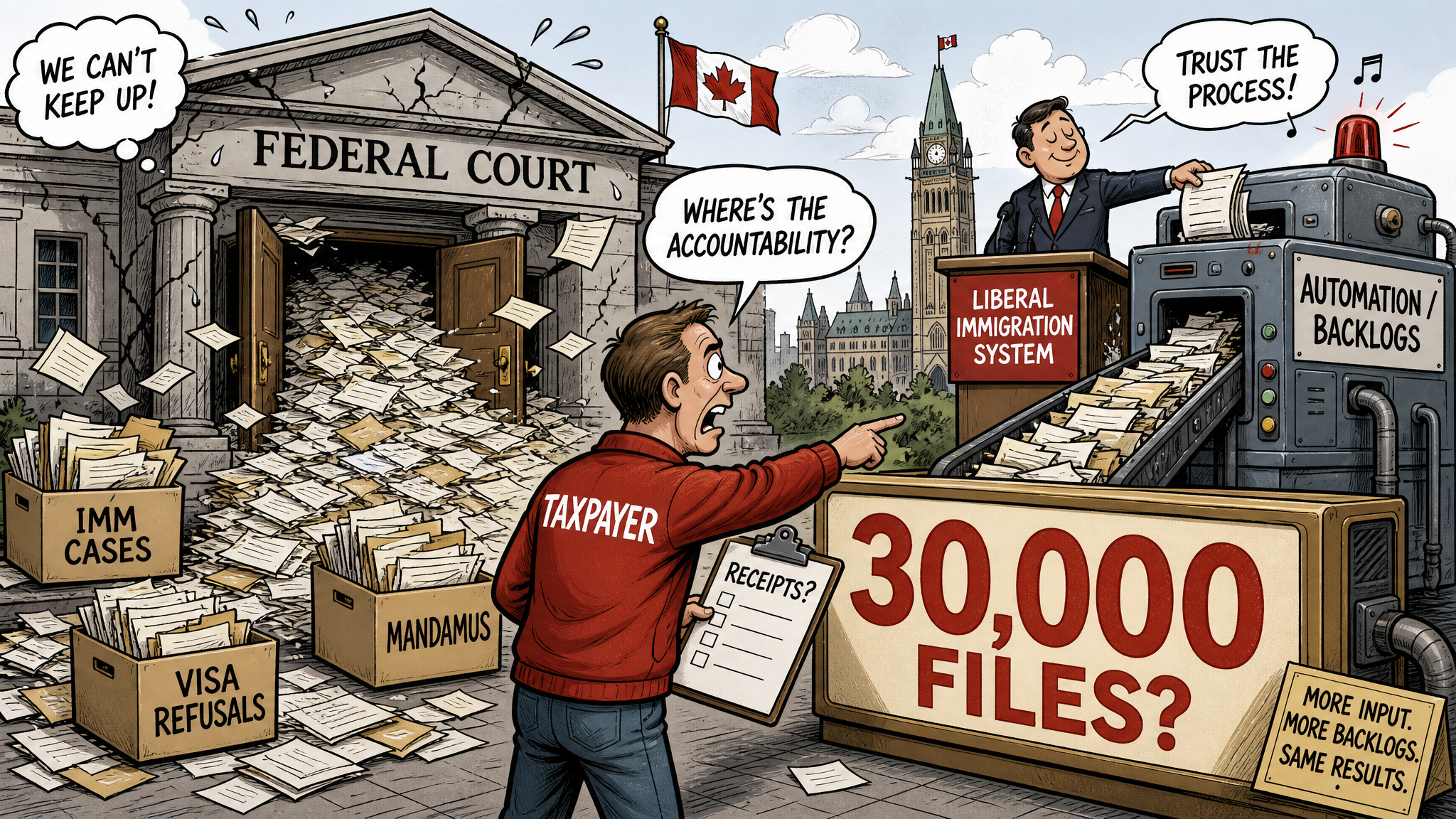
Ottawa can spin immigration targets, processing dashboards and digital modernization all it wants. The Federal Court has now supplied the receipt: the court system is absorbing an immigration failure that ministers have not explained with enough honesty, speed or detail.
On June 26, the Federal Court updated its consolidated practice guidelines for citizenship, immigration and refugee-protection proceedings. The practical change is telling: a special order extends the deadline to file an Applicant’s Record from 45 to 90 days. The Court says it had to take the step because of increasing caseload, budget restrictions and insufficient resources. That is not partisan rhetoric. That is the national trial court warning that the system is beyond normal strain.
The numbers are worse than a routine backlog story. The Court says new immigration proceedings have increased for a fifth record-breaking year and may exceed 30,000 files in 2026 — nearly five times the average annual filing volume before the pandemic. It says the surge is causing significant and sustained pressure on both the Court and the Registry, that new files can take up to eight weeks just to be processed, and that urgent motions for stays of removal are up 54% compared with last year.
The Courts Administration Service departmental plan confirms the trend. Annual immigration filings rose from 6,442 cases in 2020 to 24,673 in 2024, nearly a fourfold increase over five years. Preliminary 2025 data pointed to 29,000 to 30,000 cases. CAS also reported that self-represented litigants rose from 5% in 2022 to 23% in 2024, adding pressure to the Court and Registry.
That is where the accountability question lands on the Liberal government’s desk. Global News, reporting a Canadian Press story in May, said immigration cases at Federal Court had more than quadrupled since 2020 and that some immigration lawyers partly linked the surge to federal use of artificial intelligence and automation to clear visa backlogs. The same story reported IRCC’s position: AI plays no role in final immigration decisions, refusal decisions are made by trained officers after human review, and increased litigation cannot be attributed to one factor.
Fine. Then prove it with receipts. Publish monthly Federal Court immigration filing counts by program stream. Publish refusal volumes, approval volumes, judicial review volumes, mandamus applications, stay motions, average registry processing times and average time to hearing. Publish the automation and advanced-analytics audit trail: what tools touched a file, what recommendation or triage label was generated, what the officer reviewed, and what error rates were found. If the government says automation is not driving the court surge, the evidence should be visible enough for Parliament, litigants and taxpayers to test.
Canada needs an immigration system that is orderly, fair and enforceable. It also needs courts that can function. When a department clears one backlog by creating another one at the Federal Court, taxpayers pay twice: first for the processing machine, then for the litigation it produces. The conservative accountability standard is simple: before Ottawa asks for more money, more discretion or more patience, publish the court-backlog ledger and show Canadians exactly who broke capacity, who knew, and what is being fixed.
- Federal Court: Consolidated Practice Guidelines for Citizenship, Immigration and Refugee Protection Proceedings
- Courts Administration Service: Departmental Plan 2026–27
- Global News / Canadian Press: Immigration lawyers say automation is partly driving a massive Federal Court backlog
This article supports orderly, fair and enforceable immigration while demanding public evidence on court filings, processing quality, automation safeguards, wait times and taxpayer costs.