Carney’s Housing Cabinet Needs a Landlord Ledger
Global News found every member of Carney’s 38-person ministry owns a home and 38% are landlords. Ottawa should publish the rental-interest ledger before claiming it is fixing housing for renters.
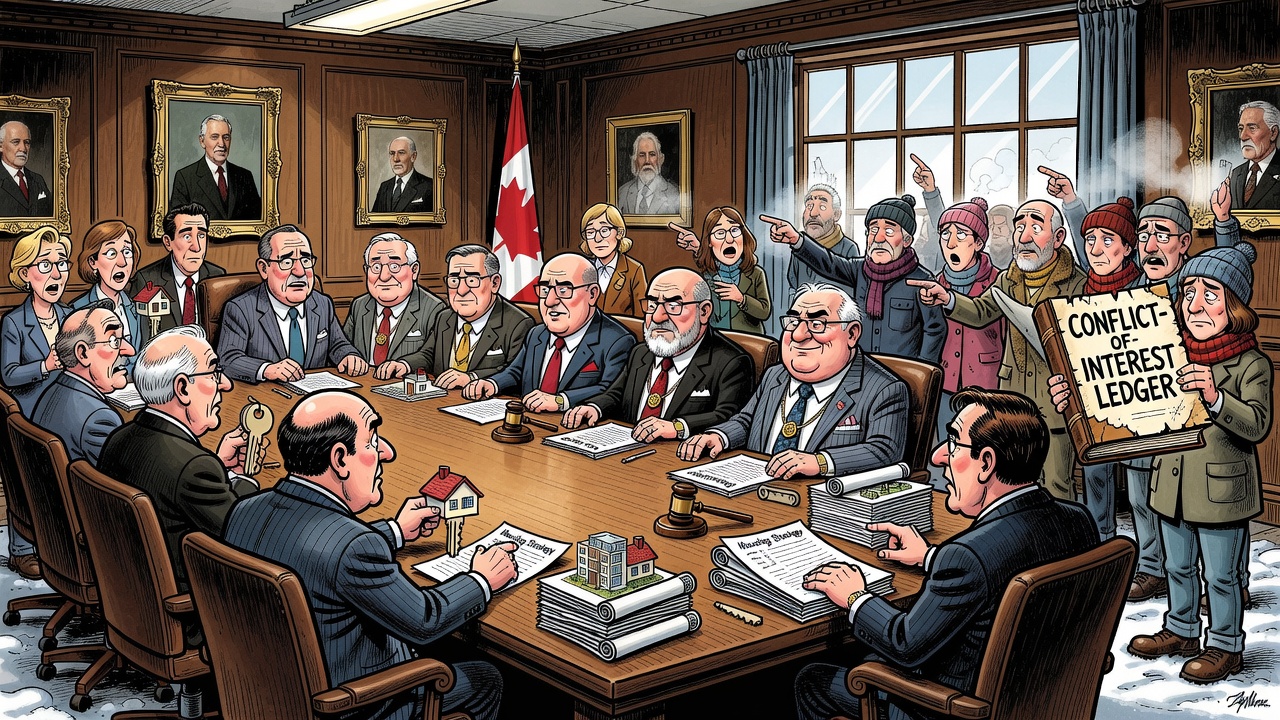
Owning a home is not a scandal. Renting out property is not automatically corruption. But when a government says it is solving the housing crisis for renters, Canadians are entitled to ask whether the people writing the rules have the same incentives as the people paying the rent.
Global News has now put hard numbers on that democratic gap. Its review of MPs’ ethics disclosures found every person in Prime Minister Mark Carney’s 38-person ministry — ministers plus secretaries of state — owns a home. None rents a principal residence. Global also found that 38% of Carney’s ministers are landlords, whether through rental income, rental properties, property-management businesses or real estate investment trusts.
The examples matter because they sit beside real policy power. Global reported that Immigration Minister Lena Metlege Diab owns or co-owns 14 rental units in Halifax; Finance Minister François-Philippe Champagne owns or co-owns two rental properties in London, England; and Secretary of State Randeep Sarai owns a half-dozen rental units in Burnaby and Surrey. Across the House of Commons, Global counted 103 MPs or spouses with disclosed rental income, rental properties, or rental/management businesses.
This is not only a Liberal problem. Conservatives and Bloc MPs are on the landlord list too, and Pierre Poilievre was named among them. That makes the accountability standard broader, not weaker. If Parliament is stacked with homeowners and landlords while roughly three in ten Canadian households rent, the answer is not partisan excuse-making. The answer is disclosure that ordinary Canadians can understand.
The timing is especially sharp because the Carney government has made housing a signature file. Bill C-20, the Build Canada Homes Act, received royal assent in June. During the committee study, tenant advocates pushed for measures such as vacancy control, security of tenure and a tenants’ bill of rights. Global reported that those requested amendments were not adopted.
Maybe ministers can defend every decision. Maybe some proposals were provincial, legally messy or poorly drafted. Fine — then explain that in public, with a clear record of who asked for what, who rejected it, and why. What Ottawa cannot credibly do is ask renters to trust a cabinet with no renters in it while refusing to show how landlord interests were identified, screened, recused or balanced.
A conservative accountability approach does not punish success or ban property ownership. It demands clean government. Publish a cabinet-and-MP housing interest table. Identify rental income, rental units, REIT holdings and property-management ties. Require recusal notes where a direct financial interest is obvious. Release the tenant-amendment decision record for Bill C-20. If Carney wants Canadians to believe his housing plan serves renters first, he should start by showing whose interests were sitting around the table.
- Global News: Landlords in the House: Advocates see a bias in Parliament against renters
- Parliament of Canada: Bill C-20, Build Canada Homes Act — LEGISinfo
- Government of Canada: Royal Assent of the Build Canada Homes Act
- Conflict of Interest and Ethics Commissioner: Public Registry
This article argues for stronger disclosure and recusal standards. It does not allege that property ownership alone proves misconduct.