The Marcos Visit Needs Receipts, Not Just a Photo Op
Canada can deepen ties with the Philippines without asking taxpayers, soldiers, businesses and diaspora families to accept a blank-cheque partnership.
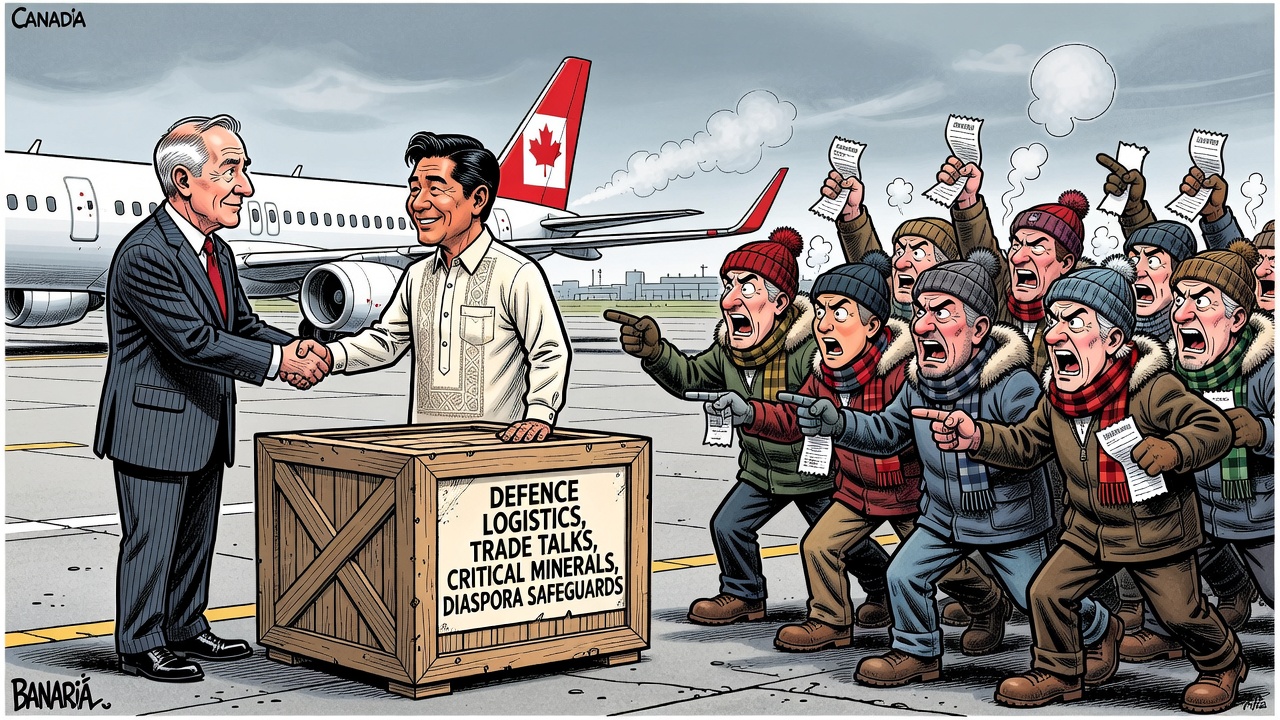
Prime Minister Mark Carney will host Philippine President Ferdinand Marcos Jr. in Vancouver from July 1 to 4, in what the Prime Minister’s Office says will be the first visit by a Philippine head of state to Canada in 11 years. That is a serious diplomatic moment. It should come with serious disclosure.
The official announcement lists a long menu: commerce, defence, energy, culture, maritime security, critical minerals, tourism, food security, and faster Canada-Philippines and Canada-ASEAN trade talks. It also points to nearly one million Canadians of Filipino descent, Canadian direct investment in the Philippines rising by more than 40 percent, and $3.4 billion in bilateral merchandise trade in 2025.
Those are not small files. They touch national security, supply chains, immigration-adjacent community safety, export finance, and Canada’s posture in the Indo-Pacific. Yet Canadians are again being handed the soft-focus version: values, partnership, diversification, opportunity.
Defence is the clearest example. On June 11, National Defence said Canada and the Philippines signed a Mutual Logistics Support Arrangement and a Statement of Intent on Strengthening Defence Cooperation. The logistics arrangement is meant to support combined exercises, training, deployments and operations. Ministers also discussed maritime security, joint military exercises and the defence industry.
That may be strategically defensible. The security pressure around the South China Sea is real, and Canada has an interest in a free and open Indo-Pacific. Conservatives should not pretend that every foreign partnership is suspicious simply because Liberals announce it. But support for allies does not erase the need for public guardrails.
What exactly can Canadian forces provide under the logistics arrangement? What requires cabinet approval, parliamentary notice or additional funding? Which defence firms, critical-mineral companies, exporters, lobbyists or provincial agencies are meeting officials around the visit? Will any export-credit exposure, procurement opportunity, training commitment or intelligence-sharing expansion follow?
The same standard should apply to trade. If Ottawa wants to accelerate Canada-Philippines and Canada-ASEAN negotiations this year, publish the objectives before the communiqués are written. Which sectors gain? Which sectors face import pressure? What labour, human-rights, anti-corruption, state-enterprise, data and supply-chain rules are being sought?
And if the government invokes Filipino Canadians as a bridge between countries, it owes that community more than symbolic language. Publish the diaspora-protection plan: foreign-interference reporting channels, consular safeguards, community consultation records, and any commitments that protect Canadians from intimidation tied to overseas politics.
None of this argues against welcoming Marcos or building an Indo-Pacific partnership. It argues against doing what Ottawa too often does: announce a sweeping strategic relationship, attach the word “values,” then release the receipts only after decisions are already locked in.
Carney should welcome the visitor. Then he should show Canadians the ledger.
- Prime Minister of Canada: Prime Minister Carney to welcome President of the Philippines Ferdinand Marcos Jr. to Canada
- National Defence: Canada and the Philippines strengthen defence partnership with new arrangement
- Philippine Canadian Inquirer: Philippine President Marcos to visit Canada after 11 years
- GMA News: Philippines, Canada sign mutual logistics support arrangement
This article does not allege wrongdoing by Canadian or Philippine officials. It argues that a major defence-and-trade visit should come with public accountability safeguards.