The Pantry Tax: Ottawa Adds 10% to Canned-Vegetable Imports
If Liberals want to call a food surtax “affordability,” they should first publish the price impact on the families who buy pantry staples.
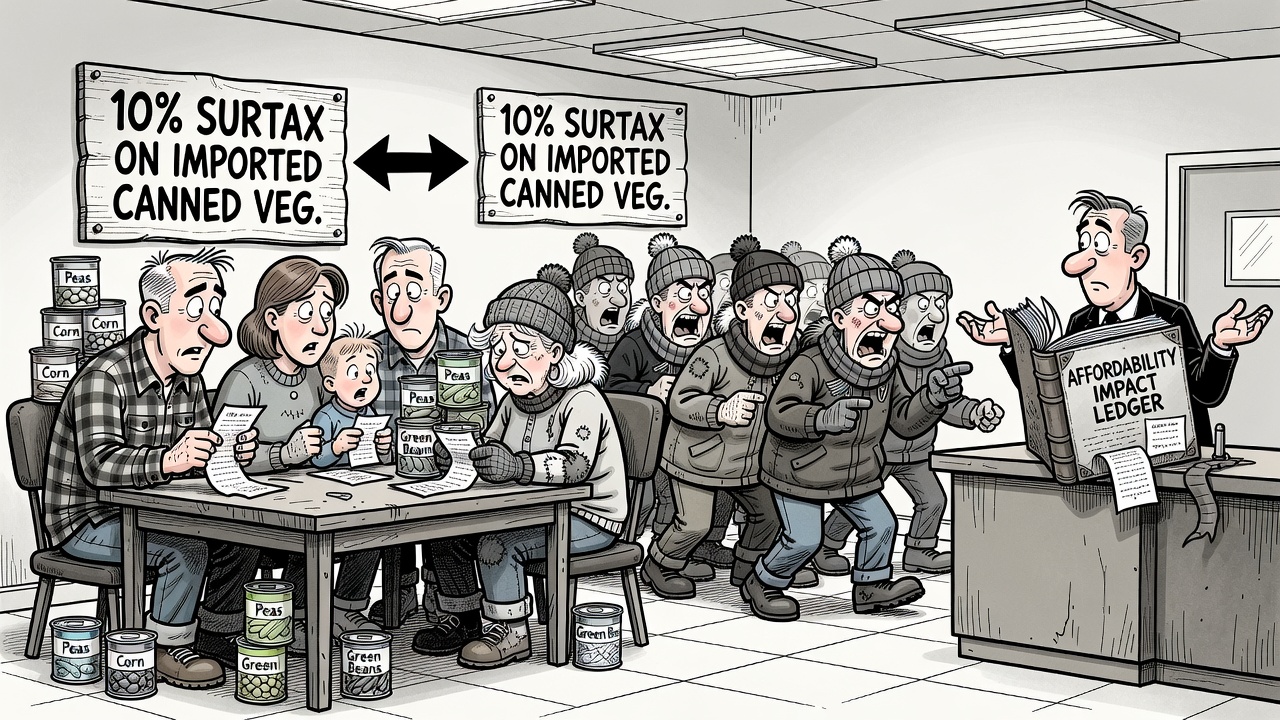
Ottawa has found a strange way to fight the grocery squeeze: add a new charge to canned vegetables.
Finance Canada announced a provisional 10 percent surtax on certain global imports of canned vegetables, effective June 19, 2026, for up to 200 days. The government says the measure is meant to protect Canadian producers while the Canadian International Trade Tribunal completes its inquiry into whether imports are injuring domestic processors. CityNews reported the same day that the tariff took effect immediately and would last for a maximum of 200 days.
That may be a defensible industrial-policy argument. It is not an affordability argument unless Ottawa shows the math.
Canned vegetables are not luxury goods. They are shelf-stable basics: corn, peas, beans, chickpeas, green and wax beans, mixed vegetables, and peas-and-carrots mixes. A customs-compliance update from Willson International says affected commercial imports are subject to a surtax of 10 percent of value for duty, while goods from the United States, Mexico, Chile, Israel and developing countries are excluded under Canada’s trade obligations.
That exclusion list matters. It means the measure is targeted, complicated and administrative — the kind of policy that may look tidy in a briefing note while still flowing through importer costs, retailer decisions and consumer prices. If Ottawa believes shoppers will not feel it, say so plainly and release the analysis.
The Liberal government’s language tries to have it both ways. Finance Minister François-Philippe Champagne said the measure provides relief to the canned-vegetables sector while protecting food security and affordability. But Canadians who live on tight grocery budgets deserve more than a slogan. A surtax is a tax at the border. Someone absorbs it, and Ottawa should identify who.
A conservative accountability standard is straightforward: protect Canadian workers where there is evidence of injury, but do not hide consumer costs behind patriotic packaging. If domestic processors need temporary relief, publish the injury evidence, expected job impact, duration test, importer consultations, retailer pass-through assumptions and the exact condition that ends the surtax.
The Tribunal is expected to conclude its inquiry in September 2026. Until then, families buying shelf-stable pantry food should not be asked to trust that a new grocery-adjacent levy is somehow pro-affordability.
The Carney government should publish a pantry-tax ledger now: products covered, import volumes, expected price effect, affected retailers, industry beneficiaries, exemptions, and the date this measure disappears if the injury case fails. Food affordability begins with receipts, not press-release adjectives.
- Department of Finance Canada: Canada announces provisional safeguard tariff on imports of canned vegetables
- CityNews / Canadian Press: Canada announces 10% tariff on import of canned vegetables
- Willson International: Compliance update: Certain canned vegetable goods surtax effective June 19, 2026
This article does not allege wrongdoing by processors or importers. It argues that a grocery-related surtax should come with public affordability receipts.