Carney’s Rent-to-Own Condo Pitch Still Needs a Public Ledger
Affordability cannot be a slogan when taxpayers are asked to help convert unsold condos.
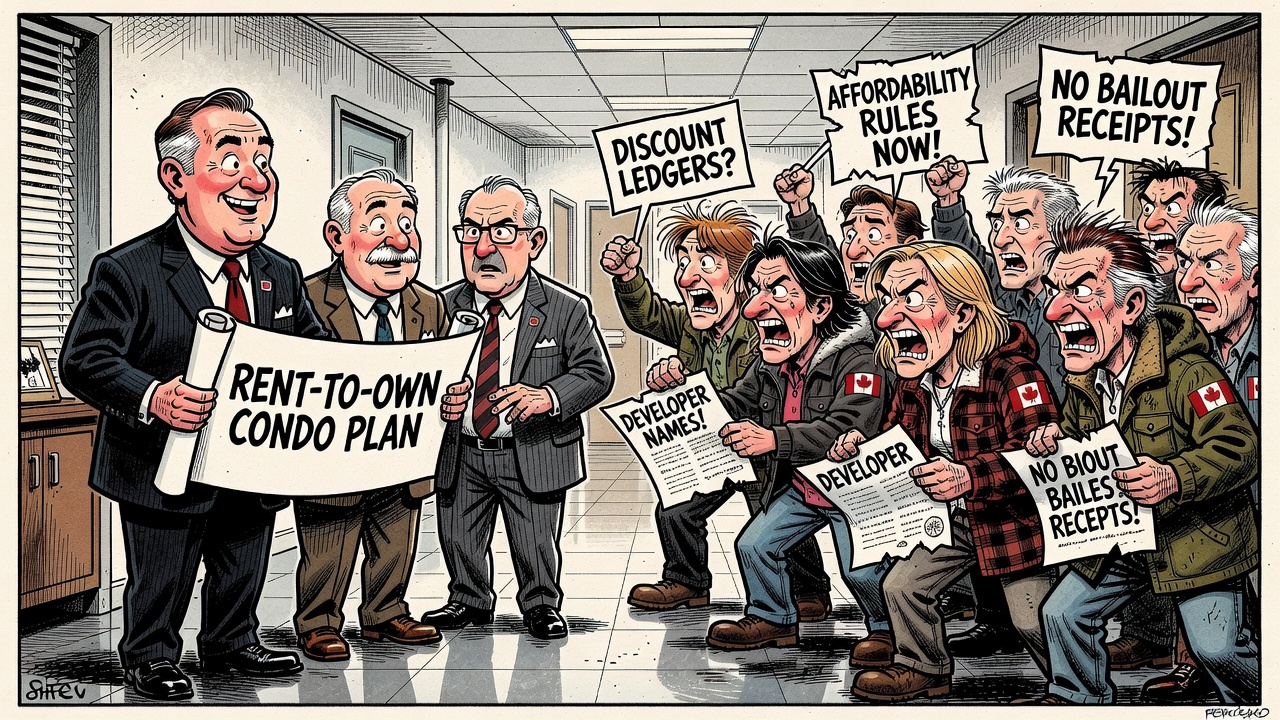
Prime Minister Mark Carney now says the B.C. vacant-condo conversion plan is about affordability, not bailing out developers. Fine. Then the test should be simple: publish the ledger before public money moves.
The June 18 federal announcement said Ottawa and British Columbia would launch a Canada-B.C. Partnership on Condo Conversion, using Build Canada Homes and BC Housing to “leverage innovative financing tools” and convert more than 2,200 vacant condo units in priority growth areas into affordable homes. That same announcement put the broader B.C. infrastructure partnership above $5 billion over 10 years and included nearly $1.6 billion in federal money, matched by B.C., to cut development charges for multi-unit housing by up to 50%.
That clarification matters, but it does not settle the accountability question. Rent-to-own can help some buyers if the entry price is truly below market, the terms are understandable, the savings mechanism is protected, and the future purchase price is not rigged to rescue today’s developer math. It can also become a complicated subsidy that props up asking prices, limits normal price discovery, and leaves taxpayers carrying risk while politicians claim compassion.
Carney says no developer asked him for the proposal. Canadians should not have to take that on faith. If the plan came from Victoria, publish the proposal memo, the transaction criteria, the lobbying and meeting logs, and any analysis of which developers, lenders or projects could benefit. If there are no specific transactions yet, there is no excuse for hiding the rules that will govern them.
The conservative accountability standard is not “never buy anything.” It is “prove the deal.” For every unit, taxpayers should see the seller, appraised value, asking price, purchase or financing price, discount achieved, strata fees, repair liabilities, eligibility rules, rent-to-own formula, default consequences, resale restrictions and affordability covenant. They should also see a comparison against the simpler alternative: letting unsold condos fall to a market-clearing price so ordinary buyers can negotiate without government stepping in as a bulk buyer.
Ottawa and Victoria may eventually show that some distressed units can be converted into durable affordable housing at a bargain. But until the numbers are public, Canadians are being asked to applaud a plan whose beneficiaries, prices and risks remain mostly invisible.
Carney wants this judged as affordability, not a bailout. Good. Put the discount ledger online and let taxpayers judge the transactions before the cheques clear.
- Prime Minister of Canada: Canada and British Columbia forge new partnership to accelerate homebuilding, lower costs, and build new local infrastructure
- CityNews / The Canadian Press: Carney says B.C. condo buyout proposal is about affordability, not bailouts
- CityNews Vancouver: Province faces backlash over plan to potentially help finance purchase of 2,200 condos
- Fraser Institute: Carney and Eby governments should not bail out condo developers in B.C.
This article argues that any condo-conversion program should be judged by public transaction terms, enforceable affordability rules and beneficiary disclosure.