Ottawa’s Access-Law Rewrite Would Put Emails and Texts Behind a New Wall
The Carney government says it wants a modern access system. But a faster secrecy machine is still a secrecy machine.
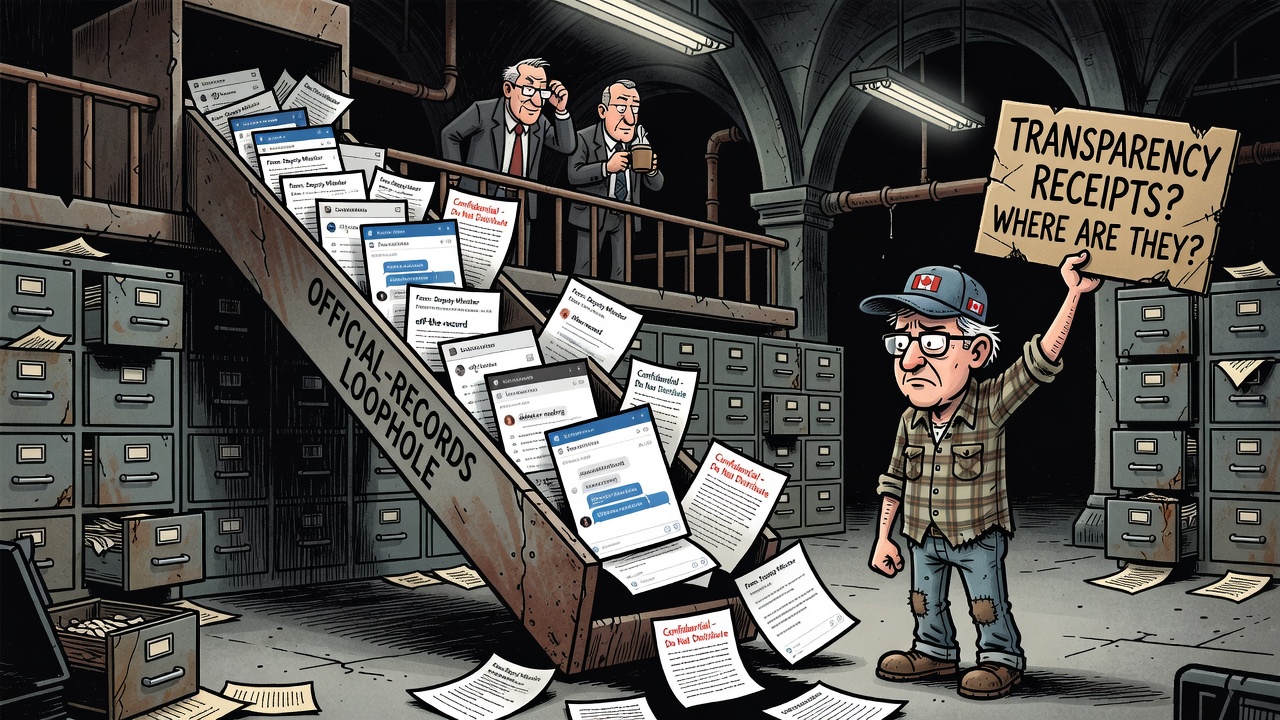
Ottawa’s access-to-information problem is real. Requests take too long, records arrive blacked out, and digital government has scattered public business across emails, texts, Teams chats and shared workspaces. But the cure now being tested by Treasury Board could be worse than the disease: redefine the law so fewer records are reachable in the first place.
The federal policy paper proposes changing “record” under the Access to Information Act to “official record” — material with ongoing business value that is stored in official repositories. Treasury Board says this would make searches faster, remove irrelevant or duplicate transitory material, and help institutions provide more useful answers. That sounds efficient until Canadians ask the obvious question: who decides which records count before the public ever gets to ask?
Information Commissioner Caroline Maynard is right to raise the alarm. In a Canadian Press report, she warned that narrowing the scope of the Act could exclude “entire swaths” of government-held records and called the approach a move in the wrong direction. Her office has separately reminded federal institutions that once an access request is received, responsive records must be preserved and provided regardless of whether they are transitory or considered business-value records.
That principle matters because government decisions are often revealed in the messy trail, not the polished final memo. Emails show who was warned. Texts show who was pressed. Drafts show what was removed. Chats can show how a public line was coordinated before a minister stands up and reads it. A democracy does not become more transparent by moving those records behind an internal label.
The Narwhal warned the proposal could shield some emails, texts, instant messages, drafts and duplicates if they are treated as transitory or lacking business value. TVA Nouvelles reported the same rollback concern in plainer terms: Ottawa wants to exclude routine communications from access requests, including emails, texts and Microsoft Teams conversations that can be crucial to public-interest reporting.
Conservatives should not defend a broken access system just because Liberals are proposing the fix. Delays need reform. Vexatious flooding can be handled. Historical records should be declassified faster. But the first rule must be simple: if a government record exists when a lawful request arrives, it remains subject to access, with ordinary exemptions for privacy, national security and legitimate confidences.
Carney and Treasury Board should publish the consultation submissions, legislate a real duty to document, preserve digital communications, and reject any “official records” loophole that makes accountability depend on where a bureaucrat saved the file. Open by default cannot mean open only after Ottawa decides the receipt is official enough.
- Treasury Board of Canada Secretariat: 2025 review of the Access to Information Act: policy approaches
- Treasury Board of Canada Secretariat: 2025 review engagement page
- Canadian Press via 980 CJME: Bid to narrow transparency law “a move in the wrong direction,” info watchdog says
- Office of the Information Commissioner of Canada: Message on digital collaboration tools and retention of records
- The Narwhal: Government emails, text messages could be shielded by federal transparency law changes
- TVA Nouvelles: Recul de la transparence au fédéral
This article argues for broader public access to existing government records while recognizing that legitimate statutory exemptions can still protect privacy, security and confidential information.