Before More Chinese EVs Enter Canada, Publish the Forced-Labour Screen
A cheaper-car pitch does not cancel Canada’s duty to prove battery and supply-chain compliance before quota imports scale up.
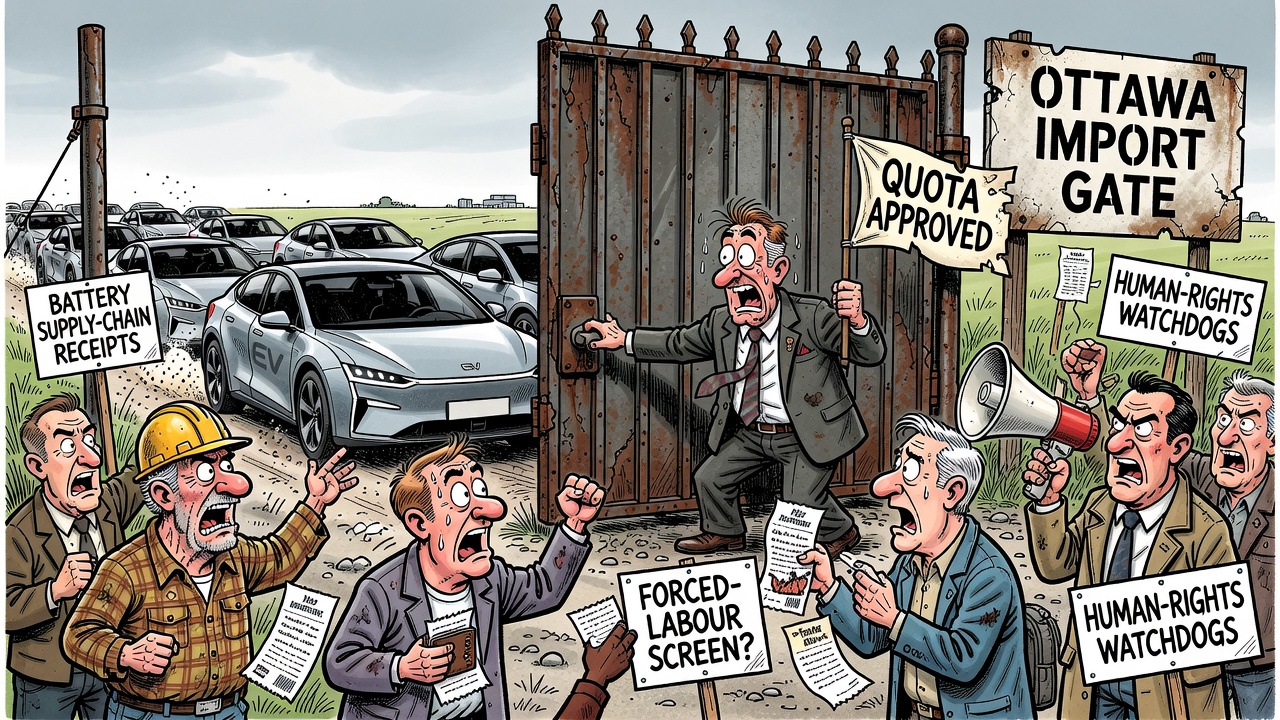
Ottawa’s China EV quota is no longer just an auto-policy story. It is now a forced-labour enforcement test.
Juno News reported that Foreign Minister Anita Anand could not say whether Chinese EV batteries would be included on Ottawa’s forced-labour prohibited list, saying the list would be finalized later in the fall. That answer matters because the government is simultaneously opening a tariff-rate quota for China-sourced vehicles. IndustryWeek reports the quota began March 1, 2026, starts at 49,000 imported vehicles in the first 12 months at a 6.1 percent tariff, and rises through 2030, while imports above quota face a much higher tariff.
To be precise, this is not a claim that every Chinese-made EV or battery entering Canada is tainted. Conservatives should not need to overstate the case. The stronger argument is simpler: when the government changes trade rules for a supply chain already under forced-labour scrutiny, ministers must show the compliance system before the market is flooded with new incentives.
The House industry committee record shows Ottawa is selling its auto strategy as a jobs-and-industrial-policy plan. Minister Mélanie Joly told MPs Canada’s auto sector directly supports more than 125,000 jobs, contributes nearly $17 billion annually to GDP, and depends on decisions that protect workers and supply chains. Those are exactly the stakes that make the China quota risky if the guardrails are not public.
Canadian consumers want affordable vehicles. Canadian auto workers want stable production. Human-rights advocates want imports screened against forced labour. None of those goals require secrecy. What they require is a published rulebook: which battery components are high risk, what importer certifications are mandatory, what supply-chain traceability standard applies, how CBSA will verify documents, and what penalties follow if a company misrepresents its sourcing.
Ottawa should also publish the quota allocation ledger. Which importers applied? Which companies received permits? How many vehicles are tied to each allocation? Which models or batteries passed the compliance screen? If a minister can announce affordability benefits, taxpayers can see the paperwork behind them.
The Carney government wants to sound tough on forced labour while sounding flexible on China trade. That balance only works if enforcement is visible. Otherwise Canada risks building an EV policy where the public gets slogans, workers get uncertainty, and importers get the benefit of the doubt.
Before one more quota vehicle is treated as a victory lap, publish the forced-labour receipts.
- Juno News: Zero answers on inclusion of Chinese EV batteries in forced labour ban
- House of Commons INDU: Meeting 37 evidence on Canada’s auto strategy
- IndustryWeek: Big Changes in Canada’s Automotive Strategy With China
- Blacklock’s Reporter archive: June 2026 archive noting scrutiny of Chinese EV quota and slave-made goods compliance
This article does not allege that all Chinese-made EVs or batteries are made with forced labour. It argues that Ottawa should publish auditable compliance rules, importer certifications and enforcement data before quota imports scale.