Bill C-30 Put Pesticide Science Under an Economic-Security Shadow
Farmers need workable tools. Canadians also deserve proof that health and environmental risk decisions are not being quietly subordinated to cabinet politics.
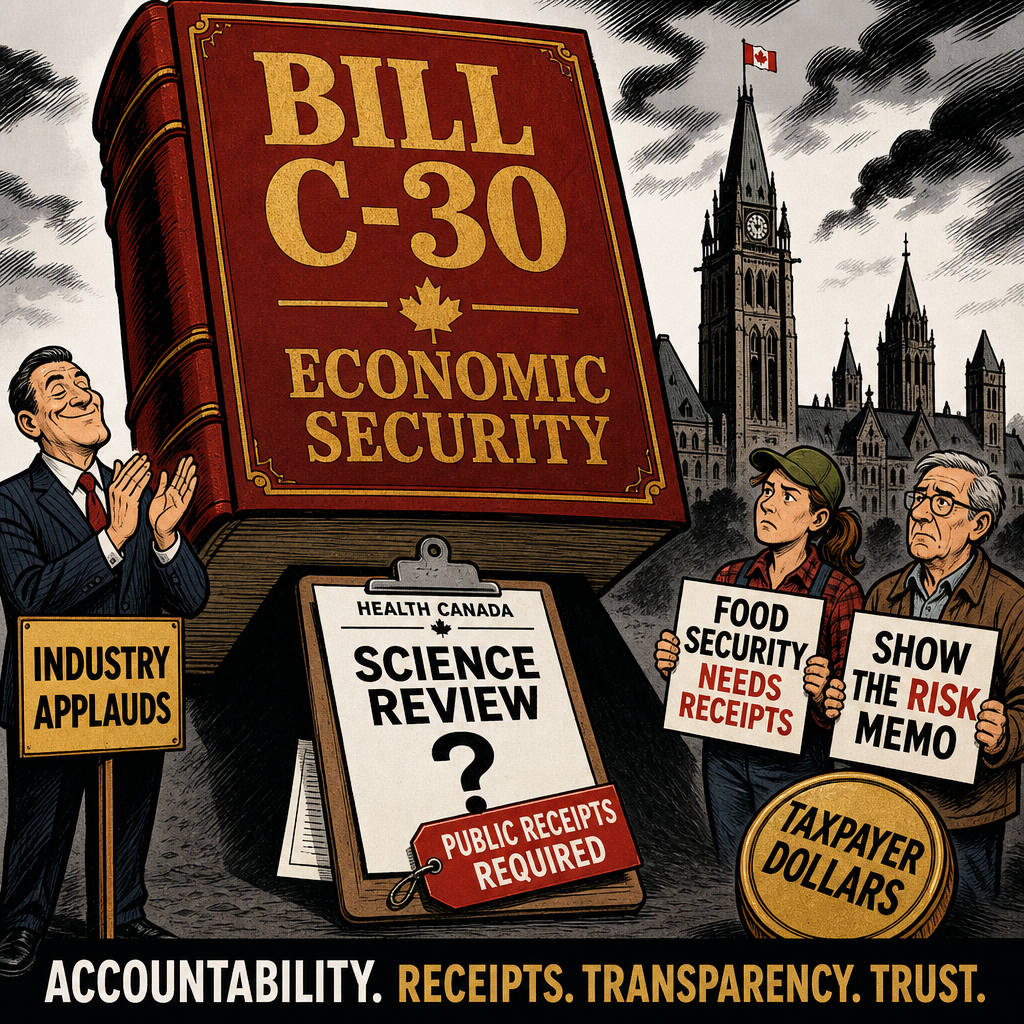
Bill C-30 is no longer a pre-passage warning. Parliament’s LEGISinfo page lists the Spring Economic Update 2026 Implementation Act as receiving Royal Assent on June 18, 2026. Buried inside that budget legislation is a pesticide accountability problem the Carney government now owns.
The Library of Parliament’s legislative summary says Division 8 amends the Pest Control Products Act by requiring the Health Minister, when administering the Act, to consider national economic security, regional economic security or national food security. Those are broad political concepts being inserted into a regime Canadians have long been told is driven by health, environmental risk and science.
The same summary says Bill C-30 also creates Canadian Food Inspection Agency Act exemption-order powers for the Governor in Council when necessary to protect national or regional economic security or national food security. TVA reported on June 18 that the measure was adopted through omnibus budget legislation, that the law does not name specific pesticides, and that Ottawa describes the temporary authorizations as exceptional and publicly justified.
That distinction matters. This is not an argument that farmers should be denied every emergency tool. Food security is real. Crop loss is real. Canada should not regulate agriculture by activist slogan. But conservative accountability starts with the obvious question: if a minister or cabinet can invoke economic security inside a pesticide-risk system, what stops the economic argument from becoming the trump card?
Health and environmental groups are not inventing that concern. The National Farmers Union and signatory organizations warned that the amendments politicize pesticide decisions and could allow cabinet to overturn decisions involving unacceptable environmental risks for up to six years plus a phase-out period. If Ottawa disagrees, it should answer with statutory guardrails, not talking points.
Industry’s reaction is also part of the public record. CropLife Canada applauded Bill C-30’s passage and specifically welcomed food-security and economic-growth considerations in the Pest Management Regulatory Agency’s mandate. Canadians can decide for themselves whether that applause makes the need for transparency stronger or weaker. It should make it stronger.
The receipt test is simple. Before any pesticide authorization or exemption is made under these new powers, publish the criteria, the Health Canada risk assessment, the ministerial recommendation, the cabinet order, the product name, the expiry date, the affected regions, the mitigation conditions and the lobbying log. If the decision is genuinely exceptional, the evidence should survive daylight.
Bill C-30 was sold as budget implementation. It now carries a health-and-environment trust test. The Carney Liberals should not ask Canadians to accept “economic security” as a magic phrase that turns science review into a cabinet convenience.
- Parliament of Canada LEGISinfo: Bill C-30 status and Royal Assent
- Library of Parliament: Legislative summary of Bill C-30
- TVA Nouvelles: coverage of pesticide measures in Bill C-30
- National Farmers Union: coalition warning on Pest Control Products Act changes
- CropLife Canada: industry statement applauding Bill C-30
This article does not claim a specific pesticide has been authorized under these provisions. It argues that any future use of the new powers should be accompanied by public criteria, risk evidence and lobbying disclosures.