Bill C-22 Reaches the Senate After Liberals Cut Off Scrutiny
The Senate should not rubber-stamp expanded digital-access powers without public amendments, hard metadata limits and a plain no-encryption-weakening rule.
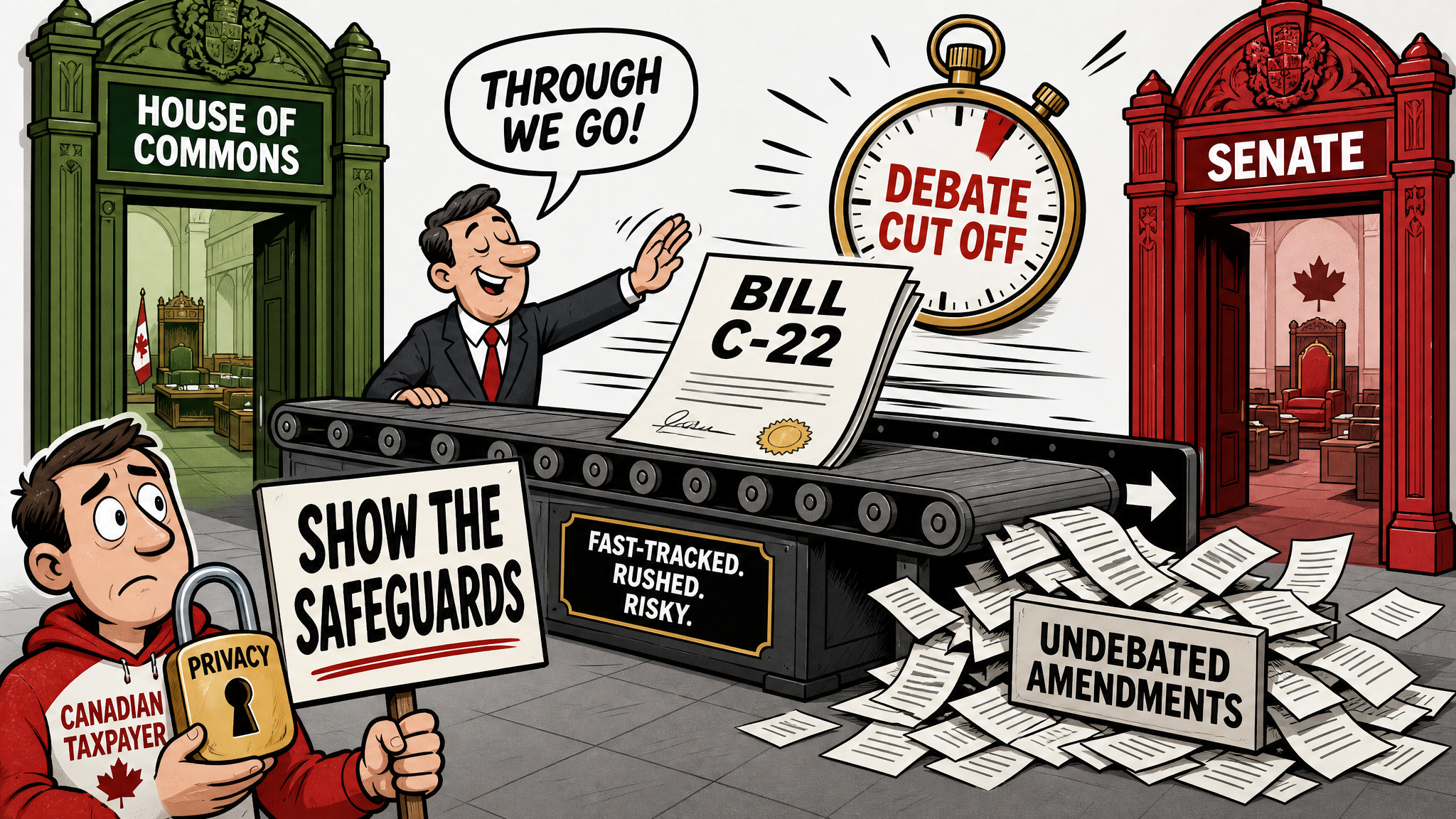
Bill C-22 has moved from warning to accountability test. Parliament’s LEGISinfo page lists the Lawful Access Act, 2026 as a House government bill sponsored by the Minister of Public Safety. It shows committee consideration, report stage and third reading all completed in the House of Commons on June 18, 2026, and the Senate progress line lists first reading that same day, with no second-reading activity shown yet.
That matters because the way the House handled this bill was not normal scrutiny for a major surveillance measure. Global News reported that the House passed C-22 after the government approved a motion to fast-track the bill and end public-safety committee debate. The committee then approved it just before midnight without debating dozens of outstanding amendments. The Senate is now the first real chance to slow the machine down and make the safeguards visible.
Conservatives can support police getting timely, judge-authorized tools to pursue child exploitation, violent crime and national-security threats. But public safety is not a blank cheque. A government that asks Canadians to accept broader digital-access powers must prove necessity, proportionality and auditability in public, not insult critics while rushing the process.
The concern is not imaginary. Global News reported that C-22 would let law enforcement get digital information more quickly under judicial warrant, while controversial provisions involving metadata retention and technical access capabilities alarmed privacy advocates, academics, technology companies and opposition parties. Those are serious objections about architecture, not partisan theatre.
The Privacy Commissioner’s submission is the receipt senators should keep on their desks. Philippe Dufresne wrote that C-22 meaningfully improves on the earlier Bill C-2, but still needs further changes to balance lawful-access needs with privacy rights. His office recommended narrowing subscriber-information powers, defining publicly available information so it excludes data where a person has a reasonable expectation of privacy, requiring necessity and proportionality for obligations including metadata retention, and strengthening the systemic-vulnerability language so orders must not weaken encryption or authentication.
Civil liberties groups reached the same democratic point from a sharper angle. ICLMG, OpenMedia, CCLA and other signatories said C-22 is too complex and consequential to be rushed, and warned that all government and opposition amendments should have been fully considered and scrutinized in public. That is not an anti-police position. It is a pro-Charter, pro-Parliament position.
The Senate should not rubber-stamp C-22 as written. It should publish the amendment table, hold recorded votes, require annual transparency reporting, set hard limits on metadata retention, protect encryption in plain statutory language, and narrow secret ministerial orders so they are necessary, proportionate and reviewable.
If the Carney Liberals are right that privacy fears are overblown, they should welcome that test. Put the safeguards in writing. Put the votes on the record. Put the surveillance state on a leash before Canadians are told to trust it.
- Parliament of Canada LEGISinfo: Bill C-22, Lawful Access Act, 2026 status and progress
- Global News: Liberals dismiss privacy fears as lawful access bill passes
- Global News: Minister urges MPs to fast-track lawful access bill
- Office of the Privacy Commissioner of Canada: Submission on Bill C-22
- International Civil Liberties Monitoring Group: Civil liberties groups denounce shutdown of debate on Bill C-22
This article supports lawful, judge-authorized investigative tools where they are precise, necessary and auditable. It does not claim Bill C-22 is law or that it creates unrestricted warrantless access; it argues the Senate should require enforceable safeguards before passage.