The Affordability Test Carney Can’t Speechify Away
Canadians do not buy headline promises. They buy food and fuel — and the latest CPI receipt is moving the wrong way.
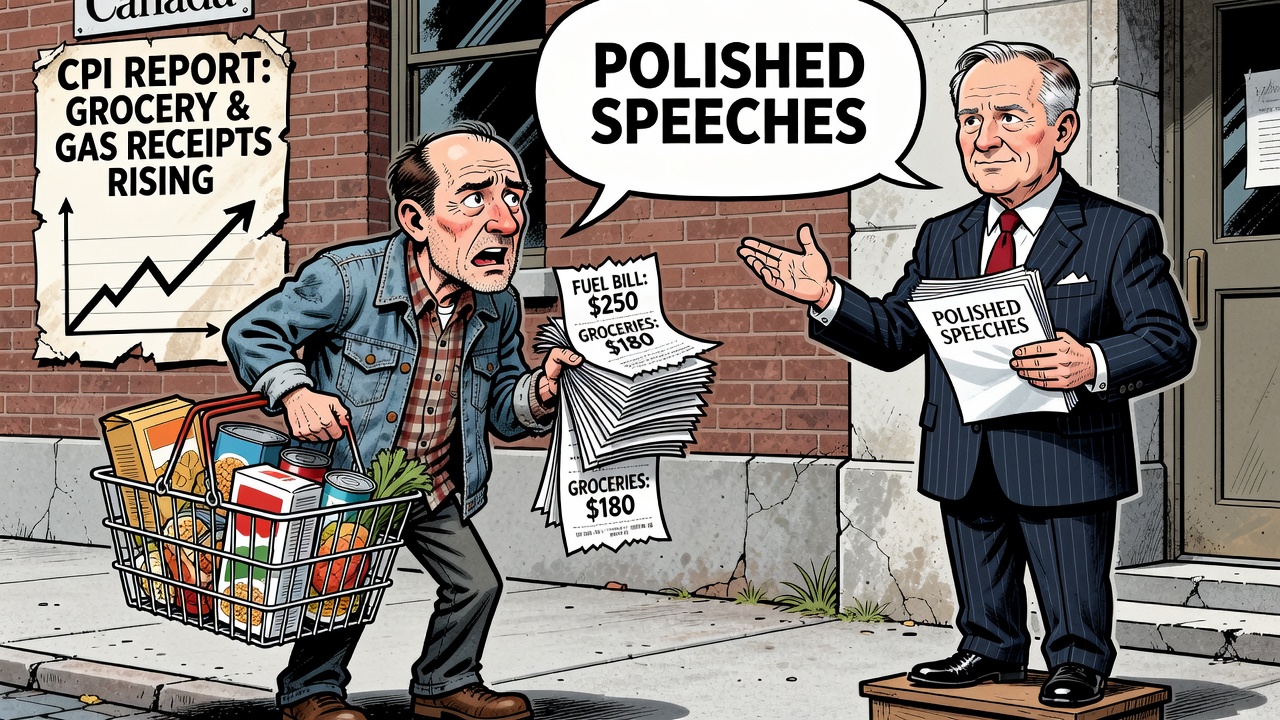
Statistics Canada’s June 22 release should be required reading for every Liberal minister still talking as if affordability is a communications problem. The Consumer Price Index rose 3.2% year over year in May, up from 2.8% in April. That is not a partisan talking point. It is the federal statistical agency’s latest receipt.
The Carney government can argue that inflation is global, that energy markets are volatile, and that central bankers target inflation over the medium term. Some of that is true. But households do not live inside a ministerial briefing note. They live at the checkout, at the pump, and around kitchen tables where the monthly budget has to add up.
That grocery number matters because it hits everyone, every week. Fresh vegetables were up 9.0% year over year. Tomato prices rose 45.2% in May, with Statistics Canada pointing to supply contractions in Mexico after poor weather and reduced acreage following U.S. tariffs. Even if Ottawa cannot control every weather event or foreign tariff, it can stop pretending Canadian families are being unreasonable when they say the cost of living still feels broken.
There is also a credibility problem. Carney was sold as the adult in the room: the banker, the technocrat, the man who could manage complexity. Fine. Then let him be judged by results, not aura. If affordability is the priority, Canadians deserve a public scorecard that separates speeches from outcomes: grocery inflation, fuel costs, rent, mortgage interest, taxes, regulatory costs and federal spending pressures.
The Bank of Canada’s inflation-control target aims to keep total CPI inflation at the 2% midpoint of a 1% to 3% range over the medium term. May’s 3.2% headline rate is above that range. Even excluding gasoline, Statistics Canada says CPI rose 2.2%, faster than April’s 2.0%. That undercuts any easy claim that the problem is only one volatile commodity.
A conservative affordability test is simple: government should make essentials cheaper to produce, transport, build and buy. That means disciplined spending, faster approvals for energy and housing supply, lower compliance costs for small businesses, and no new hidden tax grab dressed up as “investment.” It also means publishing the receipts when programs are sold as relief.
Canadians do not need another polished lecture about resilience. They need a government that understands that a 4.3% grocery increase is paid with after-tax dollars by people who already made sacrifices last year. The May CPI release is the scoreboard. Carney’s affordability message is failing it.
- Statistics Canada, The Daily: Consumer Price Index, May 2026
- Bank of Canada: Inflation-control target
This article does not claim Ottawa directly controls every price shock. It argues that federal affordability promises should be judged against current household-cost data and backed by measurable policy results.