When Condos Won’t Sell, Carney Sends Taxpayers
A vacant-condo rescue is not housing policy unless taxpayers see the price, the discount and the affordability rules.
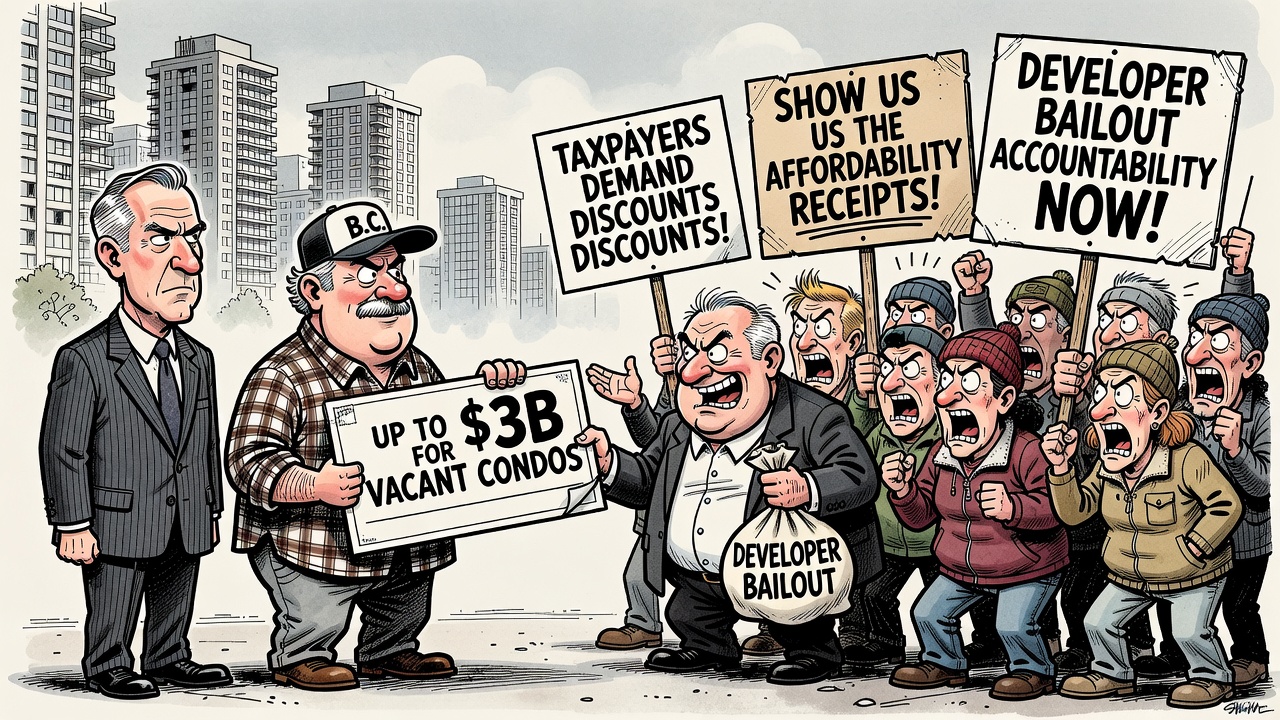
Canada’s housing crisis was supposed to be about families priced out of a place to live. Now Ottawa and British Columbia are floating a plan that could make taxpayers the buyer of last resort for condos the market will not absorb.
CBC reported that Prime Minister Mark Carney and B.C. Premier David Eby plan to use up to $3 billion to buy vacant condo units and convert them into affordable housing. The same report says part of the fund, split between Ottawa and B.C., would also be used over 10 years to lower municipal development fees for builders. That is not a small tweak. It is a major public intervention in a private market that already produced units many Canadians cannot afford.
There is a defensible version of this idea. If governments can buy finished units at a steep discount, impose real affordability covenants, disclose every purchase price, and keep the homes in public or non-profit affordable stock, taxpayers might get usable housing faster than waiting years for new construction.
But that is not the same as writing a soft landing for developers who guessed wrong on price, demand, financing or product mix. Housing expert Andy Yan asked whether the plan is really helping industry rather than bailing out bad business decisions. Jill Atkey of the B.C. Non-Profit Housing Association told CBC that using public dollars to rescue the condo market or private development sector would be a misuse of funds.
Carney said the government would use the right financial mechanisms, but CBC reported he did not say whether bulk purchases would be below market value. That missing detail is the entire ball game. Buying unsold condos at or near developer asking prices would protect balance sheets and lenders before it protects renters, first-time buyers or taxpayers.
The development-charge piece needs the same scrutiny. CBC reported that governments could cut development cost charges for multi-unit housing by up to 50%, saving builders up to $40,000 per unit while public money funds infrastructure such as water, wastewater and roads. If taxpayers are replacing municipal fees, they deserve a binding pass-through mechanism proving lower costs become lower rents or lower sale prices — not simply higher margins.
The conservative accountability standard is straightforward: publish the unit list, developer names, lenders where relevant, appraised values, purchase prices, discounts, occupancy timelines, affordability definitions, resale restrictions and operating subsidies. Show whether any politically connected firms benefit. Show whether the homes remain affordable for decades, not just for a press conference.
Canadians do not need another housing announcement dressed up in compassionate language while private risk quietly migrates onto the public ledger. If Carney wants taxpayers to buy the condo glut, he should publish the receipts first.
- CBC News: Critics slam government plan to “bail out” sagging condo sector in B.C.
- Canada Mortgage and Housing Corporation: Completed and unabsorbed units — Metro Vancouver table
- CityNews Vancouver: Prime Minister Carney and Premier Eby make housing agreement
This article argues that any public purchase of vacant condos should be judged by transparent discounts, beneficiary disclosure and enforceable affordability conditions.