Bill C-14 Is Law. Now Publish the Repeat-Offender Receipts.
Ottawa is celebrating tougher bail and sentencing rules. The accountability question is why communities had to shout for years before Liberals admitted the repeat-offender problem was real.
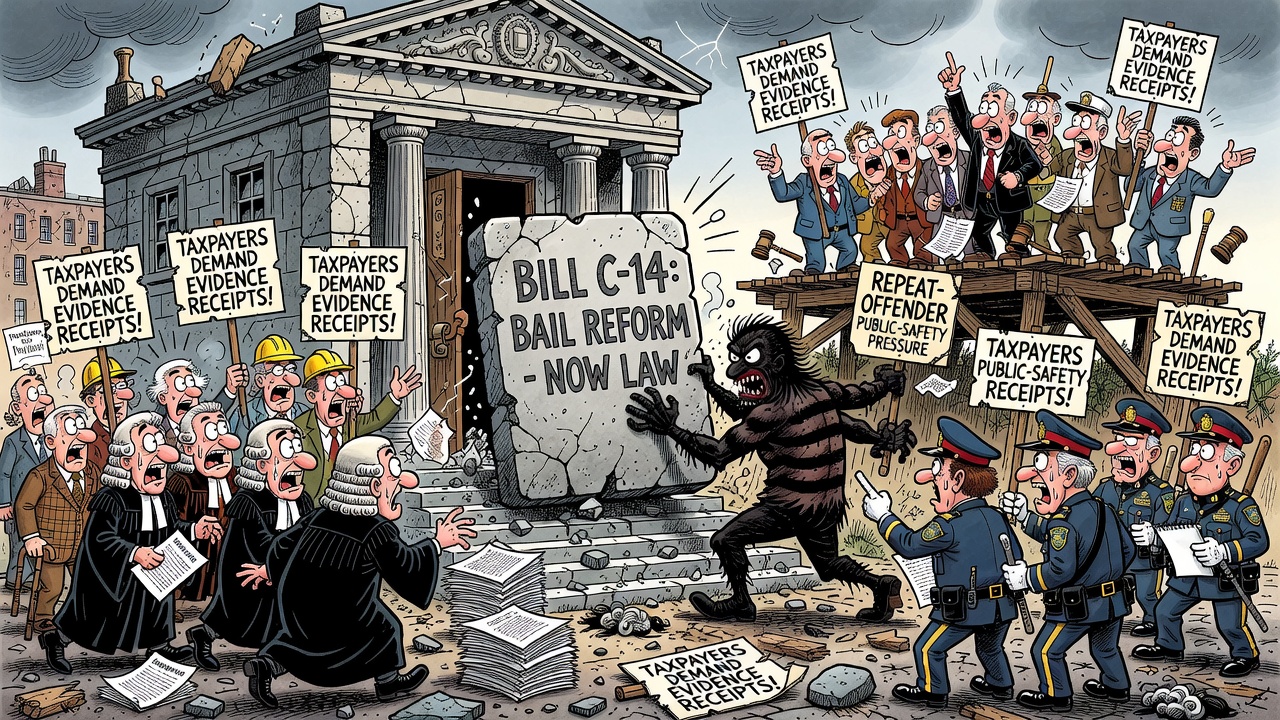
Bill C-14, the Bail and Sentencing Reform Act, is now law. The federal government says its bail and sentencing changes received Royal Assent on June 15 and will come into force 30 days later, on July 15. Ottawa’s release boasts of more than 80 targeted Criminal Code changes, stricter bail rules and tougher sentencing tools for repeat and violent offenders.
That is the admission Canadians should not miss. For years, premiers, mayors, police leaders, victims’ advocates and ordinary neighbourhoods warned that repeat offenders were cycling through the system while communities absorbed the damage. Now the Liberal government is holding a victory lap for reforms designed to address the same pressure it spent years minimizing, deflecting or blaming on everyone else.
The new law expands reverse-onus bail provisions, including for certain auto theft, extortion and human-trafficking offences. In plain language, more accused repeat or high-risk offenders will have to persuade a judge why they should be released instead of putting the whole burden on the Crown to prove detention. The bill also adds sentencing tools, including consecutive-sentence provisions for repeat violent offences and crimes such as vehicle theft, breaking and entering, extortion and arson.
Conservatives should welcome any serious move that protects the public from chronic offenders. But applause is not accountability. A press release does not prove safer streets. A new Criminal Code clause does not hire prosecutors, clear court backlogs, monitor bail compliance or measure whether the same offenders stop cycling through police cells and emergency rooms.
There are also legitimate legal warnings on the record. The Canadian Bar Association told Parliament that several changes risk expanding custody, reducing judicial discretion and curtailing fair-trial rights. That does not mean Ottawa should do nothing. It means the government must prove the law is targeted, constitutional and effective — not merely a tough-sounding repair job after public confidence collapsed.
The federal government should publish a public dashboard before July 15: repeat-offender bail outcomes by offence category, breaches while on release, new charges laid while accused persons are on bail, average time to trial, Crown capacity, provincial enforcement gaps and reoffending rates after sentencing. If Ottawa wants credit for listening to communities, it should also accept responsibility for measuring results.
Bill C-14 may be a step forward. But the question Canadians should ask is harder: why did it take this long for the Liberals to act, and how will they prove the new law works?
- Government release via CNW: Canada's sweeping bail and sentencing reforms become law
- CityNews / Canadian Press: Federal bail bill becomes law as two other crime bills await passage
- Global News: Ottawa’s bail and sentencing reform is now law
- Parliament of Canada: Bill C-14 third-reading text
- Canadian Bar Association: Submission on Bill C-14
This article supports targeted public-safety reform while separating that principle from Ottawa’s duty to publish implementation metrics and legal safeguards.