CBC’s $150M Boost Needs a Fairness Audit and Spending Receipts
If Ottawa is boosting CBC funding, Canadians deserve independent fairness testing and a public plan for the extra money.
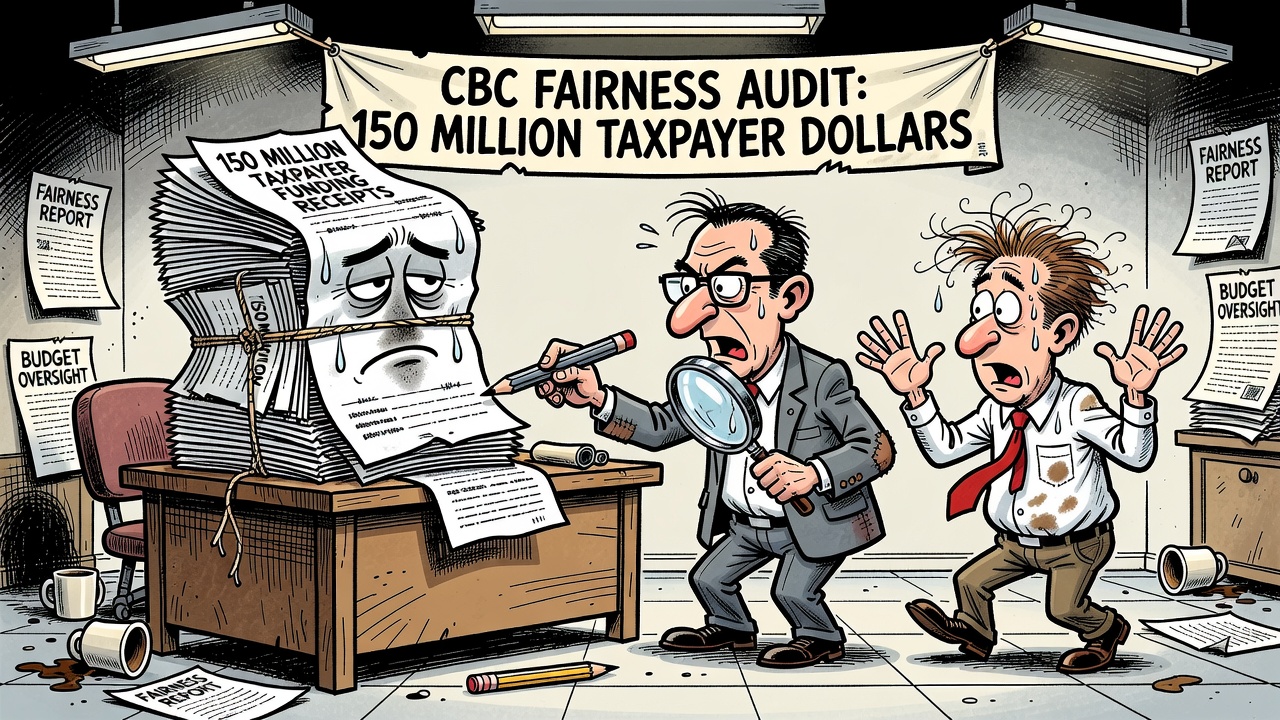
The new Senate report on CBC/Radio-Canada should not be treated as a culture-war footnote. It is a basic accountability test for a taxpayer-funded broadcaster receiving more public money while public trust in media keeps fraying.
On June 17, The Canadian Press reported that the Senate transport and communications committee’s Local News Matters report recommends periodic outside analysis of CBC/Radio-Canada news and current-affairs content “in order to assess its fairness and balance.” The same report says the committee heard from more than 60 witnesses, called for local programming to be added to the broadcaster’s mandate, and urged stable, multi-year funding for local programming.
Those recommendations can coexist. Canadians can value local news and still ask whether a federally funded newsroom is fair, balanced and transparent. In fact, the more Ottawa asks taxpayers to underwrite CBC/Radio-Canada, the stronger the case becomes for independent review that is public, regular and insulated from both government and CBC management.
The funding side makes that point sharper. The Canadian Press report noted that the Liberal budget included a $150 million funding increase for CBC/Radio-Canada. Juno News, citing Blacklock’s Reporter, reported in May that the Budget Office asked how the extra money would be spent and was told by Heritage Minister Marc Miller that the corporation could not provide the information because the funds had not yet been received and remained unallocated.
That may be an administrative answer, but it is not an accountability answer. If $150 million is being added for public broadcasting, Canadians should not have to wait until after the money is absorbed to learn what it bought. Was it local reporters? Foreign bureaus? Digital platforms? Executive costs? Programming? Technology? Debt pressure? The answer matters because each choice serves a different public purpose and deserves different performance measures.
Ottawa’s own CBC modernization paper argues that public broadcasting faces trust, funding and independence challenges, and says restoring trust requires transparency, quality journalism and a diversity of viewpoints. That is exactly why a fairness audit should not be dismissed as an attack on journalism. Properly designed, it would protect journalism by separating measurable standards from partisan shouting.
A conservative accountability standard is straightforward: no censorship board, no politician editing stories, and no threat to journalistic independence. But also no blank cheques. The review should be run by independent experts selected through a transparent process, publish its methodology, measure viewpoint diversity and corrections practices, and report findings directly to Parliament and the public. CBC/Radio-Canada should also publish a plain-language spending plan for the extra $150 million, with targets and year-end results.
If the public broadcaster is as fair, local and essential as its defenders say, it should welcome receipts. Taxpayers are not asking for propaganda in the other direction. They are asking for proof that a publicly funded institution is serving the public, not the government of the day, its own bureaucracy or any political tribe. More funding should mean more accountability — not another trust-us subsidy.
- CityNews Toronto / The Canadian Press: CBC’s news should be assessed by outside experts for fairness, senators say in report
- Juno News / Blacklock’s Reporter: CBC refuses to disclose where it will allocate additional $150M in taxpayer funds
- Government of Canada / Canadian Heritage: The Future of CBC/Radio-Canada
This article argues for stronger accountability around public funding and fairness review while rejecting political interference in newsroom decisions.