Bill C-22’s Fast-Track Is a Surveillance Safeguard Test
If Ottawa’s lawful-access bill is balanced, Canadians should be allowed to watch the safeguard fight in public.
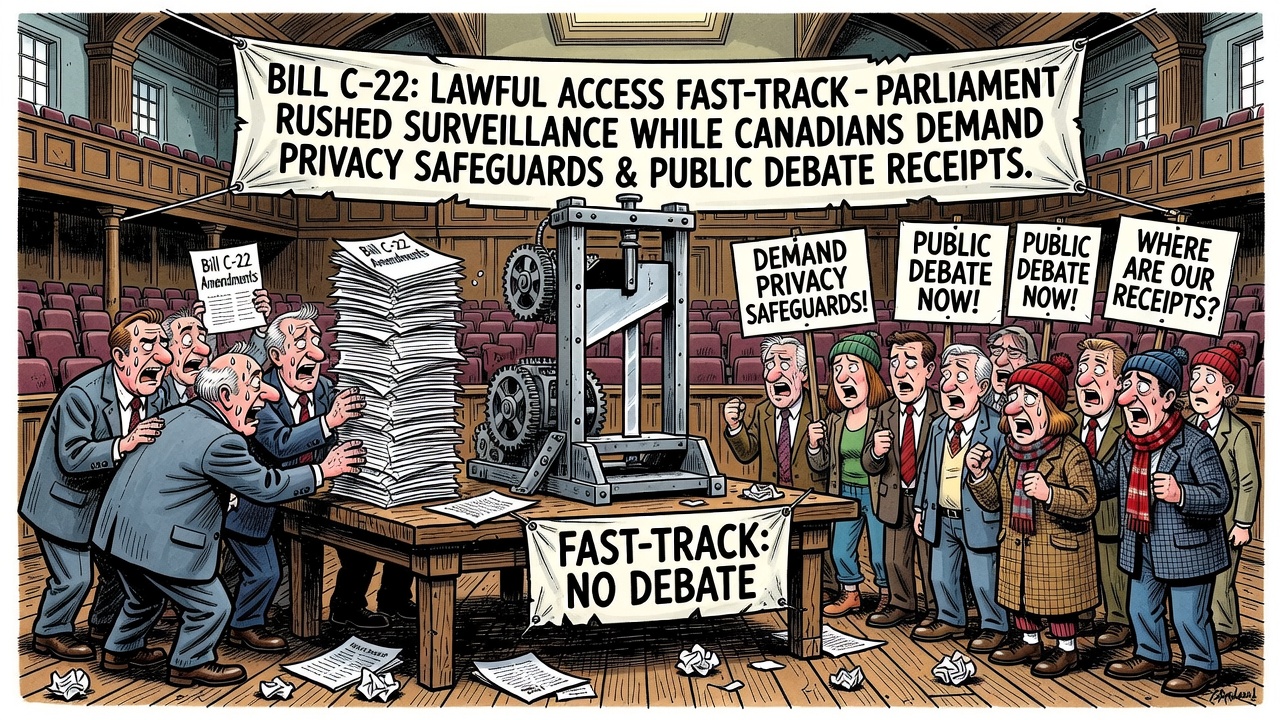
Bill C-22 is no longer just a privacy bill debate. It has become a process test. When a government asks for expanded lawful-access powers, the public should see the safeguards strengthened line by line, not watch committee work squeezed after weeks of warnings.
Parliament’s own LEGISinfo page lists Bill C-22, the Lawful Access Act, 2026, as a House government bill still at committee after second reading. The bill has two broad tracks: faster access to subscriber information, and a more controversial framework requiring electronic service providers to maintain technical capabilities so police and CSIS can obtain communications and information when legally authorized.
That second track is where the alarm bells are loudest. Global News reported that the metadata-retention proposal could require service providers to keep transmission and location data for up to one year, while the government later signalled it was open to shortening that period but would not split the bill. CityNews, citing The Canadian Press, reported the minister rejected calls to separate the controversial section even as privacy groups and technology companies warned about encryption, back doors and sweeping cabinet powers.
The Privacy Commissioner’s submission to the public safety committee did not sound like partisan theatre. It said interception of communications and search or seizure of information are among the most intrusive powers the state can use, because they affect privacy and the exercise of other fundamental rights. The Commissioner also recommended narrowing subscriber-information definitions and tightening who can be compelled to produce information.
Civil-liberties groups went further. The Canadian Civil Liberties Association said more than 75 organizations and experts endorsed a letter calling for problematic elements of Bill C-22 to be withdrawn, warning that the proposal risks privacy rights and cybersecurity. Whether one agrees with every criticism or not, those are exactly the kinds of objections committee review is supposed to test in daylight.
Instead, Michael Geist reported on June 16 that the government moved to limit clause-by-clause review, cancel further debate on remaining amendments and push the bill through by week’s end. Geist is a critic, not an official source, but the accountability question is obvious: if amendments answer the privacy, encryption and metadata concerns, why not let Canadians see the arguments?
A conservative standard is simple. Police should have lawful tools for serious investigations. But those tools must be narrow, reviewable, technically safe and transparent enough for citizens to know where the line is. Metadata can reveal movements, associations and habits. Technical-access mandates can create security risks even when governments insist they are lawful. Secretive ministerial orders and rushed amendments do not build trust.
Ottawa should publish the amendment package, preserve meaningful clause-by-clause debate, separate low-controversy investigative tools from high-risk technical-access powers if needed, and require public reporting on demands, retention orders, challenges and errors. Public safety does not require Parliament to race past privacy. It requires proving the state’s new powers are necessary, limited and accountable before Canadians are told to trust them.
- Parliament of Canada LEGISinfo: Bill C-22, Lawful Access Act, 2026
- Office of the Privacy Commissioner of Canada: Submission on Bill C-22
- Canadian Civil Liberties Association: Civil society warning on Bill C-22
- Global News: Liberals open to shorter metadata rules but will not split bill
- CityNews / The Canadian Press: Liberals say they won’t split controversial section
- Michael Geist: Government moves to shut down lawful-access hearing
This article supports lawful tools for police where justified, while arguing that expanded surveillance, metadata and technical-access powers need public amendments, narrow scope and enforceable safeguards.