Seven Months Later, Ottawa’s Pipeline File Is Still Mostly Paper
The sales pitch was nation-building. The paper trail still says: future application, future designation, future consultation, future permissions.
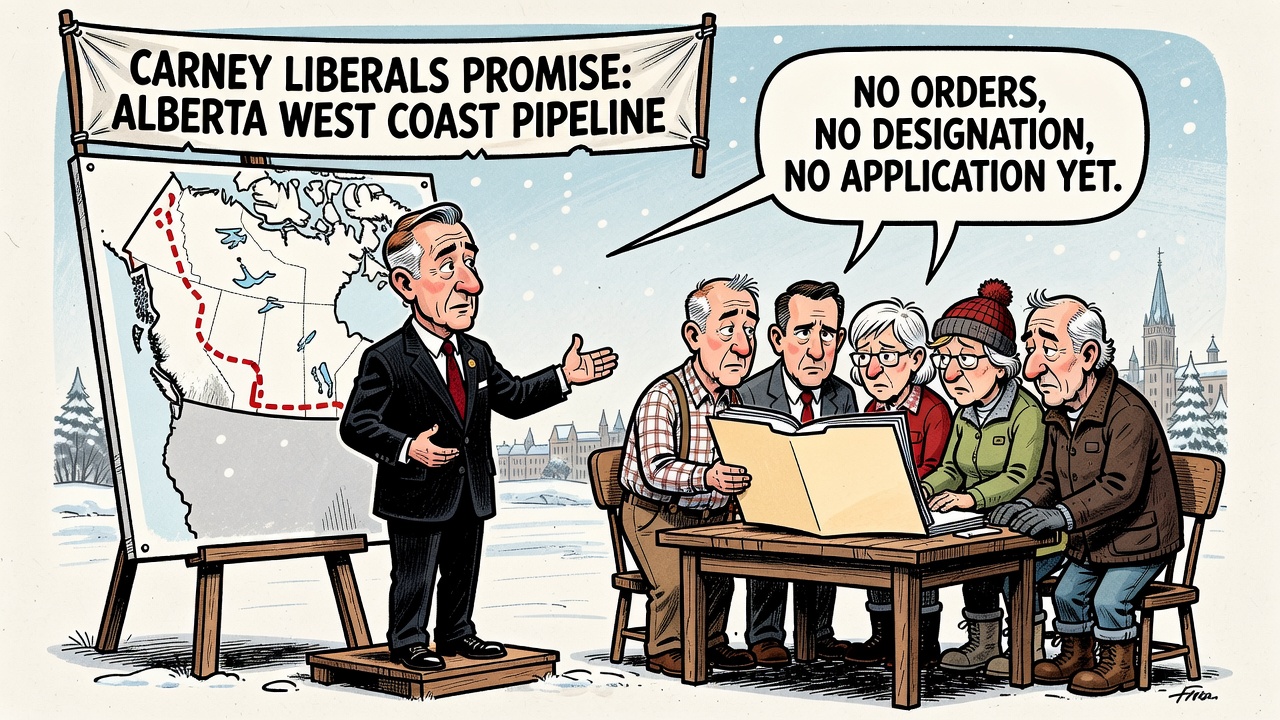
Mark Carney’s Liberals want credit for turning Canada into an energy “superpower.” Fine. Then the first accountability test is simple: show the work.
A June 10 House of Commons response to Order Paper Question Q-1108 is useful because it asks the right receipt questions. Conservative MP Arnold Viersen asked what Ottawa had done under the Canada-Alberta memorandum of understanding on pipelines: approvals, project designations, orders, exemptions, regulatory amendments, consultations, timelines, funding and implementation committee work. That is exactly the checklist Canadians should expect after a heavily promoted federal-provincial pipeline deal.
The answer, as reported from the Privy Council Office response, is not much. Rebel News says the government had issued or prepared no orders, directives, exemptions or regulatory amendments to facilitate pipeline development under the MOU. It also reports no pipeline proposal had yet been submitted to the federal Major Projects Office, no national-interest designation had been made under the Building Canada Act, and Indigenous consultations had not begun because there was no filed application.
That does not mean a pipeline is impossible. It means the Liberal victory lap is ahead of the paperwork. Alberta’s own west coast oil pipeline page says the province is preparing a submission to the Major Projects Office by July 1, 2026. It says Canada is to facilitate prompt review so the project can be designated as being in the national interest by October 1, 2026, with the intent of obtaining permissions so design and construction may begin as early as September 1, 2027. Those words matter: preparing, pursuing, intent, may.
Conservatives should not sneer at pipelines. Canada needs private-sector investment, tidewater access, Indigenous partnership, and serious infrastructure that lets us sell energy to allies instead of remaining dependent on one customer. But support for a pipeline is not support for Liberal theatre. A press conference is not an approval. An MOU is not a permit. A future deadline is not a delivered project.
The practical accountability standard is a public dashboard. Ottawa should publish whether an application has been received; which departments are reviewing it; what statutory approvals are required; whether any national-interest designation is being prepared; which Indigenous communities have been engaged and on what issues; what environmental, marine-safety and legal risks have been identified; and which regulatory changes, if any, ministers believe are necessary.
Carney’s brand is competence. This file is a fair test of it. If the government wants applause for building again, it should welcome a public list of deliverables and dates. If the list is empty, Canadians should hear that too — before another pipeline promise becomes another Liberal announcement with no steel in the ground.
- House of Commons: Order Paper Question Q-1108
- House of Commons: Response from June 10, 2026 for Q-1108
- Government of Alberta: West Coast Oil Pipeline timeline and project description
- Rebel News: Carney Liberals have done nothing to advance Alberta pipeline under MOU, docs show
This article distinguishes the official parliamentary question and Alberta timeline from Rebel News’ reporting on the contents of the Privy Council Office response.