Carney’s Forced-Labour Bill Comes With the Watchdog Missing
A forced-labour import bill is welcome. Scrapping independent corporate-abuse oversight at the same time is the accountability problem.
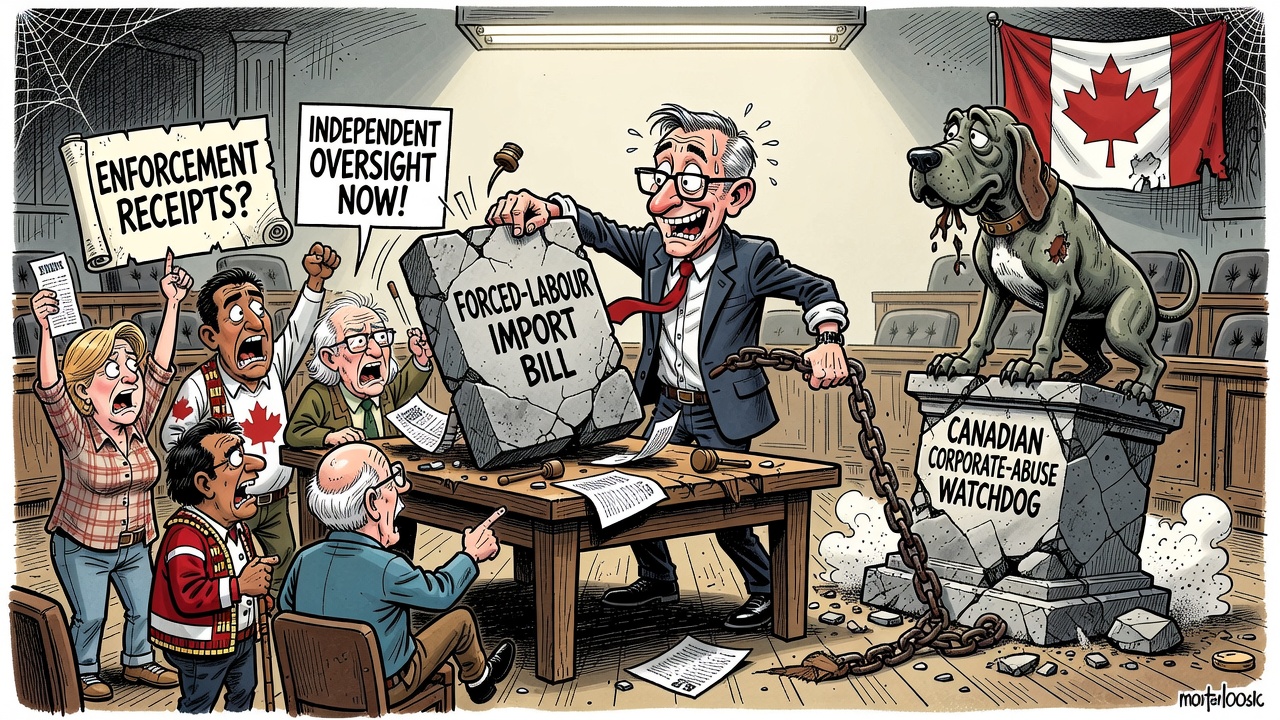
Ottawa tabled Bill C-35 on Friday, a bill described on the House of Commons Order Paper as legislation “respecting the prohibition of the importation of goods produced by forced labour.” On its face, that is a necessary move. Canadians should not be asked to compete against slavery, and Canadian consumers should not be forced to guess whether everyday imports are tied to coercion in Xinjiang, prisons, or abusive supply chains abroad.
But the Carney government chose an odd week to discover enforcement. Canadian Press reported that the bill would move the main responsibility for blocking forced-labour imports from the public safety minister to the foreign affairs minister. The same report said the Canada Border Services Agency has detained 50 shipments over forced-labour concerns since 2020, but only two were ultimately found to have been produced with forced labour. That record does not scream “working system.” It screams “show Canadians the receipts.”
Then came the contradiction. Carney said his government is eliminating the Canadian Ombudsperson for Responsible Enterprise, the office created to investigate alleged human-rights abuses by Canadian companies operating abroad. So Ottawa is promising tougher rules at the border while removing a watchdog aimed at corporate conduct overseas.
That is the Liberal accountability problem in one file: announce compassion, centralize discretion, weaken independent scrutiny, and ask voters to applaud the press release.
Global Affairs briefing material had still described CORE as part of Canada’s Responsible Business Conduct Abroad Strategy and said the government was committed to a “robust and fit-for-purpose” approach while awaiting future direction for the office. If the “future direction” is abolition, Canadians deserve to know what replaces it. Will complainants be transferred to another body? Will investigations die quietly? Will companies accused of profiting from abusive labour face public findings, or just private diplomacy?
Conservatives should support a real ban on forced-labour goods. They should also reject a fake enforcement model where ministers gain more discretion and the public gets fewer independent facts. The issue is not whether Ottawa can write moral language into a bill. The issue is whether border agents, diplomats, importers and victims can force action when powerful commercial interests prefer silence.
Parliament should demand five things before treating Bill C-35 as a victory: the full CBSA enforcement record since 2020; clear evidentiary rules for detaining and releasing shipments; public reporting by country, sector and company where legally possible; a transition plan for every CORE complaint; and a replacement watchdog with real investigatory powers.
If Carney wants credit for fighting forced labour, he can earn it the conservative way: publish the numbers, preserve independent oversight, name the risks, and prove the law can bite. Anything less is just another Ottawa virtue signal with the watchdog removed.
- House of Commons: Order Paper notice for Bill C-35
- Canadian Press via CityNews: Ottawa to table bill to keep products of forced labour out of Canada
- Canadian Press via Yahoo Finance: Forced-labour import bill and CORE context
- Global Affairs Canada: Briefing material on responsible business conduct abroad and CORE
This article argues for enforceable anti-forced-labour rules while scrutinizing the government’s decision to remove an independent corporate-accountability office.