Carney’s Fiscal Anchor Just Met the PBO’s Less-Than-1% Stress Test
A fiscal anchor is supposed to restrain government. The budget watchdog says Ottawa’s anchor barely survives contact with risk.
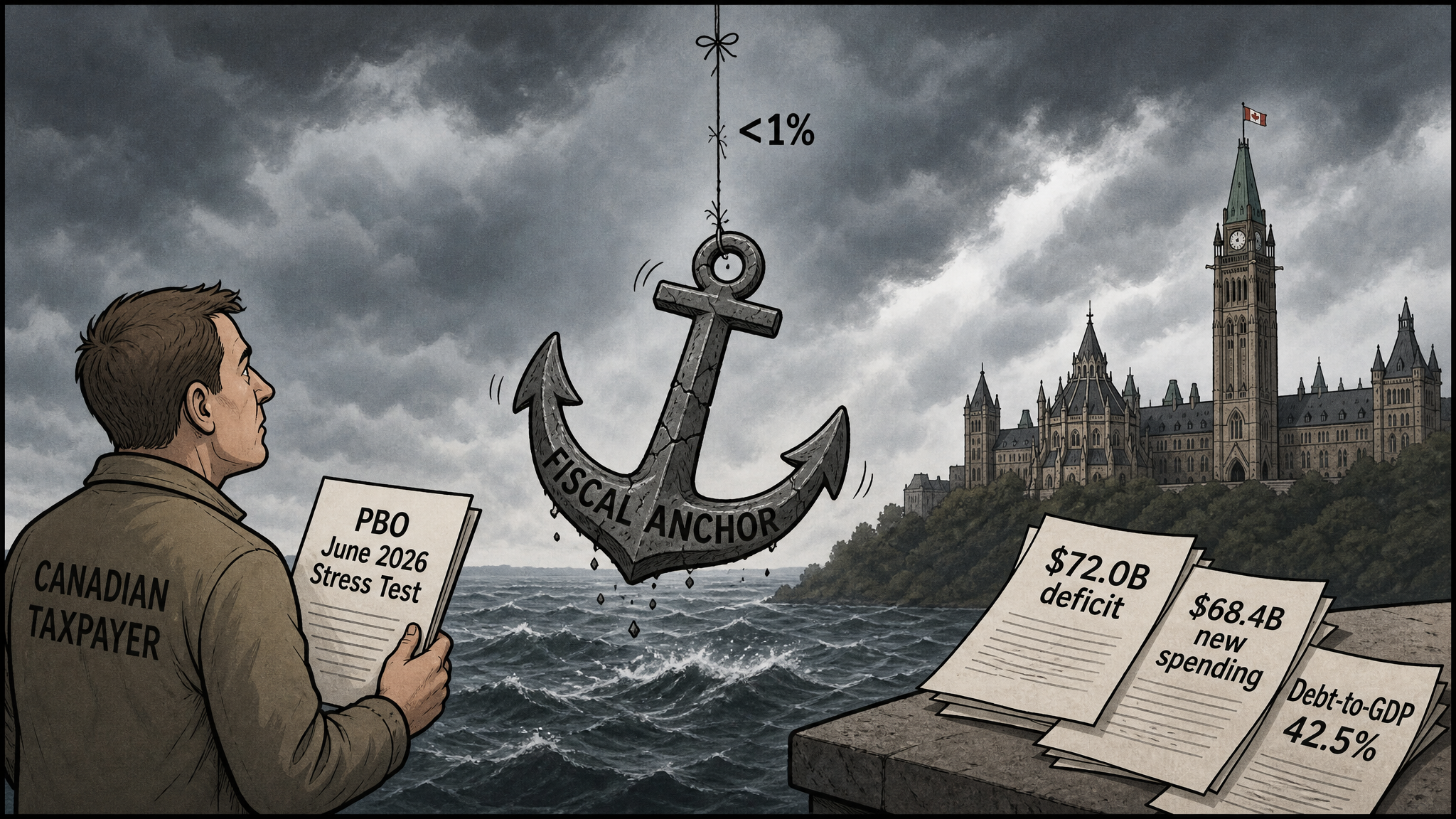
Mark Carney’s government has been selling fiscal discipline with banker-grade confidence. The Parliamentary Budget Officer’s June 2026 Economic and Fiscal Outlook gives taxpayers the test that matters: not whether Ottawa can draw a neat line on a chart, but whether that line holds up when normal economic shocks are applied.
The answer is ugly. The government’s stated fiscal anchor is a declining deficit-to-GDP ratio over the projection horizon. On the PBO’s baseline, the ratio rises from 1.2% of GDP in 2024–25 to 2.2% in 2025–26, then declines to 1.5% by 2030–31. That baseline is what ministers point to when they say the plan is disciplined.
But PBO stress testing, using historical Canadian economic and fiscal shocks, estimates the likelihood that the deficit-to-GDP ratio declines in every year from 2026–27 to 2030–31 at less than 1%. That is the accountability number. A real anchor should keep the ship from drifting. This one looks more like a press-release slogan tied to a fraying rope.
The pressure is self-inflicted as well as economic. PBO says Budget 2025 and the Spring Economic Update 2026 add $68.4 billion in net new spending over 2025–26 to 2030–31 compared with the September outlook. The watchdog projects the deficit rising from $36.3 billion in 2024–25 to $72.0 billion in 2025–26, then still sitting at $58.2 billion by 2030–31 if no new measures are introduced and temporary measures sunset as scheduled.
The debt anchor looks no safer. PBO projects the federal debt-to-GDP ratio rising from 41.3% in 2025–26 to 42.5% in 2030–31, and says there is only a 39.6% chance it will be lower in 2030–31 than in 2025–26. Debt charges also squeeze future budgets: PBO projects the debt-service ratio climbing to 13.1% by 2030–31, with per-person public debt charges rising to $1,885.
Finance Minister François-Philippe Champagne stood by the government’s projections after the report, according to The Canadian Press. Fine. Then publish the receipts. Canadians deserve a year-by-year restraint table, the assumptions behind the operating-versus-capital split, the reconciliation against the spring update, and the list of programs that get reduced if the stress test becomes reality.
Carney did not campaign as just another Liberal spender. He campaigned as the adult in the room. Adults do not wave around a fiscal anchor that has a less-than-1% chance of meeting the annual decline test and call it credibility. They fix the spending plan before taxpayers get dragged further into debt.
- Parliamentary Budget Officer: Economic and Fiscal Outlook — June 2026
- The Canadian Press / CityNews Halifax: Champagne stands his ground after budget watchdog questions fiscal anchor
- Canadian Taxpayers Federation: Carney goes over budget — twice
This article uses the PBO report as the primary factual source, The Canadian Press for the ministerial response, and the Canadian Taxpayers Federation as an advocacy/accountability source.